 WhatsApp Us (24/7)
 +91 926 888 0303 (24/7)


To Book an Appointment
Call Us+91 926 888 0303Kidney Transplant: Donor Options, Common Myth & Recovery
By Dr. Manoj Arora in Nephrology
Apr 30 , 2026 | 15 min read

Chronic Kidney Disease (CKD) is now becoming common worldwide. The major contributors to this increasing number include diabetes, high blood pressure, obesity and unhealthy lifestyles. When kidney function decreases due to CKD, one may develop kidney failure, also known as end-stage kidney disease (ESKD). At this stage, the kidneys can no longer function properly and effectively remove waste and excess fluid from the body. The patient then requires either dialysis or a kidney transplant to survive.
Among both available options, for kidney failure patients and long life, kidney transplantation is considered the best treatment option. It not only improves survival but also improves quality of life.
Understanding Kidney Transplant
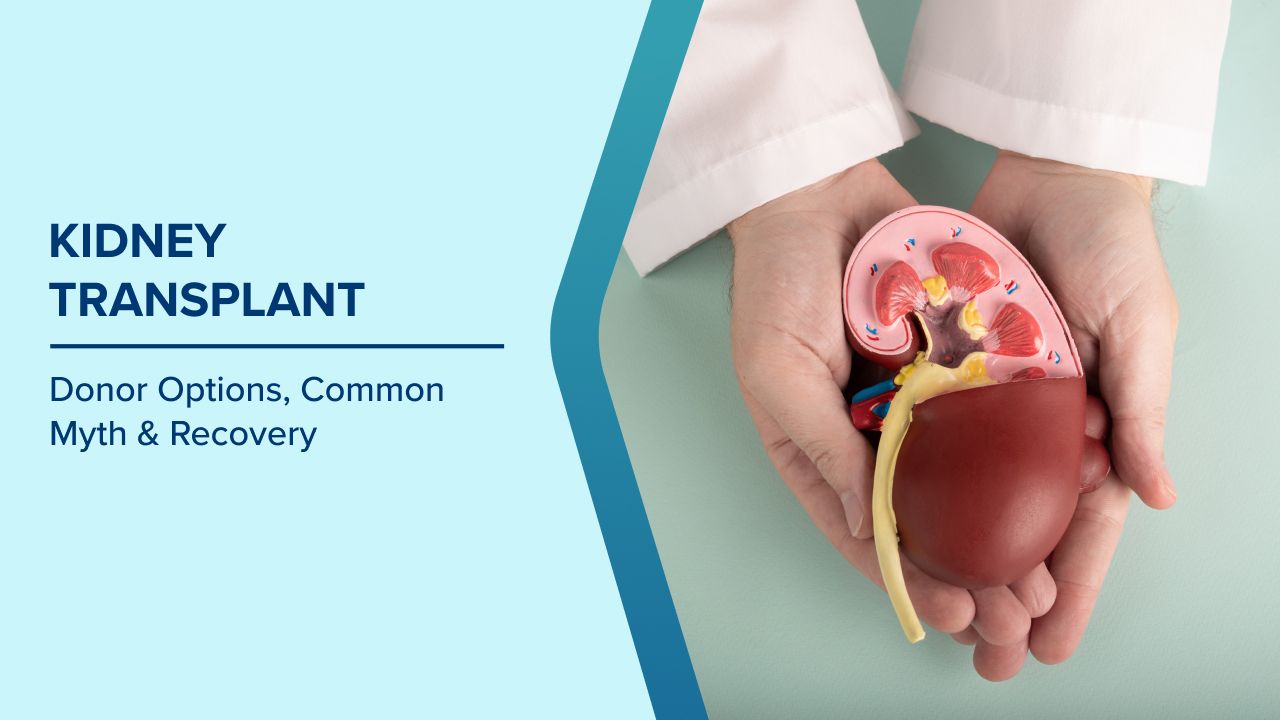
A kidney transplant is a process where a healthy kidney from a donor is transplanted into a patient whose kidney is not functioning properly. The transplanted kidney then takes up the role of filtering blood and maintains the body’s balance of fluids and electrolytes in the recipient.
Type of Donor
Transplanted kidneys can come from two types of donors:
Living donors: A healthy person (often a relative or spouse) donates one of their kidneys. Humans can live a normal life with a single healthy kidney.
Deceased donors: Organs are donated after a person is declared brain dead, with the consent of the family.
Why Is Transplant Better Than Dialysis?
While dialysis can help in living a sustainable life, it can not fully replace the functions of a normal kidney. Patients on dialysis often experience fatigue, weakness, dietary restrictions and frequent hospital visits. Whereas a successful kidney transplant allows patients to return to their normal routine and lifestyle.
Benefits of kidney transplantation include:
Better long-term survival
Improved quality of life
Fewer dietary and fluid restrictions
Ability to work and travel more easily
Improved physical and emotional well-being
Common Myths About Kidney Donation
Many people hesitate to consider a kidney transplant due to misconceptions.
Myth: Donating a kidney will harm the donor’s health.
Fact: Most healthy donors live completely normal lives with one kidney and are carefully evaluated before donation.
Myth: Kidney transplantation is not successful.
Fact: Modern transplant medicine has excellent outcomes. With proper care and medications, transplanted kidneys can function for many years.
Myth: Only blood relatives can donate.
Fact: In many cases, spouses or emotionally related donors can also donate after appropriate approvals.
The Importance of Organ Donation
One of the biggest challenges in kidney transplantation is the shortage of donor organs. Thousands of patients wait for a transplant each year, but only a small number receive one. Increasing awareness about organ donation, particularly deceased organ donation after brain death, can save many lives.
A single organ donor can help multiple patients by donating kidneys, liver, heart, lungs, and other organs.
Life After Transplant
After a kidney transplant, patients must take immunosuppressive medicines as advised by their doctor to prevent rejection of the transplanted kidney. Regular follow-up with doctors, healthy lifestyle choices, and adherence to medications are essential for long-term success.
Most transplant recipients can return to work, exercise moderately, and live active, fulfilling lives.
Conclusion
Kidney disease often progresses silently until it reaches an advanced stage. Regular health check-ups, controlling diabetes and blood pressure, maintaining a healthy weight, and avoiding unnecessary medications can help protect kidney health.
Equally important is spreading awareness about organ donation and kidney transplantation. By supporting organ donation, we can give patients with kidney failure a precious gift, the chance to live a healthier and longer life.
Organ donation is not just a medical act; it is a powerful act of humanity.
Written and Verified by:

Related Blogs

Dr. Puneet Arora In Nephrology
Nov 11 , 2020 | 2 min read

Nov 11 , 2020 | 9 min read
Blogs by Doctor

Inherited Kidney Diseases: Types, Symptoms, and Management
Jul 24 , 2024 | 6 min read

How Diabetes & High Blood Pressure Harm Your Kidneys
Jul 02 , 2025 | 1 min read
Most read Blogs


Related Blogs
Dr. Puneet Arora In Nephrology
Nov 11 , 2020 | 2 min read
Nov 11 , 2020 | 9 min read
Blogs by Doctor
Inherited Kidney Diseases: Types, Symptoms, and Management
Jul 24 , 2024 | 6 min read
How Diabetes & High Blood Pressure Harm Your Kidneys
Jul 02 , 2025 | 1 min read
Most read Blogs