 WhatsApp Us (24/7)
 +91 926 888 0303 (24/7)


To Book an Appointment
Call Us+91 926 888 0303EVH in Heart Bypass Surgery: Benefits, Steps, and Recovery
By Dr. Dinesh Chandra in Cardiac Sciences , Cardiac Surgery
Jan 20 , 2026

Heart bypass surgery has changed significantly over the years. Earlier, it involved large incisions, longer hospital stays, and visible scars. Today, surgical techniques are more refined, safer, and focused on faster recovery. One such advancement is the EVH procedure, which has become an important part of modern coronary artery bypass surgery.
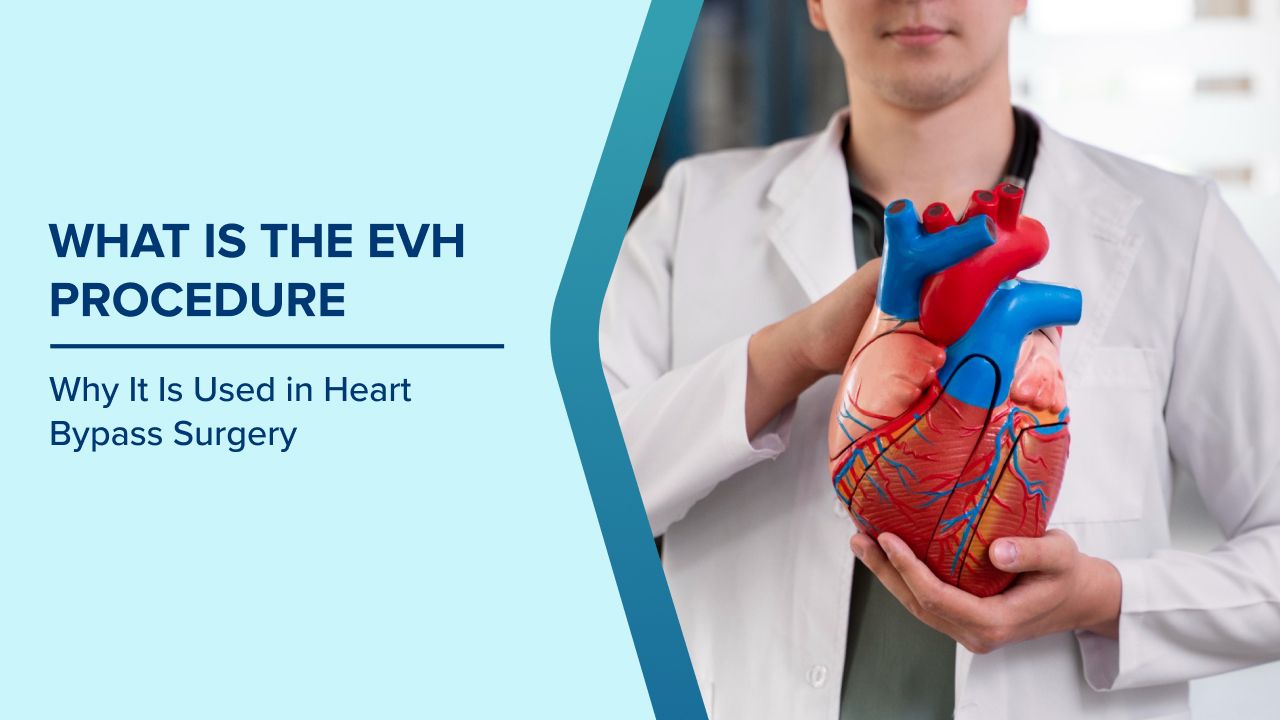
EVH stands for Endoscopic Vein Harvesting. It is a minimally invasive method used to collect healthy veins needed during heart bypass surgery. These veins are used to create new pathways for blood flow around blocked coronary arteries. While the bypass itself remains the core of the surgery, the way the vein is obtained plays a major role in recovery, comfort, and long-term outcomes.
Why Veins Are Needed in Heart Bypass Surgery
In coronary artery disease, the blood vessels supplying the heart become narrowed or blocked due to plaque buildup. When blood flow is severely restricted, bypass surgery is recommended to restore circulation.
To perform a bypass, surgeons need healthy blood vessels from another part of the body. These vessels act as new channels that redirect blood around the blockage. The most commonly used vessels include:
- The saphenous vein from the leg
- Arteries from the chest or arm
The quality of the harvested vein directly affects the success of the bypass, which is why the EVH procedure plays a crucial role.
What Is the EVH Procedure?
The EVH procedure is a technique used to remove a vein from the leg using small incisions and a specialised camera-based instrument called an endoscope.
Instead of making a long surgical cut, the surgeon creates one or two small openings near the knee or ankle. Through these, the endoscope is inserted, allowing the vein to be carefully separated while being viewed on a screen.
Once removed, the vein is prepared and used during the bypass surgery. This method has largely replaced traditional open vein harvesting in many cardiac centres.
How EVH Is Different From Traditional Vein Harvesting
Earlier, vein harvesting required a long incision from the ankle to the groin, often leading to pain, infection, and delayed healing. EVH differs in several key ways:
Size of Incisions
- EVH uses small cuts
- Traditional methods require long open wounds
Impact on Surrounding Tissue
- EVH causes minimal tissue disruption
- Open harvesting affects skin, muscle, and nerves
Recovery Experience
- EVH allows faster healing and mobility
- Traditional harvesting often leads to prolonged discomfort
Cosmetic Outcome
- EVH results in minimal scarring
- Open methods leave visible scars
These benefits explain why EVH is now preferred in many heart bypass surgeries.
Why EVH Is Commonly Used in Heart Bypass Surgery
The goal of heart bypass surgery is not only to restore blood flow but also to reduce complications and improve recovery. EVH supports this goal by offering:
- Lower risk of wound problems: Smaller incisions reduce infection and healing issues
- Reduced postoperative pain: Less leg pain compared to open harvesting
- Faster mobility: Early movement lowers the risk of blood clots
- Better comfort: Reduced swelling and numbness
- Improved surgical efficiency: Vein harvesting can occur alongside other surgical steps
Who Is Suitable for the EVH Procedure?
Most patients undergoing coronary artery bypass surgery are suitable candidates for EVH. It is commonly recommended for patients who:
- Require one or more vein grafts
- Have good vein quality in the leg
- Do not have severe peripheral vascular disease
- Do not have active leg infections or skin conditions
The final decision is made by the cardiac surgeon after evaluating medical history and imaging results.
Written and Verified by:

Related Blogs

Dr. Ritwick Raj Bhuyan In Cardiac Sciences , Cardiac Surgery (CTVS)
Nov 08 , 2020 | 2 min read

Dr. Gaurav Minocha In Cardiac Sciences
Nov 08 , 2020 | 4 min read
Blogs by Doctor

Preparing for Bypass Surgery: When It's Needed and How to Plan
Dr. Dinesh Chandra In Cardiac Sciences , Cardiac Surgery
Apr 24 , 2025 | 3 min read

Yoga for Heart Valve Patients: Safe Poses & Heart Health Tips
Dr. Dinesh Chandra In Cardiac Sciences , Cardiac Surgery (CTVS)
Jul 09 , 2025 | 4 min read
Most read Blogs


Related Blogs
Dr. Ritwick Raj Bhuyan In Cardiac Sciences , Cardiac Surgery (CTVS)
Nov 08 , 2020 | 2 min read
Dr. Gaurav Minocha In Cardiac Sciences
Nov 08 , 2020 | 4 min read
Blogs by Doctor
Preparing for Bypass Surgery: When It's Needed and How to Plan
Dr. Dinesh Chandra In Cardiac Sciences , Cardiac Surgery
Apr 24 , 2025 | 3 min read
Yoga for Heart Valve Patients: Safe Poses & Heart Health Tips
Dr. Dinesh Chandra In Cardiac Sciences , Cardiac Surgery (CTVS)
Jul 09 , 2025 | 4 min read
Most read Blogs