 WhatsApp Us (24/7)
 +91 926 888 0303 (24/7)


To Book an Appointment
Call Us+91 926 888 0303What is Degenerative Spine Disease: Causes, Symptoms & Treatment
By Dr. Paresh Bang in Spine Surgery
Mar 18 , 2026

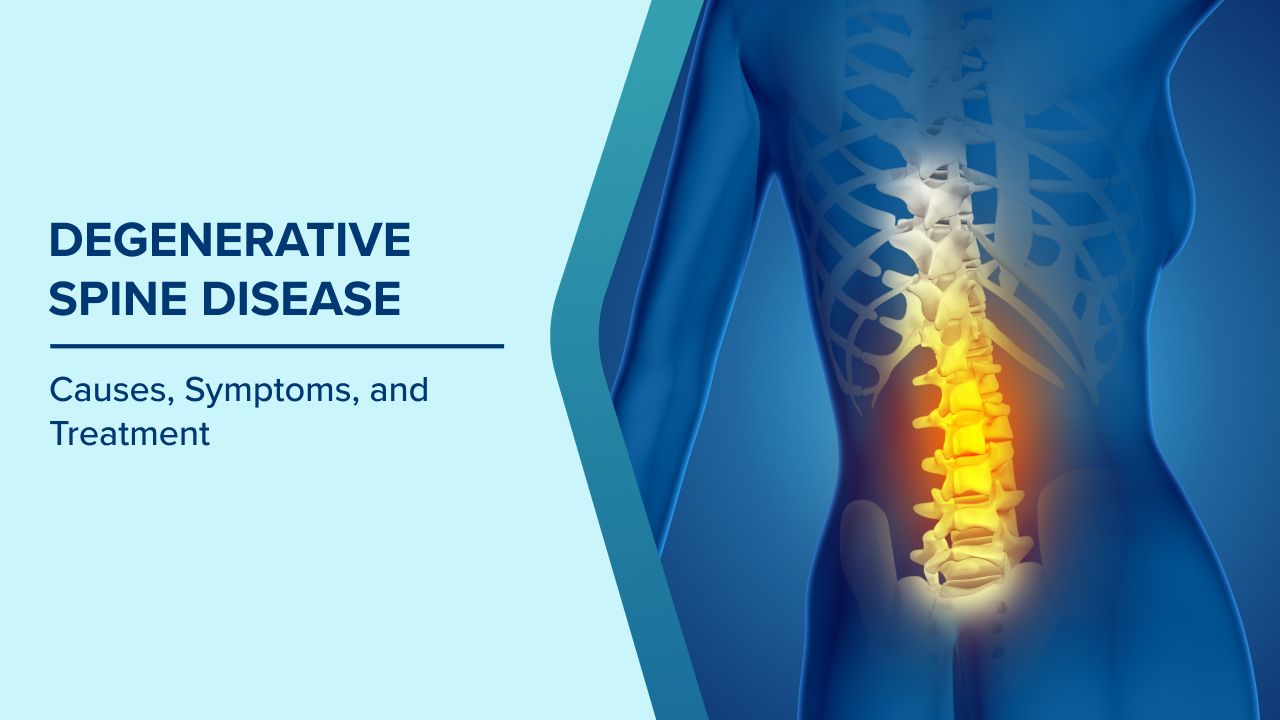
Degenerative spine disease is a progressive condition characterised by age-related wear and tear of the intervertebral discs, facet joints, and supporting structures of the spine. As we age, the discs that cushion our vertebrae gradually lose water content and become less flexible, while the surrounding ligaments and joints develop arthritis-like changes. This natural degeneration is incredibly common, affecting millions of people worldwide, and in many cases, symptoms are minimal and manageable with conservative treatment. While the term "disease" may sound alarming, spinal degeneration is more accurately described as a normal part of ageing rather than a serious illness. The good news is that most people with degenerative spine disease can lead active, pain-free lives with appropriate management strategies, lifestyle modifications, and targeted therapies.
What Is Degenerative Spine Disease?
Degenerative spine disease refers to structural changes in the spine that develop over time due to ageing. These changes primarily involve the intervertebral discs, the gel-filled cushions between vertebrae, and the facet joints that allow the spine to bend and twist. As we age, these structures naturally weaken, dry out, and lose their ability to absorb shock.
It's important to understand that spinal degeneration is not a disease in the traditional sense. It's a normal consequence of aging, similar to grey hair or skin wrinkles. Medical experts often distinguish between structural changes visible on imaging (degenerative changes) and actual symptoms that affect quality of life. Many people have significant degenerative changes on an MRI scan yet experience no pain or functional limitations.
Degenerative spine disease can occur in any region of the spine: the cervical spine (neck), thoracic spine (mid-back), or lumbar spine (lower back). Lumbar degeneration is most common because the lower spine bears the most weight and stress from daily activities.
What Causes Spinal Degeneration?
Several factors contribute to spinal degeneration. While ageing is the primary cause, multiple other factors can accelerate the process:
- Ageing: The primary cause; spinal discs naturally lose water and elasticity over time
- Disc Dehydration: Discs gradually lose water content, reducing their shock-absorbing capacity
- Repetitive Strain: Occupations or activities involving heavy lifting, bending, or vibration expose the spine to excessive stress
- Poor Posture: Prolonged slouching or forward head posture increases mechanical stress on discs and joints
- Obesity: Extra body weight increases load on the spine, accelerating wear and tear
- Previous Spine Injury: Earlier trauma or herniated discs create vulnerability to accelerated degeneration
- Genetics: Family history of spinal problems increases predisposition to degenerative changes
Common Types of Degenerative Spine Conditions
- Degenerative Disc Disease: A condition where the intervertebral discs break down, losing hydration and height. This can lead to abnormal movement between vertebrae and the development of bone spurs.
- Spinal Stenosis: Narrowing of the spinal canal that can compress nerves and cause pain, numbness, or weakness in the legs or arms. This often results from degenerative changes, including disc bulges, bone spurs, and thickened ligaments.
- Facet Joint Arthritis: Osteoarthritis affecting the small joints on either side of the spine that allow bending and twisting. This causes inflammation, pain, and stiffness.
- Herniated Disc: When a weakened disc ruptures and the inner gel material bulges outward, it potentially irritates nearby nerves. This is common in the lumbar spine.
- Spondylosis: A general term for spine arthritis characterised by bone spur formation and degenerative changes along the spine, often accompanied by stiffness and chronic pain.
Early Symptoms of Degenerative Spine Disease
Symptoms of degenerative spine disease vary widely depending on which part of the spine is affected and whether nerve compression is present. Some people experience no symptoms at all, while others develop persistent pain and functional limitations. Common early symptoms include:
- Chronic Back Pain: Persistent, dull ache in the lower back, mid-back, or neck that may worsen with activity
- Neck Pain: Stiffness and soreness in the cervical region, often worse at the end of the day
- Morning Stiffness: Reduced flexibility immediately upon waking that improves with movement
- Radiating Pain: Shooting pain that travels from the spine into the buttocks, legs, or arms (often indicating nerve root compression)
- Numbness or Tingling: Paresthesia (pins-and-needles sensation) in the extremities from nerve irritation
- Weakness in Arms or Legs: Reduced strength or difficulty with fine motor tasks, suggesting nerve compression
When Does It Become Serious?
While degenerative spine disease is usually manageable, certain circumstances warrant immediate medical attention. Nerve compression can progress to severe levels, compromising nerve function and causing lasting damage if untreated.
Warning signs that require urgent evaluation include loss of bladder or bowel control (indicating spinal cord compression), progressive weakness in the legs that worsens despite treatment, significant difficulty walking or maintaining balance, or severe pain unresponsive to conventional therapies. These symptoms suggest advanced nerve compression or spinal instability that may require surgical intervention to prevent permanent neurological damage.
For most individuals, however, degenerative spine disease remains stable or progresses slowly. Regular monitoring and adherence to treatment recommendations help prevent serious complications.
How Is Degenerative Spine Disease Diagnosed?
Accurate diagnosis requires a combination of clinical evaluation and imaging studies. Your spine specialist will begin with a thorough history and physical examination, assessing your pain, range of motion, strength, and neurological function. Imaging studies help confirm the diagnosis and identify specific degenerative changes:
- MRI Scan: The gold standard for imaging soft tissues; shows disc dehydration, herniation, and nerve compression with excellent detail
- CT Scan: Provides detailed bone imaging; particularly useful for assessing bone spurs and spinal stenosis
- X-rays: Simple imaging showing bone alignment, disc height loss, and bone spur formation
- Nerve Conduction Studies or EMG: Specialised tests that measure nerve function when nerve compression is suspected
Non-Surgical Treatment Options
The majority of people with degenerative spine disease respond well to conservative (non-surgical) management. Treatment aims to reduce pain, improve function, prevent progression, and enhance quality of life.
- Physical Therapy: Structured exercises that improve flexibility, strengthen core muscles, and reduce pain. This is the foundation of most treatment plans.
- Core Strengthening: Targeted exercises for the abdominal and back muscles that provide spinal stability and reduce mechanical stress on degenerated discs
- Anti-Inflammatory Medications: Over-the-counter NSAIDs (ibuprofen, naproxen) or prescription medications that reduce pain and inflammation
- Epidural Steroid Injections: Targeted injections of anti-inflammatory medication around nerve roots to reduce pain and swelling, often providing 3-6 months of relief
- Weight Management: Losing excess weight reduces spinal load and decreases pain and degeneration progression
- Lifestyle Modifications: Ergonomic workplace adjustments, proper lifting techniques, regular movement, heat/ice therapy, and stress reduction
When Is Surgery Needed?
Surgery is reserved for cases where conservative treatment fails to relieve symptoms or when serious complications develop. Surgical candidates typically have severe nerve compression causing progressive neurological deficits, significant spinal instability, or pain that severely limits daily function despite 6-12 months of proper conservative care. Common surgical procedures for degenerative spine disease include:
- Laminectomy: Removal of the lamina (part of the vertebra) to enlarge the spinal canal and relieve nerve compression in spinal stenosis
- Discectomy: Partial or complete removal of a herniated disc that compresses nerves, often performed through a small incision
- Spinal Fusion: Joining two or more vertebrae together using bone graft and hardware to stabilise the spine, reducing pain from abnormal motion
- Minimally Invasive Spine Surgery: Advanced techniques using small incisions and specialised instruments that reduce tissue damage, blood loss, and recovery time compared to traditional open surgery
Can You Slow Down Spinal Degeneration?
While spinal degeneration cannot be completely reversed, certain lifestyle strategies can slow progression and reduce symptoms:
- Regular Exercise: Consistent physical activity improves spinal mobility, strengthens supporting muscles, and maintains disc nutrition
- Good Posture: Maintaining proper alignment reduces abnormal stress on discs and joints throughout the day
- Ergonomic Support: Proper workstation setup, supportive mattresses, and correct lifting techniques minimise spinal stress
- Bone Health: Adequate calcium and vitamin D intake, along with weight-bearing exercise, supports spinal bone integrity
- Avoid Smoking: Smoking decreases blood flow to discs and accelerates degenerative changes; quitting is one of the most impactful lifestyle modifications
Conclusion
Degenerative spine disease is a common condition that affects millions of people, yet it doesn't have to mean a life of chronic pain or disability. Understanding the causes, recognising symptoms early, and implementing comprehensive treatment strategies can dramatically improve quality of life. The vast majority of people find significant relief through physical therapy, lifestyle modifications, and conservative management. If you suspect you have degenerative spine disease, consult with a spine specialist who can provide an accurate diagnosis and a personalised treatment plan tailored to your specific needs. Early intervention and consistent adherence to treatment recommendations offer the best outcomes.
Frequently Asked Questions
1. Is degenerative spine disease permanent?
Degenerative spine disease is indeed permanent, the structural changes that occur do not reverse on their own. However, symptoms are often temporary and manageable. Many people experience pain that comes and goes, and symptoms may improve significantly or even resolve completely with appropriate treatment, lifestyle modifications, and exercise.
2. Can young adults get degenerative disc disease?
Yes, while less common than in older adults, early-onset degenerative disc disease can occur in younger people due to genetic predisposition, previous spine injuries, heavy occupational stress, or certain medical conditions like ankylosing spondylitis. Young individuals should prioritise spinal health by adopting proper ergonomics, engaging in regular exercise, and avoiding smoking.
3. Does walking help spinal degeneration?
Yes, walking is one of the best exercises for degenerative spine disease. It improves blood flow to discs, strengthens core muscles, enhances flexibility, and provides cardiovascular benefits, all without high impact. Spine specialists recommend regular walking (30 minutes most days) as part of a comprehensive treatment plan.
4. Can spinal degeneration cause paralysis?
While rare, severe and untreated spinal cord compression from advanced degenerative disease could theoretically lead to paralysis. This is why it's crucial to seek medical attention for warning signs like loss of bladder/bowel control, progressive weakness, or severe balance problems. Early intervention prevents serious complications.
5. Is degenerative spine disease the same as arthritis?
Degenerative spine disease and spine arthritis are closely related but not identical. Degenerative disc disease involves breakdown of the intervertebral discs, while spinal arthritis (spondylosis) specifically refers to osteoarthritis of the facet joints. Both often occur together as part of the ageing process and produce similar symptoms, such as pain and stiffness.
6. Can it be reversed naturally?
Degenerative structural changes in the spine cannot be completely reversed naturally or through medical intervention, the damaged disc material and worn joints do not fully regenerate. However, symptoms can improve dramatically through exercise, physical therapy, weight loss, and activity modification. Emerging therapies like regenerative medicine show promise but remain largely experimental.
Written and Verified by:

Related Blogs

Prof. (Dr). V.K.Jain In Neurosciences , Spine Surgery
Nov 07 , 2020 | 5 min read
Dr. Amit Gupta In Spine Surgery , Neurology
Nov 07 , 2020 | 2 min read
Blogs by Doctor
Most read Blogs


Related Blogs
Prof. (Dr). V.K.Jain In Neurosciences , Spine Surgery
Nov 07 , 2020 | 5 min read
Dr. Amit Gupta In Spine Surgery , Neurology
Nov 07 , 2020 | 2 min read
Blogs by Doctor
Most read Blogs