 WhatsApp Us (24/7)
 +91 926 888 0303 (24/7)


To Book an Appointment
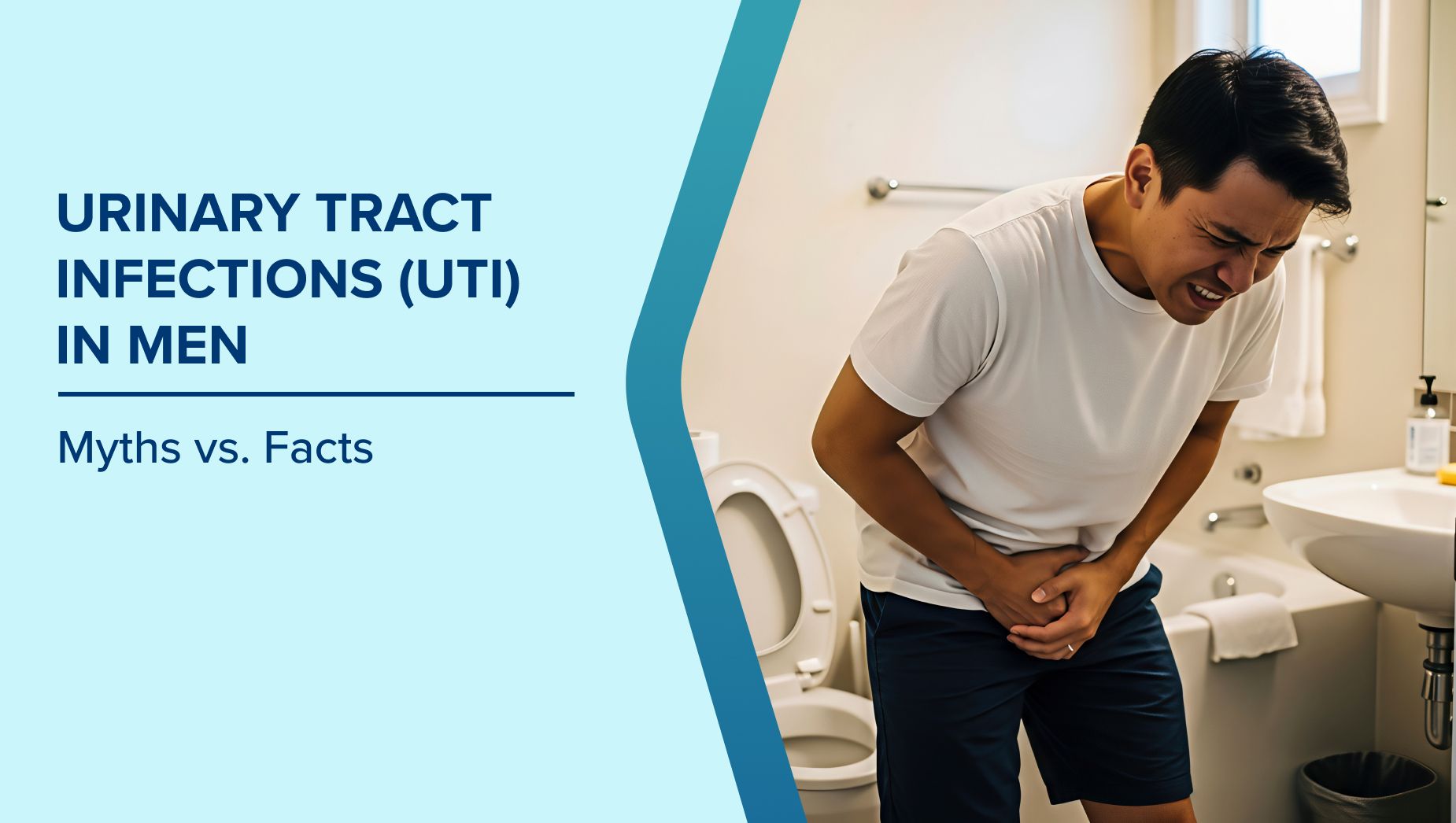
Call Us+91 926 888 0303Urinary Tract Infections (UTI) in Men: Myths vs. Facts
By Dr. Amit Goel in Urology , Kidney Transplant , Uro-Oncology , Robotic Surgery
Nov 11 , 2025 | 2 min read

Urinary Tract Infections (UTIs) are often seen as a “women’s problem,” but men can get them too, especially after the age of 40. Unfortunately, many misconceptions prevent men from seeking timely medical help. Here’s a clear breakdown of the common myths and the real facts every man should know.
Myth 1: Men Don’t Get UTIs
Fact: While UTIs are more common in women, men, especially those above 50, are at increased risk.
As men age, prostate enlargement (BPH) becomes common. This can block urine flow, allowing bacteria to multiply and cause infection. Diabetes, kidney stones, poor hydration, and unprotected sexual activity can also increase risk.
Myth 2: A Burning Sensation Is the Only Symptom
Fact: UTI symptoms in men can be subtle.
Apart from burning while urinating, men may experience:
- Frequent urge to pass urine
- Cloudy, foul-smelling urine
- Pain in the lower abdomen, groin, or back
- Blood in urine
- Fever or chills (suggesting the infection has reached the kidneys)
- Painful ejaculation
Ignoring these symptoms can lead to complications, including prostate infection or kidney damage.
Myth 3: UTIs Happen Only Due to Poor Hygiene
Fact: Hygiene is important, but UTIs in men are often medical, not hygiene-related.
In many cases, the cause is:
- Prostate enlargement
- Blocked urine flow
- Kidney stones
- Uncontrolled diabetes
- Weak immune system
Good hygiene reduces risk but does not eliminate it.
Myth 4: UTIs Go Away on Their Own
Fact: UTIs rarely resolve without treatment.
Left untreated, the infection can spread from the bladder to the kidneys or even the bloodstream. Men should avoid self-medication and always get a urine test and a doctor's evaluation for accurate treatment.
Myth 5: Cranberry Juice Is Enough to Treat UTIs
Fact: Cranberries may help prevent recurrent infections, but they cannot treat an active UTI.
Bacterial infections require antibiotics chosen based on a urine culture. Relying solely on home remedies delays proper care.
Myth 6: UTI Means There’s an STD
Fact: A UTI is not the same as a sexually transmitted disease.
Though sexual activity can sometimes introduce bacteria into the urinary tract, most UTIs are not sexually transmitted. A doctor can differentiate between UTI, prostatitis, and STDs through tests.
Myth 7: Only Older Men Need to Worry
Fact: While UTIs increase with age, younger men can also get them, especially if they have:
- Unprotected intercourse
- Urinary tract abnormalities
- Catheter use
- Poor hydration
- Kidney stones
Ignoring symptoms can quickly worsen the infection regardless of age.
How Men Can Prevent UTIs
Simple habits can significantly reduce the chances of infection:
- Stay well-hydrated
- Don’t hold urine for long
- Maintain sexual hygiene
- Manage diabetes properly
- Get prostate check-ups after 40
- Avoid excessive caffeine and alcohol, which irritate the bladder
Seek medical help for lower urinary symptoms like a weak stream or difficulty in urination.
When Should Men See a Doctor?
Visit a specialist at Max Hospital, Gurugram, if you notice:
- Burning during urination
- Frequent urination or urgency
- Blood in urine
- Lower abdominal or back pain
- Fever along with urinary symptoms
Early diagnosis prevents complications and ensures faster recovery.
UTIs in men are common, treatable, and preventable. What matters most is timely medical attention. If you’re experiencing urinary symptoms, don’t ignore them. Get expert guidance from the Urology team at Max Hospital, Gurugram.
Written and Verified by:

Related Blogs

Dr. Anant Kumar In Urology , Kidney Transplant , Uro-Oncology
Nov 08 , 2020 | 8 min read
Dr. Shailendra Kumar Goel In Urology , Kidney Transplant , Uro-Oncology
Nov 08 , 2020 | 4 min read
Blogs by Doctor

Prostate Cancer Myths and Facts - Types, Symptoms, Risk Factors & Treatment Options
Jan 08 , 2024 | 6 min read

Kidney Transplant: A Hope for End-Stage Renal Disease (ESRD)
Dr. Amit Goel In Kidney Transplant
Jan 09 , 2024 | 4 min read
Most read Blogs


Related Blogs
Dr. Anant Kumar In Urology , Kidney Transplant , Uro-Oncology
Nov 08 , 2020 | 8 min read
Dr. Shailendra Kumar Goel In Urology , Kidney Transplant , Uro-Oncology
Nov 08 , 2020 | 4 min read
Blogs by Doctor
Prostate Cancer Myths and Facts - Types, Symptoms, Risk Factors & Treatment Options
Jan 08 , 2024 | 6 min read
Kidney Transplant: A Hope for End-Stage Renal Disease (ESRD)
Dr. Amit Goel In Kidney Transplant
Jan 09 , 2024 | 4 min read
Most read Blogs