 WhatsApp Us (24/7)
 +91 926 888 0303 (24/7)


To Book an Appointment
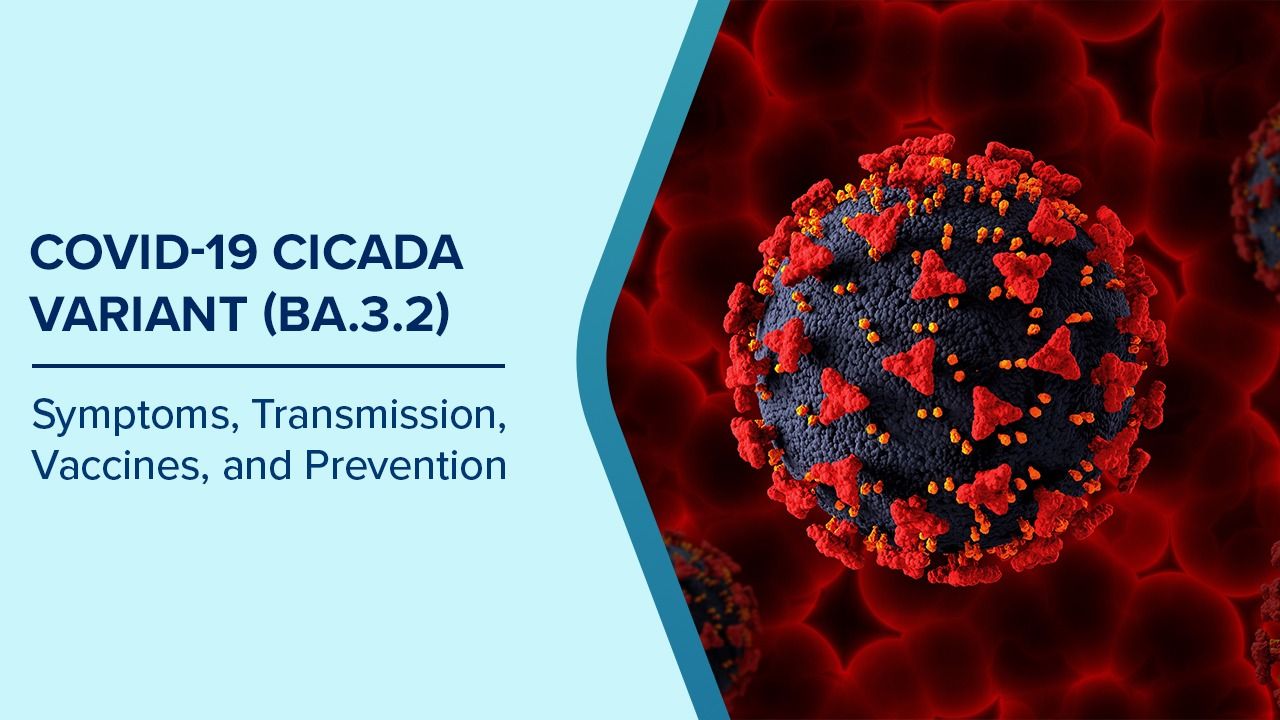
Call Us+91 926 888 0303COVID-19 Cicada Variant (BA.3.2): Symptoms, Transmission, Vaccines, and Prevention
By Dr. Meenakshi Jain in Internal Medicine
Mar 31 , 2026
3

As COVID-19 continues to evolve, scientists have identified a new subvariant, the COVID-19 Cicada variant (BA.3.2). This variant has been detected in multiple countries and is currently classified as a Variant Under Monitoring (VUM).
Known for its high number of mutations in the spike protein, BA.3.2 is being closely studied for transmissibility, vaccine escape potential, and reinfection risk. Understanding the Cicada variant is critical for staying safe during ongoing COVID waves.
What Is the COVID-19 Cicada Variant (BA.3.2)?
The Cicada variant (BA.3.2) is a sublineage of the Omicron SARS-CoV-2 variants. It carries numerous mutations in the spike protein, the key structure that allows the virus to infect human cells.
Experts are monitoring BA.3.2 because these mutations may influence:
- Immune escape from previous infection or vaccination
- Vaccine effectiveness
- Transmissibility
Despite these mutations, current data shows that BA.3.2 does not cause significantly more severe disease than earlier Omicron variants.
Why It’s Called the “Cicada” Variant
The nickname “Cicada” reflects the variant’s delayed emergence. Much like cicada insects that appear after years underground, BA.3.2 emerged after circulating quietly in older virus lineages. This periodic re-emergence caught the attention of scientists and media alike.
Read more: Coronavirus (COVID-19): All You Need to Know
Symptoms of the COVID-19 Cicada Variant
Current evidence shows that BA.3.2 symptoms are similar to those of other Omicron subvariants, mainly affecting the upper respiratory system. Common symptoms include:
- Fever or chills
- Cough
- Sore throat
- Runny or blocked nose
- Fatigue and body aches
- Headache
- Loss of taste or smell (less common than previous variants)
How Contagious Is the Cicada Variant?
BA.3.2 primarily spreads through respiratory droplets and aerosols, as do other COVID-19 variants. Early reports indicate moderate transmissibility, but not necessarily higher than dominant Omicron strains.
Vaccine Effectiveness Against BA.3.2
Current vaccines remain highly effective at preventing severe illness, hospitalisation, and death from BA.3.2.
- Bivalent and updated COVID boosters improve protection against this variant
- Vaccines reduce viral load and transmission risk
- Antiviral treatments (e.g., Paxlovid) remain effective for high-risk patients
Prevention and Safety Measures
Even with new variants like BA.3.2, basic COVID-19 prevention strategies are still effective:
- Stay up to date with vaccinations and boosters
- Wear high-filtration masks (N95/KF94) in crowded indoor spaces
- Maintain hand hygiene and surface cleaning
- Improve indoor ventilation
- Stay home if symptomatic or after exposure
Read more: JN.1 Variant of COVID-19: Symptoms, Treatment and Prevention
When to Seek Medical Care
Seek immediate care if you experience:
- Shortness of breath
- Chest pain or pressure
- Confusion or drowsiness
- Severe or worsening symptoms
High-risk individuals should consult healthcare providers early for antiviral therapy.
Conclusion
The COVID-19 Cicada variant (BA.3.2) is a monitored subvariant of SARS-CoV-2 with multiple mutations in the spike protein. Vaccines, boosters, masks, and antiviral therapies remain the most effective tools for protection.
Staying informed, practising prevention, and seeking early treatment are essential strategies for navigating the evolving COVID-19 landscape in 2026.
Frequently Asked Questions
Can BA.3.2 cause reinfection?
Yes, reinfection is possible, especially if immunity has waned. Reinfections are generally milder in vaccinated individuals.
Are standard COVID tests accurate for BA.3.2?
Yes, PCR and rapid antigen tests remain reliable for detecting BA.3.2.
Can children get BA.3.2?
Children can be infected, but outcomes are generally mild to moderate, similar to other Omicron strains.
Does BA.3.2 increase the risk of long COVID?
Long COVID may occur, but vaccination reduces the risk of persistent symptoms.
How is BA.3.2 monitored globally?
Through genomic sequencing, wastewater surveillance, and clinical testing, helping track variant emergence and spread.
Written and Verified by:

Related Blogs


Dr. Vandana Boobna In Internal Medicine
Nov 08 , 2020 | 2 min read
Blogs by Doctor

Care Plan for Malaria: Effective Self-Care Tips and Recovery
Dr. Meenakshi Jain In Internal Medicine
Jun 05 , 2024 | 2 min read

Commit to Your Health: Take the Pledge for Better Health This Father’s Day
Dr. Meenakshi Jain In Internal Medicine
Jul 01 , 2024 | 2 min read
Most read Blogs


Related Blogs
Dr. Vandana Boobna In Internal Medicine
Nov 08 , 2020 | 2 min read
Blogs by Doctor
Care Plan for Malaria: Effective Self-Care Tips and Recovery
Dr. Meenakshi Jain In Internal Medicine
Jun 05 , 2024 | 2 min read
Commit to Your Health: Take the Pledge for Better Health This Father’s Day
Dr. Meenakshi Jain In Internal Medicine
Jul 01 , 2024 | 2 min read
Most read Blogs