 WhatsApp Us (24/7)
 +91 926 888 0303 (24/7)


To Book an Appointment
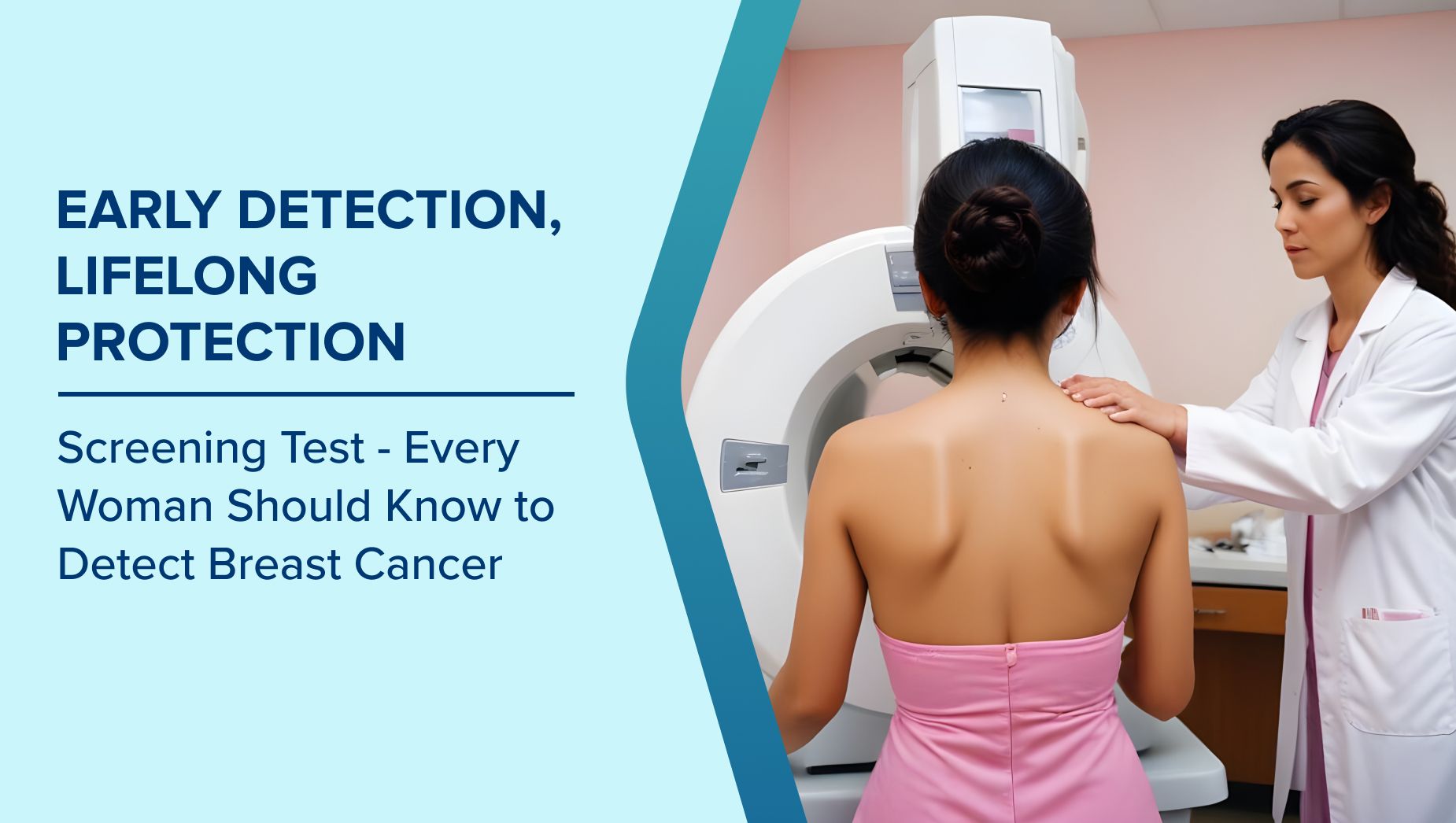
Call Us+91 926 888 0303Early Detection, Lifelong Protection: Essential Screening Tests Every Woman Should Know to Detect Breast Cancer Early
By Dr. Waseem Abbas in Medical Oncology , Paediatric (Ped) Oncology , Cancer Care / Oncology , Breast Cancer , Gastrointestinal & Hepatobiliary Oncology
Jan 06 , 2026 | 5 min read

Breast cancer remains one of the most common cancers affecting women worldwide. While hearing the term can feel challenging, there is one powerful truth that offers hope: early detection saves lives.
When found in its early stages, breast cancer is highly treatable, often curable, and associated with significantly better survival rates. The key lies in regular screening, awareness of your body, and timely consultation with a doctor.
Understanding which screening tests to take, when to take them, and how they work empowers women to protect their health for a lifetime.
Understanding Breast Cancer Screening: A Lifesaving Routine
Breast cancer screening tests are designed to detect cancer before symptoms appear. These tests help identify abnormal growths or early changes in breast tissue, giving doctors a chance to act long before the disease progresses.
Regular screening does not just help in detection, it also builds awareness, encouraging women to stay proactive about their health.
Mammogram Test for Breast Cancer: The Gold Standard for Early Detection
A mammogram is an X-ray image of the breast and remains the most reliable test for detecting breast cancer early, sometimes up to two years before a lump can be felt.
How It Works
- The breast is gently compressed between two plates to capture detailed X-ray images.
- These images help identify tiny calcium deposits or abnormal tissue patterns.
Ideal Age and Frequency
- Most women are advised to begin annual or biennial mammograms at age 40.
- Those with a family history or other breast cancer risk factors may start earlier based on medical advice.
Why It Matters
Regular mammograms can reduce the risk of dying from breast cancer by catching it early when treatment is most effective.
Breast Ultrasound: Clarity Beyond the Mammogram
A breast ultrasound uses sound waves to create images of breast tissue. It is often recommended when mammogram results are unclear or for women with dense breast tissue, where X-rays may not provide enough detail.
Benefits of Breast Ultrasound
- Helps distinguish between solid lumps and fluid-filled cysts.
- Provides extra detail for younger women whose dense tissue can make mammogram readings difficult.
- Does not involve radiation exposure.
Best Practice
While ultrasound is not a replacement for mammography, it is most effective as a complementary tool for precise diagnosis.
MRI for Breast Cancer Screening: Advanced Imaging for High-Risk Women
A breast MRI (Magnetic Resonance Imaging) uses magnetic fields to produce detailed 3D images of the breast. It is often recommended for women who carry BRCA1 or BRCA2 gene mutations, or those with a strong family history of breast or ovarian cancer.
Advantages
- Detects cancers that mammograms or ultrasounds might miss.
- Particularly effective in women with dense breasts or previous breast surgeries.
When It’s Used
MRI screening is typically performed once a year alongside mammograms for high-risk individuals.
Breast Self-Examination: Awareness Starts with You
A breast self-exam (BSE) is a simple, no-cost habit every woman can practice at home. It involves visually inspecting and physically feeling the breasts to check for any unusual changes.
How to Do It
- Examine your breasts in a mirror for any visible changes in shape, size, or skin texture.
- Use the pads of your fingers to feel for lumps or thickened tissue in circular motions.
- Check both lying down and standing up, including underarm areas.
Why It’s Important
Many women detect the first signs of breast cancer themselves. Self-awareness builds confidence and helps you recognise when something feels different.
Tip: Do your self-exam once a month, ideally a few days after your menstrual period ends, when breasts are least tender.
Genetic Testing for Breast Cancer: Understanding Your Hereditary Risk
Around 5–10% of breast cancers are linked to inherited genetic mutations. The best-known are the BRCA1 and BRCA2 genes. A genetic test analyses your DNA to identify these mutations and estimate your lifetime breast cancer risk.
Who Should Consider Genetic Testing
- Those with a strong family history of breast, ovarian, or prostate cancer.
- Individuals with multiple relatives diagnosed at a young age.
- Anyone from a family known to carry BRCA mutations.
Why It’s Valuable
Genetic testing empowers women to take preventive steps such as increased screening, lifestyle adjustments, or risk-reducing strategies in consultation with a doctor.
Clinical Breast Examination: A Professional’s Insight
A clinical breast exam (CBE) is a physical examination performed by a healthcare provider. Doctors use their hands to check for lumps or other changes that may not be visible on imaging tests.
When to Get It
- Every 1–3 years for women in their 20s and 30s.
- Every year for women over 40.
Combining clinical exams with imaging enhances detection accuracy and offers a comprehensive breast health assessment.
When to See a Doctor: Warning Signs You Should Never Ignore
Even with regular screenings, it’s essential to stay alert to changes in your breasts. Consult a doctor immediately if you notice:
- A new lump or thickened area in the breast or underarm.
- Unexplained pain, redness, or swelling.
- Nipple discharge (especially bloody or clear fluid).
- Dimpling, puckering, or changes in breast shape or size.
Prompt evaluation can make all the difference between early and late detection.
Lifestyle and Prevention: Supporting Breast Health Every Day
While screening detects cancer early, lifestyle choices can also play a crucial role in prevention. Here are some evidence-based tips for supporting breast health:
- Eat a balanced diet rich in fruits, vegetables, and whole grains.
- Maintain a healthy weight to reduce hormonal imbalance.
- Exercise regularly to boost immunity and metabolism.
- Limit alcohol and avoid smoking.
- Manage stress with mindfulness or yoga.
Small, consistent habits can go a long way in protecting your body and mind.
Empowering Women with Knowledge and Action
Breast cancer awareness goes beyond just October campaigns — it’s a year-round commitment. Knowing your body, scheduling routine check-ups, and staying informed about available screening tests are powerful acts of self-care.
When women take charge of their health through awareness and early detection, lives are saved. The sooner you act, the stronger your chances for lifelong protection.
Conclusion
Breast cancer screening is not about fear, it’s about empowerment. With today’s advanced imaging tools, self-checks, and preventive strategies, every woman can take control of her breast health.
Early detection can be the difference between treatment and cure. Stay proactive, get screened regularly, and inspire others to do the same.
Frequently Asked Questions
Can young women develop breast cancer even without a family history?
Yes, although rare, breast cancer can occur at any age. Lifestyle factors, dense breast tissue, or hormonal influences may contribute even in the absence of a genetic history.
How often should women with dense breasts get screened?
Women with dense breast tissue may need annual mammograms and additional ultrasounds to achieve clearer results.
What role do genetics play in breast cancer risk?
Inherited mutations like BRCA1 and BRCA2 significantly raise risk, but most cases are not genetic and result from lifestyle and hormonal factors.
Is it safe to get regular mammograms?
Yes, the radiation dose is extremely low, and the benefits of early detection far outweigh the minimal exposure.
How should I prepare for my first breast screening test?
Avoid deodorants or powders before a mammogram, wear a two-piece outfit for comfort, and inform your provider about any previous breast procedures.
Written and Verified by:

Dr. Waseem Abbas Exp: 16 Yr
Medical Oncology, Paediatric (Ped) Oncology, Cancer Care / Oncology, Uro-Oncology, Musculoskeletal Oncology, Breast Cancer, Thoracic Oncology, Gynecologic Oncology, Head & Neck Oncology, Neuro Oncology, Hematology Oncology, Gastrointestinal & Hepatobiliary Oncology
Meet the doctorRelated Blogs


Dr. Meenu Walia In Medical Oncology , Cancer Care / Oncology
Aug 02 , 2016 | 4 min read
Blogs by Doctor

Innovative Therapies in Cancer
Dr. Waseem Abbas In Medical Oncology , Cancer Care / Oncology
Nov 08 , 2020 | 3 min read

A New Development: Cancer Vaccines
Dr. Waseem Abbas In Medical Oncology , Cancer Care / Oncology
Nov 08 , 2020 | 5 min read
Most read Blogs


Related Blogs
Dr. Meenu Walia In Medical Oncology , Cancer Care / Oncology
Aug 02 , 2016 | 4 min read
Blogs by Doctor
Innovative Therapies in Cancer
Dr. Waseem Abbas In Medical Oncology , Cancer Care / Oncology
Nov 08 , 2020 | 3 min read
A New Development: Cancer Vaccines
Dr. Waseem Abbas In Medical Oncology , Cancer Care / Oncology
Nov 08 , 2020 | 5 min read
Most read Blogs