 WhatsApp Us (24/7)
 +91 926 888 0303 (24/7)


To Book an Appointment
Call Us+91 926 888 0303What is Robotic Urological Surgery: Purpose, Benefits and Faster Recovery
By Medical Expert Team
May 05 , 2025 | 3 min read

When it comes to delicate procedures like urological surgeries, precision matters. Today, robotic-assisted surgery is revolutionising the way these procedures are performed—offering patients not just high-tech precision, but also the promise of faster healing, less pain, and a quicker return to daily life.
What Is Robotic Urological Surgery?
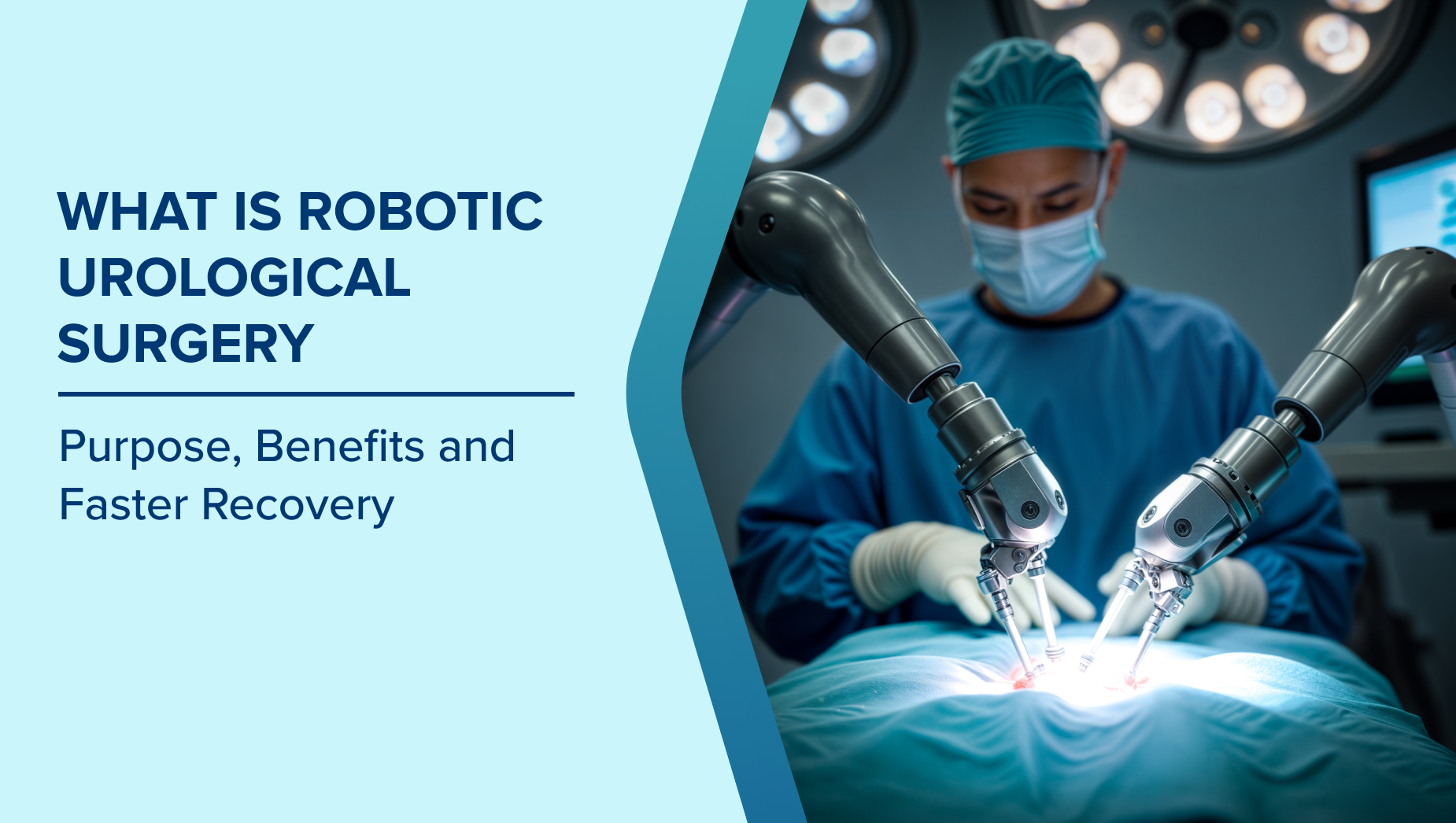
Robotic urological surgery doesn’t mean a robot is operating on you independently. Instead, it’s a highly advanced surgical system that allows the urologist to perform procedures with enhanced control and precision.
Using a console, the surgeon guides robotic arms equipped with surgical instruments. These robotic tools can rotate and bend in ways a human hand cannot—offering pinpoint accuracy even in tight spaces inside the body.
This approach is commonly used in procedures like:
- Prostatectomy (removal of the prostate)
- Partial nephrectomy (removal of part of the kidney)
- Ureteral reimplantation
- Pyeloplasty
- Bladder reconstruction
Precision That Protects What Matters Most
The urological system includes some of the most sensitive and functionally important structures in the body. Whether it’s preserving nerves during prostate surgery or sparing healthy tissue in kidney operations, surgical precision can greatly affect outcomes.
What You Gain
- Lower risk of damage to nearby nerves, vessels, or organs
- Better functional outcomes—especially in procedures involving the prostate, bladder or kidneys.
- Greater confidence in the success of your procedure
When every movement counts, robotic technology helps surgeons perform with a level of control that simply wasn’t possible before.
Smaller Cuts, Less Pain
One of the standout benefits of robotic-assisted surgery is how minimally invasive it is. The surgeon creates a few small keyhole-sized openings rather than making one large incision.
Why It Matters
- Less blood loss
- Minimal scarring
- Lower chances of infection
Smaller incisions lead to reduced post-operative pain, resulting in a lower need for pain medications and a faster return to normal comfort.
Shorter Hospital Stays
Most patients who undergo robotic urological surgeries can expect a much shorter hospital stay—often just one or two days, depending on the procedure.
How That Helps
- Less exposure to hospital-based infections
- Reduced overall medical costs
- More time to heal while staying comfortable at home
In many cases, patients are up and walking within hours of the surgery. That’s a major shift from traditional open surgery recovery timelines.
Quicker Recovery, Faster Return to Life
Nobody wants to spend weeks recovering from surgery. With robotic-assisted techniques, downtime is significantly reduced.
Expect
- Faster healing of surgical wounds
- Quick return to work or routine activities
- Less fatigue compared to traditional recovery
Patients often report feeling “back to themselves” sooner than expected, which is a big win when life doesn’t pause for health setbacks.
Enhanced Visualisation for the Surgeon
While this might sound like a behind-the-scenes benefit, it plays a big role in how well your surgery goes. Robotic systems provide a magnified, high‑definition, three‑dimensional view of the surgical field.
Why That’s a Game Changer
- Surgeons can identify and preserve important structures more clearly
- Precise tumour removal without harming nearby healthy tissues
- Greater accuracy even in complex or repeat surgeries
It’s like giving the surgeon a supercharged set of eyes and hands—helping them do their best work, which benefits you directly.
Peace of Mind with Modern Innovation
For many patients, choosing robotic urological surgery also comes with emotional comfort. Knowing that your care includes the latest, most precise tools available can provide reassurance—especially when facing a major procedure.
What You Feel
- Greater trust in the surgical
- Confidence in better recovery
- Peace of mind knowing you're not alone—your surgeon is backed by cutting-edge
Conclusion
Robotic urological surgery isn’t just a technological upgrade—it’s a shift toward smarter, safer, and more patient-friendly care. From reducing pain and hospital time to offering surgeons unmatched control, it’s changing what patients can expect from surgery.
If you're facing a urological procedure, ask your specialist about robotic options. In today’s world of modern medicine, precision and comfort don’t have to be a trade-off—they can go hand in hand.
Frequently Asked Questions
Will I be awake during robotic urological surgery?
No, all robotic urological surgeries are done under general anaesthesia. You’ll be fully asleep and feel nothing during the procedure.
Is robotic surgery suitable for all urological conditions?
While it's widely used, not all patients are ideal candidates. Your surgeon will evaluate factors like your overall health, condition type, and prior surgeries to decide.
Are robotic surgeries more expensive than traditional methods?
They can be, but many patients find that quicker recovery, lower risk of complications, and shorter hospital stays offer long-term value.
Will I have visible scars after robotic urological surgery?
Scars are minimal—typically small and often hidden in natural skin folds. Over time, they fade significantly compared to open surgery scars.
Can robotic urological surgery be repeated if needed in the future?
Yes, in many cases, the minimally invasive approach actually makes repeat surgeries easier and safer than traditional open procedures.
Related Blogs

Dr. Anant Kumar In Urology , Kidney Transplant , Uro-Oncology
Nov 08 , 2020 | 8 min read

Dr. Shailendra Kumar Goel In Urology , Kidney Transplant , Uro-Oncology
Nov 08 , 2020 | 4 min read
Blogs by Doctor


What is Laser Prostate Surgery: Benefits, Recovery & Lifestyle Impact
Dr. Samit Chaturvedi In Urology , Kidney Transplant , Uro-Oncology , Robotic Surgery
May 05 , 2025 | 4 min read
Most read Blogs


Related Blogs
Dr. Anant Kumar In Urology , Kidney Transplant , Uro-Oncology
Nov 08 , 2020 | 8 min read
Dr. Shailendra Kumar Goel In Urology , Kidney Transplant , Uro-Oncology
Nov 08 , 2020 | 4 min read
Blogs by Doctor
What is Laser Prostate Surgery: Benefits, Recovery & Lifestyle Impact
Dr. Samit Chaturvedi In Urology , Kidney Transplant , Uro-Oncology , Robotic Surgery
May 05 , 2025 | 4 min read
Most read Blogs