 WhatsApp Us (24/7)
 +91 926 888 0303 (24/7)


To Book an Appointment
Call Us+91 926 888 0303Robotic Revolution in Women’s Health: Transforming Benign Gynaecological Surgeries with Precision and Compassion
By Dr. Anuradha Kapur in Obstetrics And Gynaecology , Robotic Surgery , Gynaecologic Laparoscopy
Dec 05 , 2025 | 7 min read

Women’s health is witnessing a transformation like never before. For decades, gynaecological surgeries often meant long recovery times, visible scars, and a significant emotional toll. Today, robotic surgery is changing that narrative. It brings a blend of advanced technology and surgical precision that is reshaping the way benign gynaecological conditions are treated.
Conditions such as uterine fibroids, endometriosis, adenomyosis, and ovarian cysts may not be cancerous, but they can severely affect a woman’s quality of life. Pain, heavy bleeding, fatigue, and fertility concerns often accompany these disorders, leaving many women searching for safer and less invasive treatment options.
Understanding Benign Gynaecological Conditions
Benign gynaecological conditions are non-cancerous disorders that affect the uterus, ovaries, or pelvic region. Although not life-threatening, they can lead to chronic pain, abnormal bleeding, and fertility challenges if not treated appropriately.
Uterine Fibroids
Fibroids are muscular growths in the uterus that can vary in size and number. They often cause heavy menstrual bleeding, pelvic pain, and pressure symptoms like frequent urination.
Endometriosis
This condition occurs when tissue similar to the uterine lining grows outside the uterus, often on the ovaries or fallopian tubes. It causes severe menstrual cramps, pain during intercourse, and sometimes infertility.
Adenomyosis
Adenomyosis happens when the inner lining of the uterus penetrates into its muscle wall, leading to heavy, painful periods and an enlarged uterus.
Ovarian Cysts
Ovarian cysts are fluid-filled sacs that can cause pain, bloating, or menstrual irregularities. Some cysts may require removal if they grow large or cause complications.
These conditions, while benign, often demand surgical intervention when medications and non-surgical therapies fail. This is where robotic surgery for women offers a significant advantage, providing accuracy and gentleness in every movement.
The Rise of Robotic Surgery in Women’s Health
The evolution of surgery in women’s health has been remarkable. From traditional open operations to laparoscopy, and now to robotics, every phase has brought new levels of safety and comfort.
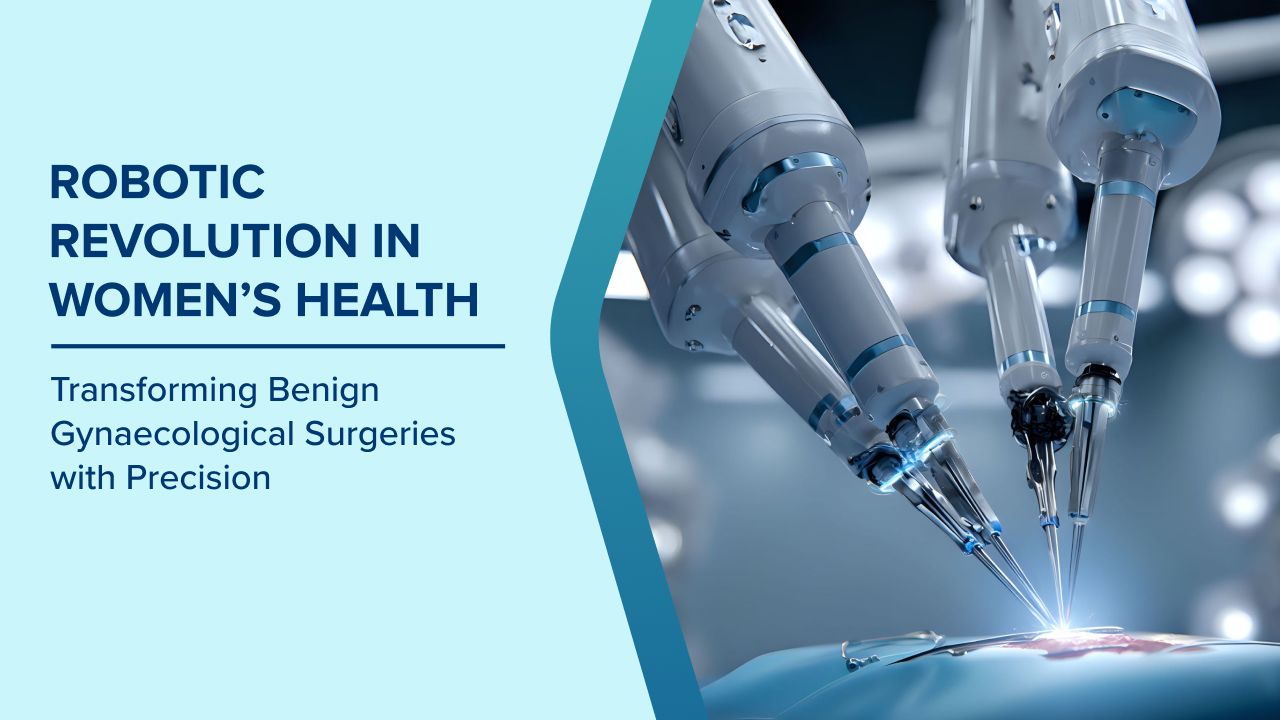
Robotic gynaecological surgery represents the latest leap in minimally invasive gynaecologic surgery. Using advanced robotic platforms such as the da Vinci robotic system, surgeons can perform complex procedures with unmatched accuracy. The system consists of robotic arms that hold surgical instruments and a high-definition camera, providing the surgeon with a magnified, three-dimensional view of the surgical field.
What makes robotic surgery revolutionary is its ability to combine technology with human expertise. The robot does not operate independently. The surgeon controls every move from a console, translating precise hand motions into delicate surgical actions inside the body. This enables unparalleled precision, reduced tissue damage, and a faster recovery for the patient.
Across the world, and increasingly in India, robotic surgery for benign gynaecological conditions has become the preferred approach for women who want effective treatment with less downtime.
How Robotic Surgery Works
The idea of robotic surgery may sound futuristic, but the process is quite straightforward.
During the procedure, a few small incisions are made in the abdomen through which thin instruments and a camera are inserted. The robotic system’s arms, guided by the surgeon, translate hand movements into ultra-fine motions within the patient’s body.
Here’s how it compares to other surgical techniques:
- Traditional open surgery involves a large incision, more bleeding, and a longer recovery.
- Laparoscopic surgery uses smaller incisions but offers limited flexibility in instrument movement.
- Robotic-assisted surgery provides enhanced precision, greater control, and better visualisation in tight spaces.
The surgeon sits comfortably at a console and views the surgical site in 3D high definition, magnified up to 10 times. This allows for meticulous dissection, suturing, and tissue handling that is nearly impossible with the naked eye.
Because of its minimally invasive nature, most patients experience far less pain and can resume normal activities much sooner than after traditional surgery.
Benefits of Robotic Surgery for Benign Gynaecological Conditions
Robotic surgery is redefining what it means to have a safe, gentle, and effective surgical experience. It offers a host of benefits that make it a preferred option for many women today.
Key Benefits Include:
- Smaller incisions and minimal scarring: The procedure utilises tiny cuts, resulting in less visible scarring and faster healing.
- Reduced blood loss: Advanced control and precision help minimise bleeding during surgery.
- Shorter hospital stay: Many women can return home within 24 to 48 hours after the operation.
- Lower risk of infection: Smaller wounds reduce the chances of post-operative infections.
- Faster recovery and early return to routine: Most patients resume work and normal activities within a few days.
- Higher surgical precision: The magnified 3D view enables surgeons to operate on delicate tissues with remarkable accuracy.
- Better fertility preservation: Robotic techniques help remove fibroids or endometrial tissue without damaging healthy reproductive structures.
Beyond the physical advantages, robotic-assisted surgery also enhances emotional well-being. Knowing that recovery will be quicker and less painful helps women approach surgery with greater confidence and peace of mind.
Robotic Procedures in Focus
Robotic technology is now applied to a variety of benign gynaecological surgeries, offering safer and more effective options for women at different stages of life.
Robotic Hysterectomy for Fibroids and Adenomyosis
A robotic hysterectomy involves removing the uterus through keyhole-sized incisions. It provides precise dissection with minimal trauma to surrounding tissues. For women suffering from fibroids or adenomyosis, this approach offers lasting relief from pain and bleeding with significantly shorter recovery time.
Robotic Myomectomy for Uterine Fibroids
A robotic myomectomy is designed for women who wish to preserve fertility. It allows the surgeon to remove fibroids while keeping the uterus intact. The precision of robotic instruments helps minimise blood loss and ensures stronger uterine repair, which is essential for future pregnancies.
Robotic Surgery for Endometriosis
In endometriosis robotic surgery, surgeons can remove endometrial tissue from complex areas such as the bowel, bladder, or ovaries without damaging nearby organs. This precision leads to better pain control and a lower risk of recurrence, improving overall quality of life.
Robotic Ovarian Cystectomy
For women with ovarian cysts, robotic cyst removal allows for delicate handling of the ovaries. Surgeons can remove cysts while preserving as much healthy tissue as possible, which is critical for women planning to conceive.
Each of these robotic-assisted surgeries provides women with safer alternatives, less discomfort, and a faster return to everyday life.
Post-Surgery Recovery and Lifestyle
Recovery after robotic gynaecological surgery is typically smooth and faster compared to conventional methods. Most women are able to walk within hours of surgery and return home within a day or two.
Post-operative tips for faster recovery:
- Follow your doctor’s advice on medications and activity levels.
- Maintain a balanced diet rich in protein, fibre, and hydration.
- Avoid heavy lifting for a few weeks.
- Practice gentle movement to prevent stiffness.
- Attend follow-up appointments to ensure proper healing.
Because robotic surgery causes less internal trauma, most patients experience minimal pain and require fewer pain medications. Many report feeling “back to normal” within a short period, both physically and emotionally.
The Future of Robotic Surgery in Gynaecology
The field of robotic surgery for women continues to evolve rapidly. Newer robotic platforms are becoming smaller, more precise, and even more intuitive. The integration of artificial intelligence, improved imaging, and augmented reality is set to enhance surgical planning and real-time decision-making.
In the coming years, robotics will likely expand to include more fertility-sparing and reconstructive procedures. The goal is not only to treat disease but to preserve quality of life, functionality, and future reproductive potential.
This ongoing innovation reflects a deeper shift in women’s healthcare, toward personalised, patient-centred treatment that combines cutting-edge science with compassionate care.
Conclusion
Robotic surgery is more than just a technological breakthrough. It represents a commitment to improving women’s health through safer, more precise, and less invasive solutions. For women facing benign gynaecological conditions, it offers a way to heal faster, maintain fertility, and return to life’s normal rhythm with renewed confidence.
By blending compassion with innovation, robotic gynaecological surgery stands at the forefront of a new era in women’s healthcare, one where every incision is smaller, every movement is more precise, and every outcome is guided by care.
If you are exploring treatment options for conditions like fibroids, endometriosis, or ovarian cysts, talk to a gynaecologist who specialises in robotic-assisted surgery. It could be the step that transforms your recovery and restores your well-being.
Frequently Asked Questions
Who is a suitable candidate for robotic gynaecological surgery?
Women diagnosed with fibroids, endometriosis, or other benign pelvic conditions that have not improved with medication may be good candidates. Suitability is determined after a detailed evaluation by a gynaecologist.
How soon can patients return to work after robotic surgery?
Most patients return to light work within one to two weeks, depending on the type of surgery and individual recovery speed.
Is robotic surgery safe for women planning future pregnancies?
Yes, procedures such as robotic myomectomy and robotic cystectomy are fertility-preserving and designed to protect reproductive organs.
What questions should I ask my surgeon before robotic surgery?
Ask about their experience, success rates, recovery expectations, and whether robotic surgery is the best approach for your condition. Understanding these details helps you make an informed decision.
Written and Verified by:

Related Blogs

Dr. Manju Khemani In Obstetrics And Gynaecology
Oct 27 , 2020 | 3 min read

Dr. Neera Aggarwal In Obstetrics And Gynaecology , Nutrition And Dietetics
Nov 07 , 2020 | 7 min read
Blogs by Doctor

Understanding Polycystic Ovary Syndrome (PCOS)
Dr. Anuradha Kapur In Obstetrics And Gynaecology
Apr 30 , 2019 | 2 min read

Abnormal Uterine Bleeding (AUB)
Dr. Anuradha Kapur In Obstetrics And Gynaecology
Jun 01 , 2020 | 1 min read
Most read Blogs

Related Blogs
Dr. Manju Khemani In Obstetrics And Gynaecology
Oct 27 , 2020 | 3 min read
Dr. Neera Aggarwal In Obstetrics And Gynaecology , Nutrition And Dietetics
Nov 07 , 2020 | 7 min read
Blogs by Doctor
Understanding Polycystic Ovary Syndrome (PCOS)
Dr. Anuradha Kapur In Obstetrics And Gynaecology
Apr 30 , 2019 | 2 min read
Abnormal Uterine Bleeding (AUB)
Dr. Anuradha Kapur In Obstetrics And Gynaecology
Jun 01 , 2020 | 1 min read
Most read Blogs