 WhatsApp Us (24/7)
 +91 926 888 0303 (24/7)


To Book an Appointment
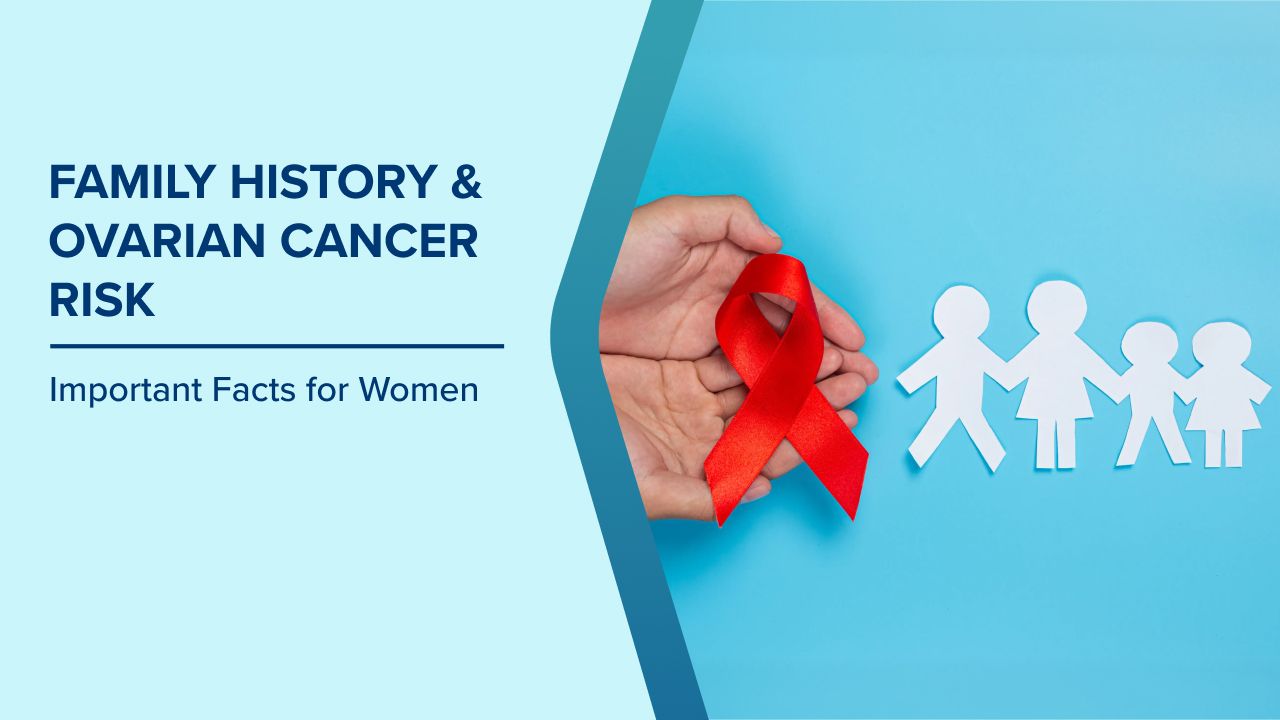
Call Us+91 926 888 0303Family History & Ovarian Cancer Risk: Important Facts for Women
By Dr Swati Mittal in Surgical Oncology , Cancer Care / Oncology , Gynecologic Oncology
Jun 01 , 2026

Hearing that ovarian cancer "runs in the family" can create a great deal of uncertainty. Many women are left wondering whether their own risk is higher, whether they should be screened earlier, or whether certain family patterns should be taken more seriously.
Family history does not automatically mean a woman will develop ovarian cancer. At the same time, ignoring inherited risk can delay important conversations about monitoring, genetic counselling, and preventive care.
Understanding how family history influences ovarian cancer risk helps women make informed decisions without unnecessary fear. Knowing which relatives matter, what patterns doctors look for, and when to seek medical advice can bring greater clarity and confidence about long-term health.
Family History Does Not Always Mean Immediate Risk
One of the most common misconceptions is that having a relative with ovarian cancer guarantees the same diagnosis in future generations. In reality, inherited risk is more complex.
Doctors usually assess:
- Which family member had cancer
- The age at diagnosis
- Whether multiple relatives were affected
- The types of cancers present within the family
A single distant relative with ovarian cancer may not carry the same significance as several close relatives diagnosed at younger ages.
The goal is not to create panic, but to identify patterns that may suggest a stronger inherited link.
Which Family Members Matter Most?
When discussing ovarian cancer risk, healthcare providers often pay closest attention to first-degree relatives.
These include:
- Mother
- Sister
- Daughter
Cancer history in second-degree relatives can also be relevant, particularly when several family members are involved.
These include:
- Grandmother
- Aunt
- Niece
Patterns on both the maternal and paternal side matter. Many women mistakenly focus only on their mother's family history, but inherited cancer-related gene changes can come from either side of the family.
Why Some Women With Family History Never Develop Ovarian Cancer
Inherited risk does not work like certainty. Even in families with known genetic risk, some women may never develop ovarian cancer.
This happens because:
- Genes are only one part of the overall risk
- Lifestyle and reproductive factors may also influence health
- Not every inherited gene change behaves the same way
- Individual risk levels can vary widely within the same family
Understanding this distinction can help reduce unnecessary fear while still encouraging appropriate monitoring.
Family History Sometimes Becomes Clear Only Later
Many women only begin connecting family patterns after speaking openly with relatives or reviewing family medical history more carefully.
Certain details are commonly overlooked, including:
- Relatives diagnosed many years ago
- Cancers described vaguely as "women's cancer"
- Family members who passed away without clear diagnoses
- Relatives who avoided discussing health conditions
These gaps can make inherited patterns harder to recognise initially.
Having conversations with family members about medical history can provide helpful information for future healthcare planning.
When Genetic Counselling May Be Recommended
Not every woman with a family history of cancer requires genetic testing. However, some situations may prompt doctors to recommend further assessment.
This may include:
- Multiple relatives with ovarian or breast cancer
- Cancer diagnosed at younger ages
- Several generations affected
- A known inherited gene change within the family
Genetic counselling helps women understand:
- Whether testing may be appropriate
- What the results could mean
- How findings may affect future monitoring or treatment decisions
The process is intended to provide clarity and support rather than pressure.
Why Routine Health Conversations Matter
Many women postpone conversations about ovarian cancer risk until later adulthood. However, family history discussions can be helpful much earlier.
Earlier awareness may support:
- Better understanding of inherited risk
- Personalised healthcare planning
- Earlier monitoring when appropriate
- Informed reproductive decisions for some women
This does not mean aggressive screening is needed at a young age for everyone. It simply allows healthcare decisions to be tailored more thoughtfully over time.
Small Details in Family History Can Be Significant
Sometimes, seemingly unrelated cancer histories within a family may still be relevant.
Doctors may ask about:
- Pancreatic cancer
- Prostate cancer
- Colon cancer
- Certain rare cancers
This broader family picture helps identify possible inherited cancer patterns that may otherwise be missed.
For this reason, gathering a detailed family medical history can be more valuable than many people realise.
Lifestyle Still Matters, Even With Genetic Risk
A family history of ovarian cancer does not mean lifestyle becomes irrelevant.
General health habits continue to play an important role in overall well-being, including:
- Maintaining a healthy weight
- Staying physically active
- Managing long-term stress
- Attending regular medical appointments
- Avoiding smoking
While lifestyle changes cannot eliminate inherited risk, they support overall health and may help women feel more proactive rather than powerless.
Supporting Family Conversations Around Cancer History
Discussions about cancer within families are not always easy.
Helpful approaches include:
- Starting conversations gently
- Asking about age at diagnosis if known
- Keeping written records of family history
- Updating information over time
These discussions can benefit not only one person, but future generations within the family as well.
Read More: What is Ovarian Cancer: Symptoms, Risk & Early Detection
Conclusion
Family history can influence ovarian cancer risk, but it does not define a woman's future with certainty. Understanding which family patterns matter, recognising inherited risk factors, and having open healthcare conversations can help women approach the topic with greater clarity and less fear.
Rather than focusing only on worst-case scenarios, the goal should be informed awareness, appropriate guidance, and long-term health planning. Even small details within family history can provide valuable insight and support more personalised care over time.
FAQs
1. Should I be concerned if only one relative had ovarian cancer?
Not necessarily. The level of concern depends on factors, such as how closely related they were, their age at diagnosis, and whether other cancers are present in the family history.
2. Can ovarian cancer risk come from my father's side of the family?
Yes, inherited cancer-related gene changes can be passed down from either the maternal or paternal side.
3. If genetic testing is negative, does that mean there is no ovarian cancer risk?
No, a negative test may reduce concern about certain inherited risks, but it does not completely eliminate the possibility of ovarian cancer.
4. Should younger women discuss family history with their gynaecologist?
Yes, sharing family history early helps healthcare providers understand possible inherited risks and guide future care appropriately.
5. What if I do not know my complete family medical history?
Provide whatever information you can. Even partial family history details may still help doctors assess patterns and guide further discussions.
Written and Verified by:

Related Blogs

Dr. S. VEDA PADMA PRIYA In Surgical Oncology , Cancer Care / Oncology
May 16 , 2016 | 2 min read

Dr. Kanika Batra Modi In Surgical Oncology , Cancer Care / Oncology
May 26 , 2016 | 4 min read
Blogs by Doctor
Most read Blogs


Related Blogs
Dr. S. VEDA PADMA PRIYA In Surgical Oncology , Cancer Care / Oncology
May 16 , 2016 | 2 min read
Dr. Kanika Batra Modi In Surgical Oncology , Cancer Care / Oncology
May 26 , 2016 | 4 min read
Blogs by Doctor
Most read Blogs