 WhatsApp Us (24/7)
 +91 926 888 0303 (24/7)


To Book an Appointment
Call Us+91 926 888 0303MASLD in Young Adults: Risks & Prevention
By Dr. Sanjiv Saigal in Gastroenterology, Hepatology & Endoscopy , Liver Transplant and Biliary Sciences
Apr 23 , 2026

Liver diseases are increasingly being detected in young individuals today. One of the major reasons behind this trend is the rising incidence of fatty liver disease, now medically referred to as Metabolic Dysfunction-Associated Steatotic Liver Disease (MASLD). Over the past decade, significant lifestyle changes, especially in urban settings like Delhi, have contributed to this shift. Sedentary behaviour, unhealthy dietary patterns, and rising metabolic disorders are making MASLD a growing concern among adolescents and young adults.
What Is MASLD?
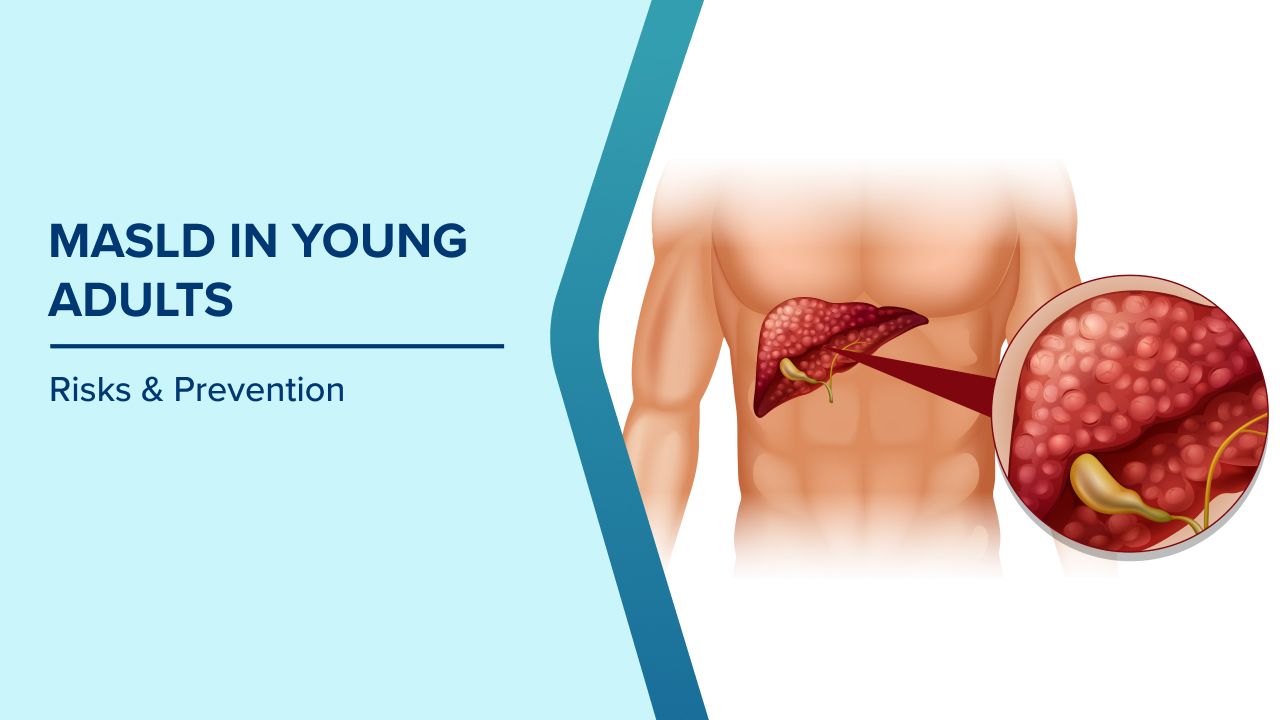
MASLD (earlier known as non-alcoholic fatty liver disease) refers to the accumulation of fat in the liver in people who have metabolic risk factors such as:
● Obesity
● Type 2 diabetes
● Abnormal cholesterol levels (dyslipidemia)
While early MASLD may appear harmless, it is not always benign. In some individuals, it can progress silently from simple fat accumulation to:
● Liver inflammation (steatohepatitis)
● Fibrosis (scarring of liver tissue)
● Cirrhosis (advanced liver damage)
If left unaddressed, this progression can significantly affect liver function over time, making MASLD a silent but serious metabolic liver disease.
Is MASLD on the Rise in India and Delhi?
The answer is clearly yes.
India is currently facing a significant burden of MASLD, with studies suggesting that a large portion of the population may be affected, depending on the presence of risk factors such as obesity, diabetes, and unhealthy lifestyle habits. Overall, research indicates that fatty liver disease has become increasingly common in the country and is now seen across different age groups.
In metropolitan cities like Delhi, the situation appears more concerning, with a rising number of cases being reported, especially among younger individuals. This trend highlights MASLD as one of the most frequently encountered liver conditions in urban India today.
Why Is MASLD Increasing Among Young People in Delhi?
Several lifestyle and metabolic factors are contributing to this worrying trend:
Sedentary Lifestyle
Urban youth spend long hours sitting, whether in offices, classrooms, or in front of screens. Low physical activity significantly reduces fat metabolism, leading to increased liver fat deposition.
Unhealthy Dietary Habits
Modern diets are often rich in:
● Processed foods
● Sugary beverages
● Refined carbohydrates
● Fast food
These dietary patterns promote hepatic fat accumulation and worsen insulin resistance.
Rising Obesity and Belly Fat
India is witnessing increasing rates of young-onset obesity, especially abdominal (central) obesity. This is closely linked to insulin resistance, a key driver of MASLD.
Early-Onset Diabetes and Metabolic Syndrome
Type 2 diabetes is increasingly being diagnosed at younger ages than before. A significant proportion of individuals with diabetes also show evidence of fatty liver disease, highlighting a strong link between blood sugar imbalance and liver fat accumulation. This connection reflects how closely liver health is tied to overall metabolic health.
“Lean MASLD” in Indians
Unlike Western populations, Indians may develop fatty liver even with normal body weight. This is due to:
● Genetic predisposition
● Higher visceral fat (internal fat around organs)
This makes MASLD less visible but equally dangerous.
Stress, Sleep, and Lifestyle Imbalance
Chronic stress, poor sleep quality, and irregular eating habits, common among urban professionals and students, further worsen metabolic health and contribute to liver fat accumulation.
Why MASLD Should Not Be Ignored
MASLD is not just “fat in the liver.” It is a progressive metabolic disease. If not addressed, it can lead to:
● Liver inflammation
● Permanent scarring (fibrosis)
● Liver cirrhosis
● Increased risk of liver cancer
Globally, MASLD-related complications are now among the leading causes of liver transplantation.
Additionally, MASLD is strongly associated with cardiovascular disease, which is the most common cause of death in affected individuals. This makes it a systemic health concern, not just a liver condition.
MASLD in Young Adults: A Growing Urban Health Challenge
MASLD is no longer limited to older or overweight individuals. It is now recognised as a modern lifestyle-related metabolic disorder, increasingly affecting teenagers, young professionals, and urban populations in cities like Delhi.
This shift reflects broader lifestyle changes, including reduced physical activity, high-calorie diets, and increased metabolic stress at younger ages.
Can MASLD Be Prevented or Reversed?
The encouraging aspect of MASLD is that early stages are both preventable and reversible.
The liver has a remarkable ability to regenerate, especially when lifestyle changes are introduced early. Key preventive strategies include:
● Regular physical activity (exercise, walking, sports)
● Maintaining a healthy body weight
● Reducing intake of sugar, processed, and high-fat foods
● Avoiding sedentary behaviour for long hours
● Early screening in high-risk individuals (obesity, diabetes, family history)
Even modest lifestyle changes can significantly reduce liver fat and improve overall metabolic health.
Conclusion
MASLD is emerging as a silent but rapidly growing liver health concern among young people in Delhi and across India. Driven largely by modern lifestyle habits and metabolic disorders, it often develops silently but can have serious long-term consequences if ignored.
However, the key message is reassuring: early-stage MASLD is reversible. With timely awareness, lifestyle correction, and appropriate medical guidance, individuals can restore liver health and prevent disease progression.
The earlier we act, the better the outcome, because the liver, when supported correctly, has an extraordinary capacity to heal itself.
Written and Verified by:

Related Blogs

Dr. Nivedita Pandey In Gastroenterology, Hepatology & Endoscopy , Liver Transplant and Biliary Sciences
Nov 07 , 2020 | 2 min read

Dr. Nivedita Pandey In Gastroenterology, Hepatology & Endoscopy , Liver Transplant and Biliary Sciences
Nov 07 , 2020 | 2 min read
Blogs by Doctor

FAQ on Non-Alcoholic Fatty Liver Disease (NAFLD)
Dr. Sanjiv Saigal In Liver Transplant and Biliary Sciences
Aug 26 , 2021 | 4 min read
Alcohol and Liver: Myths and Facts
Dr. Sanjiv Saigal In Liver Transplant and Biliary Sciences
Sep 09 , 2021 | 3 min read
Most read Blogs


Related Blogs
Dr. Nivedita Pandey In Gastroenterology, Hepatology & Endoscopy , Liver Transplant and Biliary Sciences
Nov 07 , 2020 | 2 min read
Dr. Nivedita Pandey In Gastroenterology, Hepatology & Endoscopy , Liver Transplant and Biliary Sciences
Nov 07 , 2020 | 2 min read
Blogs by Doctor
FAQ on Non-Alcoholic Fatty Liver Disease (NAFLD)
Dr. Sanjiv Saigal In Liver Transplant and Biliary Sciences
Aug 26 , 2021 | 4 min read
Alcohol and Liver: Myths and Facts
Dr. Sanjiv Saigal In Liver Transplant and Biliary Sciences
Sep 09 , 2021 | 3 min read
Most read Blogs