 WhatsApp Us (24/7)
 +91 926 888 0303 (24/7)


To Book an Appointment
Call Us+91 926 888 0303Robotic Precision in Urology: How Technology is Transforming Patient Care
By Dr. Vimal Dassi in Urology , Kidney Transplant , Uro-Oncology , Robotic Surgery
Jan 05 , 2026 | 2 min read

Urology focuses on the urinary tract, bladder, prostate, and kidneys—organs that are essential for removing waste, balancing fluids, and maintaining overall health. However, these structures lie deep within the body, surrounded by delicate nerves and blood vessels, making surgery challenging.
Over the past two decades, robotic-assisted surgery has reshaped the field of urology. This technology allows specialists to perform complex procedures with enhanced accuracy, improved safety, and fewer side effects. Although the word “robotic” may sound like the machine is operating independently, that is not the case. Every movement is controlled entirely by a trained surgeon, with technology simply amplifying precision and control.
How Robotic Assistance Works
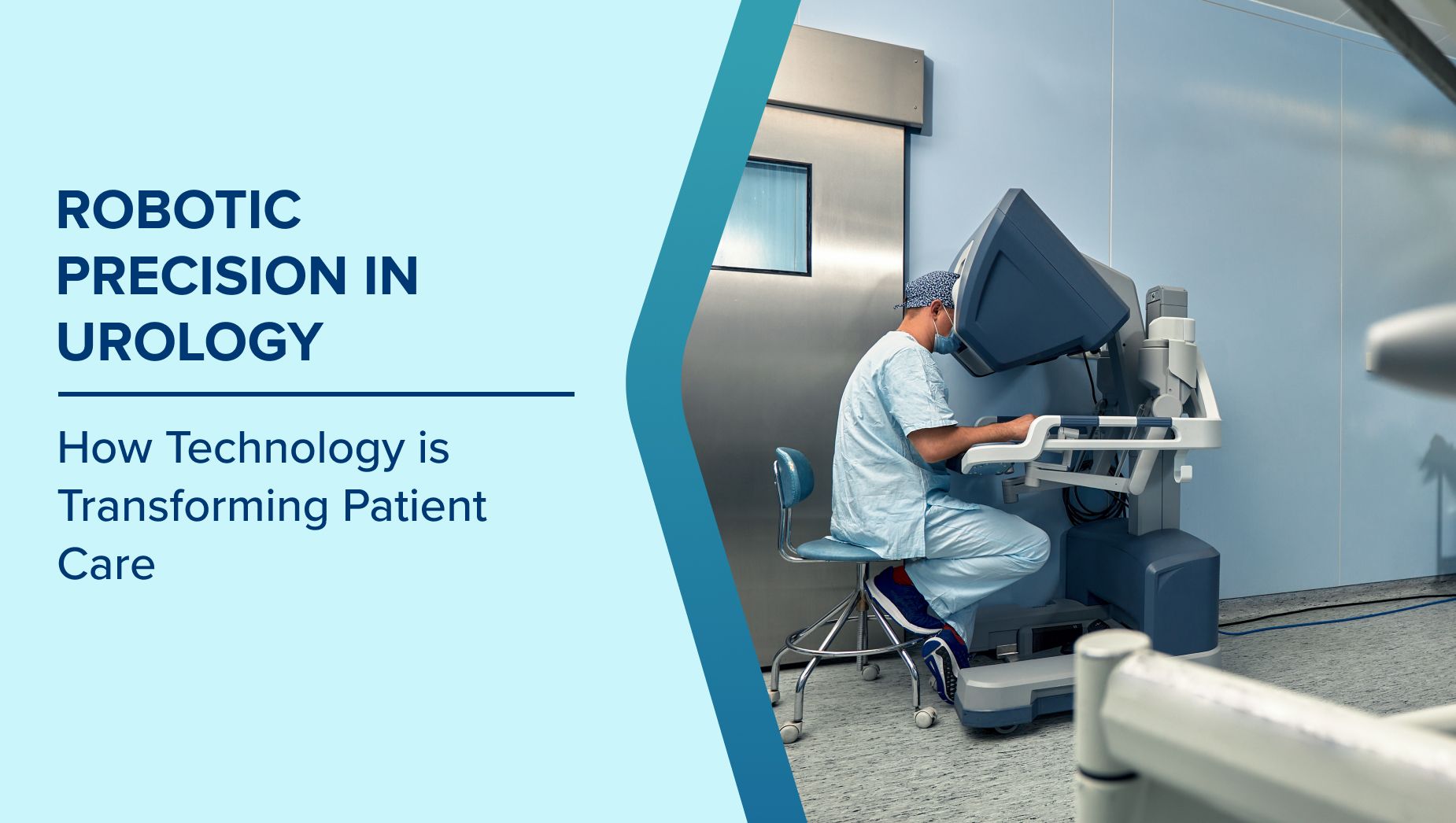
During robotic-assisted surgery, the surgeon sits at a console and views the surgical area through a magnified, high-definition 3D display. Hand controls and foot pedals guide slim, flexible instruments that move far more freely than the human hand. The system eliminates natural hand tremors and transforms the surgeon’s motions into highly precise actions.
This level of precision is particularly important in urology. Sensitive nerves and vessels responsible for bladder control, sexual function, and kidney performance lie close to the surgical site. Protecting them is crucial, and robotic systems make this far more achievable.
Where Robotic Surgery Makes a Difference in Urology
Robotic platforms are now used across a wide range of urological procedures, including:
- Prostate surgery to remove cancer while preserving nearby nerves
- Bladder procedures, including tumour removal and reconstructive surgeries
- Kidney surgeries, such as tumour removal or correction of urinary tract blockages
- Ureteral repairs, where accuracy is vital to restore normal urine flow
- Uro-oncology surgeries for cancers of the prostate, kidney, bladder, and urinary tract
- Kidney transplantation, including donor nephrectomy in select cases, allowing smaller incisions and quicker recovery
In each of these areas, robotic-assisted surgery offers smaller incisions, greater precision, and improved protection of surrounding structures compared with traditional open surgery.
Benefits of Robotic Surgery for Patients
Patients often experience several advantages when undergoing robotic-assisted urological procedures:
- Less Pain and Discomfort: Small incisions and minimal tissue disruption usually lead to reduced post-operative pain.
- Shorter Hospital Stay: Many patients return home sooner because the procedure is less invasive.
- Faster Recovery: Quicker healing allows people to resume work and normal activities earlier.
- Better Functional Outcomes: In surgeries involving the prostate or bladder, nerve preservation is vital, and robotic precision often improves the chances of maintaining normal function.
While these benefits are common, the final outcome always depends on the patient’s overall health, the complexity of the condition, and the expertise of the surgical team.
Robotics Enhances Skill but Does Not Replace It
Despite common assumptions, robotic surgery is not automated. The system cannot make decisions or perform movements on its own. It is a tool that amplifies the surgeon’s abilities, making fine, controlled movements possible even in tight spaces.
As technology continues to advance, the role of robotics in urology is expected to grow. Future developments aim to enhance imaging, refine instruments, and introduce artificial intelligence to support planning and decision-making. All of these innovations aim to provide safer procedures and better outcomes.
Conclusion
Robotic-assisted surgery has become a major milestone in urology, combining human expertise with advanced engineering to deliver safer, more precise treatments. By reducing pain, protecting critical functions, and speeding up recovery, robotic technology is reshaping the patient experience and setting new standards in surgical care.
Written and Verified by:

Related Blogs

Dr. Anant Kumar In Urology , Kidney Transplant , Uro-Oncology
Nov 08 , 2020 | 8 min read

Dr. Shailendra Kumar Goel In Urology , Kidney Transplant , Uro-Oncology
Nov 08 , 2020 | 4 min read
Most read Blogs


Related Blogs
Dr. Anant Kumar In Urology , Kidney Transplant , Uro-Oncology
Nov 08 , 2020 | 8 min read
Dr. Shailendra Kumar Goel In Urology , Kidney Transplant , Uro-Oncology
Nov 08 , 2020 | 4 min read
Most read Blogs