 WhatsApp Us (24/7)
 +91 926 888 0303 (24/7)


To Book an Appointment
Call Us+91 926 888 0303Inguinal Hernia: Types, Causes, Symptoms and Treatment
By Dr. Ashish Gautam in General Surgery
Mar 13 , 2026

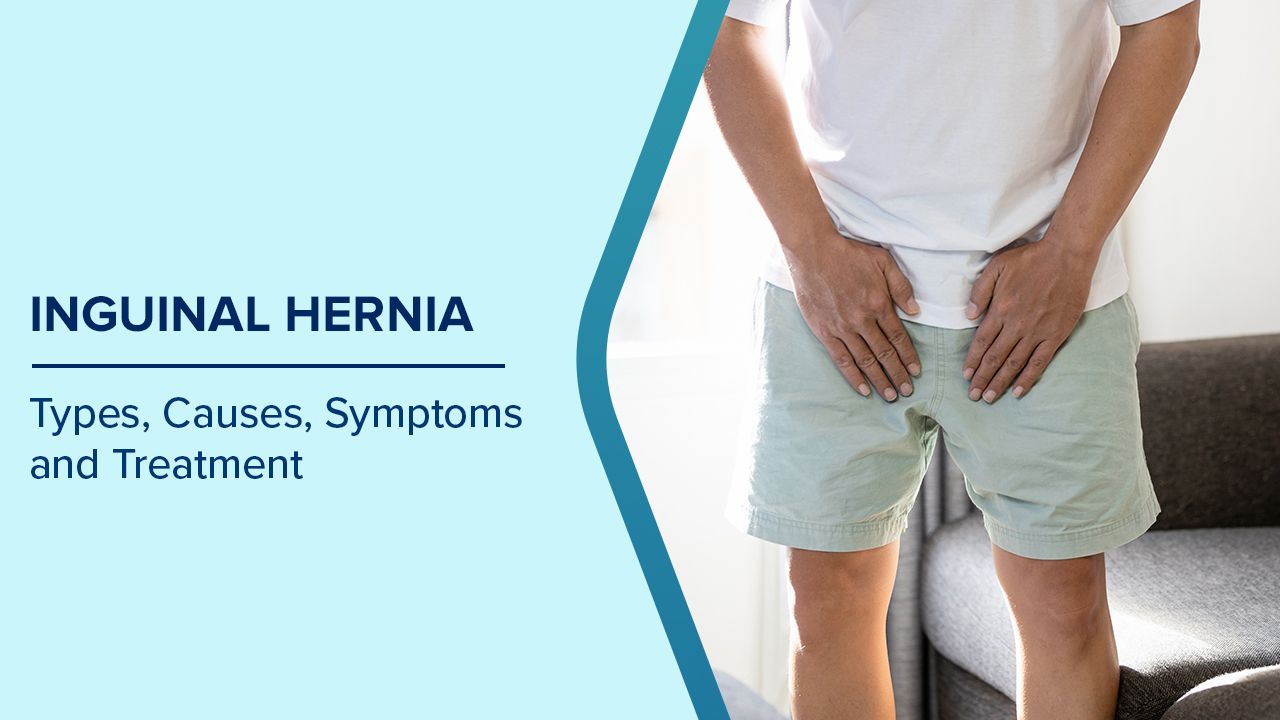
Inguinal hernia is the most common type of hernia that develops when tissue pushes through a weak point in the abdominal wall near the groin, creating a noticeable bulge. Many people dismiss initial symptoms as minor discomfort or muscle strain, delaying diagnosis until the hernia becomes more complicated. Understanding what to look for, when symptoms require urgent attention, and what treatment involves, can make the difference between a straightforward outpatient procedure and an emergency situation. This blog breaks down everything you need to know about inguinal hernias: the different types and what distinguishes them, the underlying causes, which symptoms to watch out for, and the available treatment options. Let’s start by understanding about inguinal hernia in detail.
What is an Inguinal Hernia?
An inguinal hernia happens when a part of the intestine or fatty tissue pushes through a weak spot in the lower abdominal wall, usually in the groin area. This creates a small or noticeable bulge that may become more obvious when coughing, bending, or lifting something heavy. Some hernias can be pushed back in gently, while others may stay protruded and cause discomfort.
It’s a common condition that can affect anyone, but men are more likely to develop it. The problem can be present from birth due to a weakness in the abdominal wall, or it can develop over time because of strain, age, or certain activities.
Types of Inguinal Hernia
Inguinal hernias are generally divided into two main types. Each type develops differently and can affect people of different ages:
1. Indirect Inguinal Hernia
This type often starts from birth due to a weakness in the abdominal wall. The hernia occurs when a part of the intestine or fatty tissue slips through the inguinal canal, a natural passage in the lower abdomen.
- Who it affects: More common in children and young adults, especially boys.
- Appearance: The bulge may appear in the groin and, in some cases, extend into the scrotum in men.
- Symptoms: Sometimes painless, but discomfort can increase with activities like bending, lifting, or coughing.
2. Direct Inguinal Hernia
Direct hernias usually develop over time due to the gradual weakening of the abdominal wall. The intestine or tissue pushes directly into the groin through the weakened area.
- Who it affects: Mostly adults, particularly men over 40.
- Appearance: A bulge in the lower groin area that may reduce when lying down.
- Symptoms: Can cause a feeling of heaviness, discomfort, or pain during physical activity.
What Causes an Inguinal Hernia?
An inguinal hernia happens when part of the intestine or fatty tissue pushes through a weak spot in the lower abdominal wall. Several factors can contribute to this weakness and increase the risk of developing a hernia:
1. Congenital Weakness in the Abdominal Wall
Some people are born with a naturally weak spot in the lower abdominal muscles or an incompletely closed inguinal canal. This weakness can allow tissue to slip through more easily, resulting in an indirect inguinal hernia. In many cases, the hernia may not be noticeable at birth but can appear later in childhood or even adulthood.
2. Age-Related Weakening
As the body ages, muscles and connective tissues gradually lose strength and elasticity. This makes older adults more prone to developing a direct inguinal hernia. Even minor strain can push tissue through the weakened abdominal wall, causing the characteristic bulge.
3. Straining and Heavy Lifting
Frequent lifting of heavy objects, intense physical exertion, or activities that put pressure on the abdomen can trigger a hernia. Even simple actions such as bending, coughing, or straining during bowel movements repeatedly increase intra-abdominal pressure, gradually forcing tissue through the weakened spot.
4. Chronic Cough or Respiratory Conditions
Conditions that cause prolonged coughing, such as asthma, chronic bronchitis, or smoking-related lung problems, put constant stress on the abdominal wall. This repeated pressure increases the risk of developing a hernia, especially in areas that are already weak.
5. Obesity and Excess Weight
Carrying extra weight puts continuous strain on abdominal muscles. Over time, this pressure can make weak points more vulnerable, leading to the formation of a hernia. Maintaining a healthy weight can reduce this risk.
6. Family History and Genetics
Genetic factors can contribute to hernia development. If close family members have experienced inguinal hernias, there is a higher chance of inheriting similar weaknesses in the abdominal wall.
7. Previous Surgery or Injury
Surgical scars, injuries, or trauma to the lower abdomen can weaken the abdominal wall. Hernias may develop at or near the site of surgery, particularly if the muscles or connective tissues were disrupted.
What are the Symptoms of an Inguinal Hernia?
Inguinal hernias can develop slowly and sometimes remain unnoticed for a long time. The symptoms often become more obvious during physical activity or when pressure is applied to the abdomen. Common signs include:
- Visible bulge in the groin or scrotum: A soft lump may appear on one or both sides of the groin, which may become more noticeable when standing, coughing, or lifting.
- Discomfort or pain: A dull ache, burning sensation, or sharp pain in the groin, especially during movement or strain.
- Feeling of heaviness or pressure: A sense of fullness or dragging in the lower abdomen or groin area.
- Swelling around the testicles (in men): In some cases, the bulge extends into the scrotum, causing swelling or discomfort.
- Changes in size of the bulge: The lump may shrink or disappear when lying down but reappear when standing or straining.
- Nausea or vomiting: Occurs rarely, but can indicate that part of the intestine is trapped, requiring urgent medical attention.
- Redness or tenderness at the site: A sign of irritation or complications such as strangulation, which is a medical emergency.
Even if the bulge is painless, it is important to get it checked.
How is Inguinal Hernia Diagnosed?
Accurate diagnosis is important to decide the best treatment and prevent complications. Diagnosis usually involves the following steps:
1. Physical Examination
A doctor will typically begin by checking the groin area for a visible bulge or swelling. You may be asked to stand up, cough, or strain, as these actions increase pressure in the abdomen and make the hernia easier to detect. During the examination, the doctor will also determine whether the hernia can be pushed back into the abdomen (reducible hernia) or if it is stuck (incarcerated hernia), which requires more urgent attention.
2. Review of Symptoms and Medical History
The doctor will ask questions about when the bulge or discomfort started, how it changes with activity, and whether there are any accompanying symptoms such as pain, heaviness, nausea, or vomiting. They may also ask about lifestyle factors like heavy lifting, chronic cough, constipation, previous surgeries, or family history of hernias. This information helps assess risk and guide further evaluation.
3. Imaging Tests
Sometimes, a hernia is not obvious during a physical exam, especially in overweight patients or when the hernia is small. Imaging tests can help confirm the diagnosis:
- Ultrasound: A quick, non-invasive method to visualise the hernia and check for trapped tissue.
- CT Scan: Provides a more detailed image, especially useful for complicated or recurrent hernias.
- MRI: Occasionally used to examine the abdominal wall and surrounding tissues in complex cases.
4. Assessing Complications
Diagnosis also involves checking for signs of complications such as incarceration or strangulation, where the intestine or tissue gets trapped and blood supply is reduced.
What are the Treatment Options?
The approach to treating an inguinal hernia depends on its size, severity of symptoms, and the risk of complications. Doctors typically recommend either conservative management for mild cases or surgical repair for more serious hernias:
Watchful Waiting
For hernias that are small and do not cause significant discomfort, doctors may suggest a watchful waiting approach. This involves regular check-ups to monitor the hernia and ensure it is not growing or causing complications.
Patients are encouraged to avoid activities that put excessive strain on the abdomen, such as heavy lifting, and to follow gentle exercises that strengthen abdominal muscles.
Some hernias remain stable for years and may not require surgery immediately, but careful observation is essential because symptoms can develop over time.
Surgical Repair
Surgery is the definitive treatment for hernias that are painful, enlarging, or at risk of complications such as incarceration or strangulation. There are two main types of surgical repair:
- Open Hernia Repair: The surgeon makes an incision in the groin, gently pushes the protruding tissue back into place, and reinforces the abdominal wall with stitches or a surgical mesh.
- Laparoscopic Hernia Repair: A minimally invasive procedure using small incisions and a camera to guide the repair. Mesh is placed to strengthen the abdominal wall from the inside, which often results in less post-operative pain, smaller scars, and faster recovery. Laparoscopic surgery is particularly suitable for bilateral hernias or hernias that have recurred after previous surgery.
What are the Possible Complications of an Inguinal Hernia?
Leaving a hernia untreated can sometimes lead to serious complications including:
Incarceration
An incarcerated hernia occurs when the protruding tissue becomes trapped and cannot be pushed back into the abdomen. This can cause persistent pain, swelling, and discomfort in the groin area. An incarcerated hernia requires prompt medical evaluation, as it increases the risk of further complications.
Strangulation
Strangulation is a severe complication where the blood supply to the trapped portion of the intestine or tissue is cut off. This can lead to tissue death and is considered a medical emergency. Symptoms include sudden and severe pain, nausea, vomiting, redness at the hernia site, and sometimes fever. Immediate surgical intervention is required to prevent life-threatening consequences.
Bowel Obstruction
A hernia can sometimes block the normal flow of the intestine, causing bowel obstruction. This may result in abdominal pain, bloating, constipation, nausea, and vomiting. Bowel obstruction is a serious condition that needs urgent treatment, often involving surgery.
Consult Today
If you notice a bulge in your groin, feel discomfort, or experience any unusual pain, don't wait to see if it resolves on its own. Inguinal hernias don't heal without intervention, and even small ones can develop complications over time. The good news is that when diagnosed early, inguinal hernias are highly treatable with excellent outcomes. Consult a general surgeon at Max Hospital to understand your treatment options and take the next step toward resolving the issue.
Frequently Asked Questions
Can an inguinal hernia ever heal on its own?
No, an inguinal hernia cannot heal by itself. The hernia occurs due to a weakness in the abdominal wall, and this structural issue does not repair naturally. Even if the hernia seems small or painless, it can enlarge over time or cause complications such as incarceration or strangulation. Early medical evaluation is important to prevent serious problems.
How quickly should I see a doctor if my hernia isn’t painful?
Even a painless hernia should be assessed promptly. Consulting a general surgeon at Max Hospital can help determine the best approach for monitoring or treatment. Early evaluation reduces the risk of complications and ensures you understand your treatment options before symptoms worsen.
Can lifestyle changes slow down the progression of a hernia?
Yes, certain measures can reduce strain on the abdominal wall and prevent the hernia from worsening rapidly. Maintaining a healthy weight, avoiding heavy lifting, managing chronic cough, and performing gentle core-strengthening exercises under medical guidance can help. These steps do not cure the hernia but can make living with a small hernia safer until medical intervention is needed.
Is it safe to delay surgery for a small hernia?
In some cases, doctors may recommend watchful waiting for small, asymptomatic hernias. However, delaying surgery carries risks. Hernias can grow larger, become painful, or develop complications. Regular check-ups are necessary to ensure any changes are detected early and treated promptly.
What symptoms indicate that I need urgent treatment?
Certain warning signs suggest a hernia has become serious. Sudden, severe pain in the groin, swelling that cannot be pushed back, redness or tenderness at the site, nausea, or vomiting can indicate strangulation or bowel obstruction. These are medical emergencies that require immediate attention.
Can both sides of the groin develop hernias at the same time?
Yes, bilateral inguinal hernias can occur, where hernias develop on both sides of the groin. Treatment may involve repairing one or both hernias surgically, depending on symptoms, size, and the patient’s overall health.
Is it safe to continue exercising with a hernia?
High-strain exercises, heavy lifting, or activities that increase abdominal pressure can worsen a hernia or trigger pain. Gentle, guided exercises to strengthen the core muscles may be beneficial, but you should always get clearance from a surgeon before beginning any exercise routine.
Can an inguinal hernia cause long-term complications if ignored?
Yes. Ignoring a hernia can lead to incarceration, strangulation, or bowel obstruction. These complications are painful and can become life-threatening. Seeking timely medical advice is essential even for hernias that appear small or cause minimal discomfort.
Written and Verified by:

Related Blogs

Medical Expert Team
Oct 20 , 2015 | 1 min read
Dr. Vishwas Sharma In General Surgery
Apr 23 , 2015 | 1 min read
Blogs by Doctor


Most read Blogs


Related Blogs
Medical Expert Team
Oct 20 , 2015 | 1 min read
Dr. Vishwas Sharma In General Surgery
Apr 23 , 2015 | 1 min read
Blogs by Doctor
Most read Blogs