 WhatsApp Us (24/7)
 +91 926 888 0303 (24/7)


To Book an Appointment
Call Us+91 926 888 0303Effects of Poor Air Quality on Children’s Concentration
By Dr. Arvind Bountra in Paediatrics (Ped)
Mar 02 , 2026

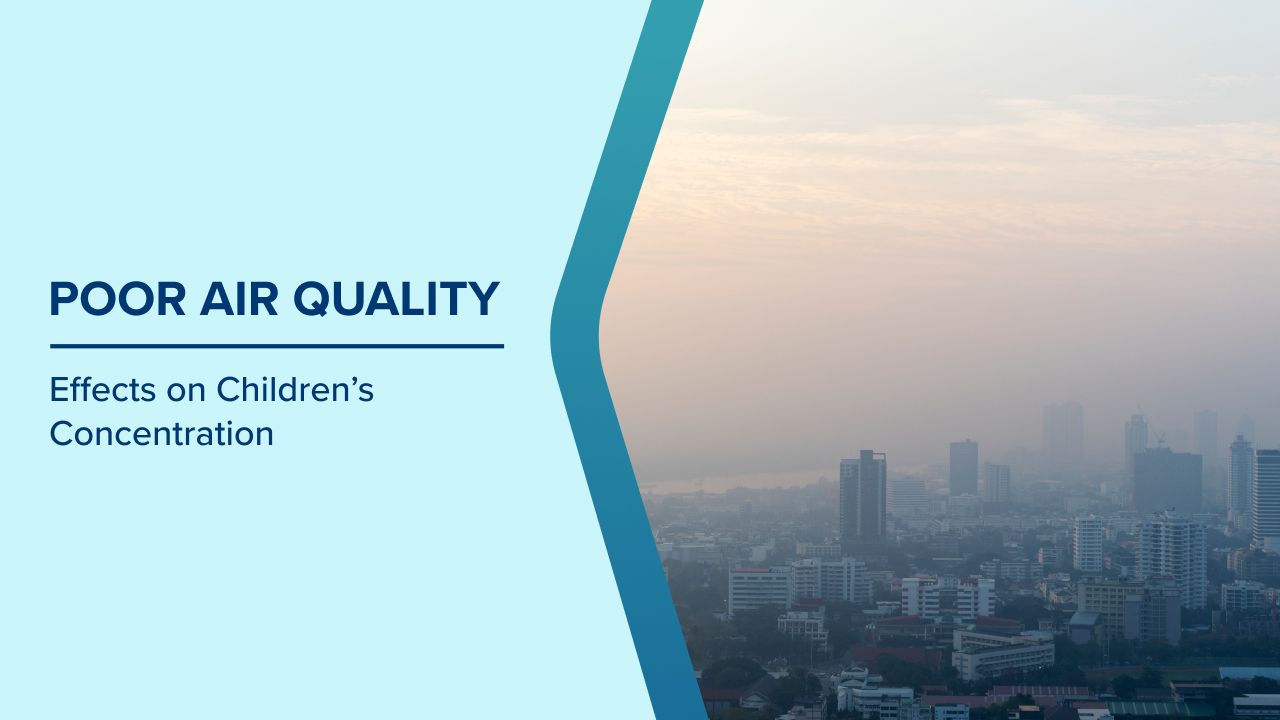
Poor air quality is usually linked to coughing, wheezing, blocked nose or throat irritation. However, one important effect often goes unnoticed. The air children breathe can strongly influence how well they think, focus and learn. School-going children are at a stage where the brain is still developing, and new learning happens every single day. When the quality of air is unhealthy, it can interfere with this process and reduce concentration without obvious warning signs.
Children breathe faster than adults and spend long hours studying, playing and travelling. Polluted air made up of smoke, dust, fine particles and harmful gases can irritate their airways and also influence how clearly they process information. Many parents notice that their children feel distracted, mentally slow, tired or unusually irritable during days of poor air quality. These are not just mood fluctuations. They may be the brain’s response to polluted air.
Why School-Going Children are More Sensitive to Polluted Air
School-age children are in a phase of rapid brain growth and active learning. Their brains are developing new pathways for memory, language, reasoning and attention. Poor air quality interferes with this progress.
Several factors make them more vulnerable than adults:
They breathe more frequently
Children have faster breathing rates. More air means more pollutants entering their system if the air quality is poor.
Their organs and brain are still developing
Any disturbance at this stage can have a stronger effect on:
- Attention span
- Emotional control
- Problem-solving ability
- Learning capacity
They spend time outdoors and are active
Playing outdoors, commuting to school, sports practice and outdoor tuition increase exposure.
They may not recognise symptoms
Children may not always say they feel foggy or mentally tired. They may simply appear:
- Inattentive
- Restless
- Disinterested in studies
This makes it important for parents and teachers to watch behavioural changes closely.
How Poor Air Quality Affects the Brain and Concentration
Poor air quality not only enters the lungs. Polluted air influences many functions that control thinking and focus.
Reduced Attention Span
Children exposed to poor air quality may find it difficult to:
- Stay seated through tasks
- Complete homework without frequent breaks
- Listen continuously to instructions
- Stay engaged in reading
They may drift into daydreaming more often or forget what they were doing.
Slow thinking speed
Mental processing slows down when the brain feels tired or stressed. Children may:
- Take longer to understand simple concepts
- Respond slowly to questions
- Find it difficult to finish exams on time
- Feel mentally sluggish in class
Memory difficulties
Short-term memory is essential for learning. Poor air quality may reduce:
- Ability to retain information
- Recall during exams
- Remembering sequences like spellings or steps in maths
- Remembering instructions given verbally
Increased mental fatigue
Many children complain that their heads feel heavy or tired when pollution rises. Mental fatigue leads to:
- Reduced interest in studies
- Frequent distraction
- Irritability while doing homework
- Desire to lie down or rest instead of studying
Behavioural changes affecting concentration
When children feel mentally uncomfortable, they may not always express it in words. Instead, they may show:
- Restlessness
- Hyperactivity
- Aggressive behaviour
- Sudden mood changes
- Withdrawal or silence
All of these interfere with concentration and productivity.
Written and Verified by:

Related Blogs

Dr. Nidhi Rawal In Paediatrics (Ped)
Nov 13 , 2020 | 2 min read

Blogs by Doctor

Treating Cough in Children with Common Cold-Guidance to Caregivers
Dr. Arvind Bountra In Paediatrics (Ped)
Apr 26 , 2016 | 1 min read

Importance of Sleep for Children: Establishing Healthy Bedtime Routines
Dr. Arvind Bountra In Paediatrics (Ped)
Aug 22 , 2023 | 2 min read
Most read Blogs


Related Blogs
Dr. Nidhi Rawal In Paediatrics (Ped)
Nov 13 , 2020 | 2 min read
Blogs by Doctor
Treating Cough in Children with Common Cold-Guidance to Caregivers
Dr. Arvind Bountra In Paediatrics (Ped)
Apr 26 , 2016 | 1 min read
Importance of Sleep for Children: Establishing Healthy Bedtime Routines
Dr. Arvind Bountra In Paediatrics (Ped)
Aug 22 , 2023 | 2 min read
Most read Blogs