 WhatsApp Us (24/7)
 +91 926 888 0303 (24/7)


To Book an Appointment
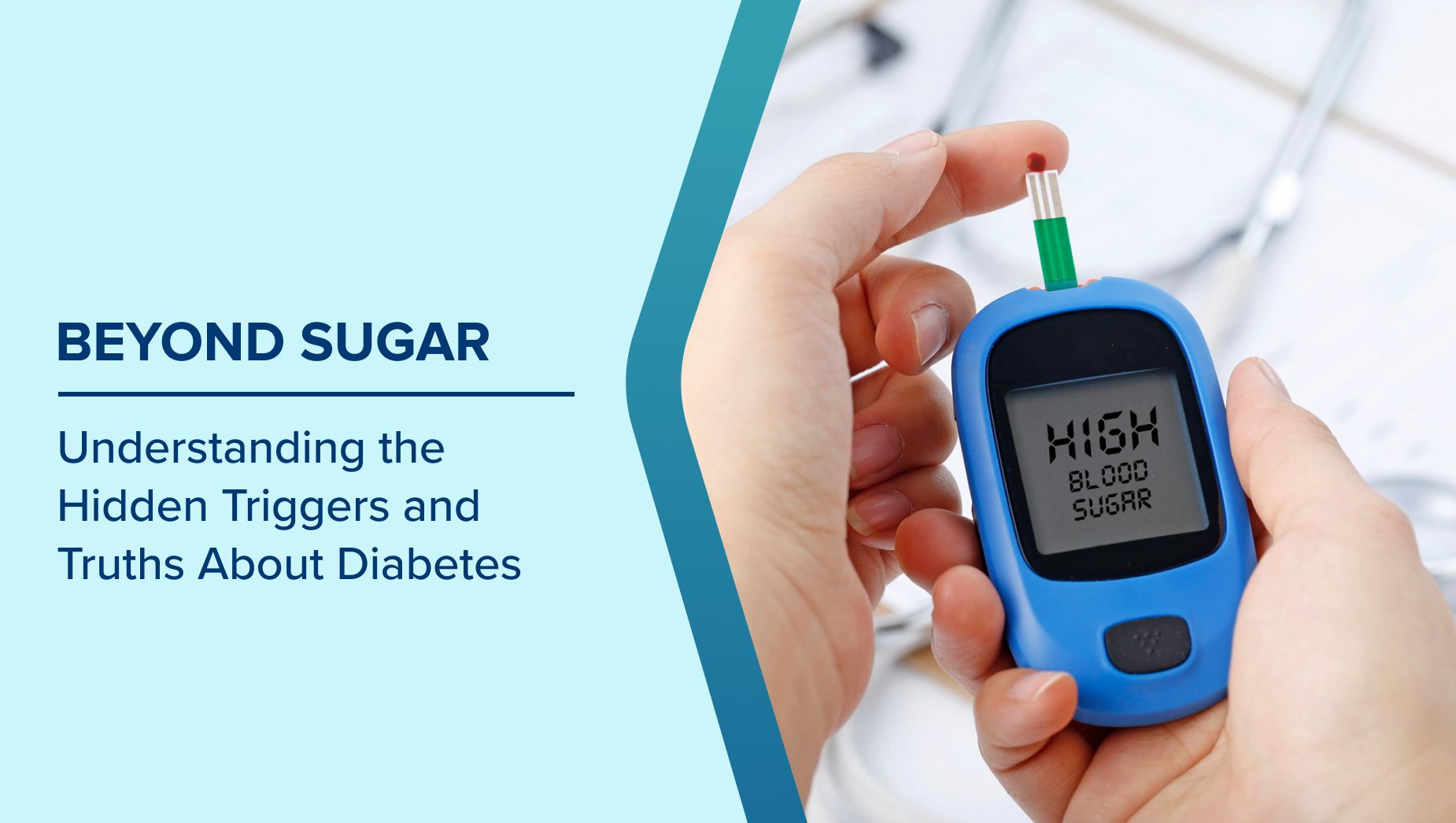
Call Us+91 926 888 0303Beyond Sugar: Understanding the Hidden Triggers and Truths About Diabetes
By Dr. Aprajita Pradhan in Endocrinology & Diabetes
Dec 02 , 2025 | 3 min read

When people think about diabetes, the first thing that comes to mind is sugar. But the truth is far deeper. Diabetes isn’t just about eating sweets. It’s a complex metabolic condition that develops when your body can’t properly regulate blood sugar due to multiple hidden triggers, genetics, stress, sleep, hormones, weight, and lifestyle choices all play a part.
Understanding these hidden causes is the key to preventing, managing, and even reversing early-stage diabetes naturally.
What Really Causes Diabetes?
Diabetes develops when your body either doesn’t make enough insulin or doesn’t use it effectively. Insulin is a hormone produced by the pancreas that helps glucose (sugar) move from your bloodstream into your cells for energy. When this process breaks down, glucose levels rise, leading to high blood sugar or diabetes.
There are two main types of diabetes:
- Type 1 diabetes: An autoimmune condition where the body attacks insulin-producing cells.
- Type 2 diabetes: The most common type, often linked to insulin resistance and lifestyle factors.
However, saying diabetes is caused only by sugar is like saying a fire starts only from smoke. Sugar is part of the story, but not the whole picture.
The Role of Insulin and How It Affects Blood Sugar
To understand diabetes, it’s important to understand insulin resistance. When you eat, your body converts the food you eat into glucose. Insulin acts like a key, helping glucose enter your cells. But when your cells stop responding to insulin properly, due to excess fat, stress, or poor sleep, the glucose stays in the blood, leading to high blood sugar.
Over time, your pancreas has to work overtime to produce more insulin. Eventually, it may wear out, resulting in Type 2 diabetes.
Common Myths About Diabetes and Sugar
Several misconceptions prevent people from understanding diabetes correctly:
- Myth 1: Eating sweets causes diabetes.
The truth: Consuming too much sugar can contribute to obesity and insulin resistance, but it’s not the sole cause. Genetics, diet quality, and physical inactivity matter more.
- Myth 2: Only overweight people get diabetes.
The truth: Even slim individuals can develop diabetes due to genetic factors, poor sleep, or chronic stress.
- Myth 3: Cutting out carbs completely cures diabetes.
The truth: Carbohydrates are essential for energy. The goal is to choose healthy carbs, whole grains, fruits, and vegetables, instead of refined ones.
Hidden Triggers: Stress, Sleep, and Sedentary Lifestyle
When people ask, “Why do I have diabetes even though I don’t eat sweets?,” the answer often lies in these hidden triggers.
- Stress: Chronic stress raises cortisol levels, which increases blood sugar and insulin resistance.
- Poor Sleep: Lack of sleep disrupts glucose metabolism and increases hunger hormones, such as ghrelin.
- Sedentary Lifestyle: Sitting for long hours slows metabolism. Muscles help use glucose, so less movement means higher blood sugar.
How Weight, Hormones, and Genes Play a Role
- Weight and Fat Distribution: Excess fat around the abdomen leads to inflammation and insulin resistance.
- Hormonal Changes: Conditions like PCOS, thyroid imbalance, or low testosterone can affect insulin function.
- Genetics: Family history strongly influences diabetes risk.
Early Warning Signs You Shouldn’t Ignore
Recognising diabetes early can help prevent complications. Watch out for these signs:
- Excessive thirst and frequent urination
- Unexplained weight loss or weight gain
- Fatigue and irritability
- Blurred vision
- Slow-healing wounds or infections
- Numbness or tingling in hands and feet
If you notice these symptoms, consult your doctor for a blood sugar test or an HbA1c test.
How to Prevent or Manage Diabetes Naturally
Prevention starts with awareness and consistency.
Eat Smart
A diabetes-friendly diet includes:
- Whole grains (brown rice, millets, oats)
- Leafy greens and colourful vegetables
- Lean proteins like fish, tofu, or lentils
- Healthy fats like olive oil and nuts
Avoid:
- Sugary beverages
- Processed snacks
- White bread and refined flour
Move More
Aim for at least 150 minutes of moderate activity per week, like:
- Brisk walking
- Cycling
- Swimming
- Yoga or aerobics
Sleep Well
A good 7–8 hours of sleep supports hormonal balance and insulin function.
Manage Stress
Meditation, deep breathing, or even 10 minutes of mindfulness can lower cortisol.
Stay Hydrated
Water helps flush excess glucose. Avoid dehydration.
Diet and Lifestyle Tips for Better Blood Sugar Control
- Eat small, frequent meals.
- Don’t skip breakfast.
- Add spices like cinnamon and fenugreek.
- Avoid alcohol and smoking.
- Monitor blood sugar regularly.
Conclusion
Diabetes isn’t just about sugar—it’s linked to how we eat, sleep, move, and manage stress.
By understanding the true causes and making healthier choices, you can improve insulin function and long-term health.
Start today—eat whole foods, stay active, manage stress, and get regular check-ups.
Frequently Asked Questions
Can stress or lack of sleep really cause diabetes?
Yes, chronic stress and poor sleep increase cortisol, which raises blood sugar.
How does dehydration affect blood sugar levels?
Dehydration increases glucose concentration in the blood.
Is it possible to have diabetes without being overweight?
Yes, genetics, hormonal imbalances, or stress can cause insulin resistance even in thin people.
Can intermittent fasting help prevent diabetes?
It may improve insulin sensitivity but isn’t suitable for everyone. Consult a doctor.
What are the best early tests to detect diabetes risk?
Fasting Blood Sugar, HbA1c, and OGTT are key tests.
Written and Verified by:

Related Blogs

Dr. Vaishakhi Rustagi In Endocrinology & Diabetes , Paediatric (Ped) Endocrinology , Nutrition And Dietetics
Nov 08 , 2020 | 1 min read

Dr. Vaishakhi Rustagi In Endocrinology & Diabetes , Paediatric (Ped) Endocrinology
Nov 08 , 2020 | 2 min read
Blogs by Doctor

How Stress Affect Your Hormones: Natural Ways to Restore Balance
Dr. Aprajita Pradhan In Endocrinology & Diabetes
Apr 25 , 2025 | 3 min read
Insulin Resistance: Causes, Early Signs & Natural Ways to Reverse It
Dr. Aprajita Pradhan In Endocrinology & Diabetes
Aug 04 , 2025 | 2 min read
Most read Blogs


Related Blogs
Dr. Vaishakhi Rustagi In Endocrinology & Diabetes , Paediatric (Ped) Endocrinology , Nutrition And Dietetics
Nov 08 , 2020 | 1 min read
Dr. Vaishakhi Rustagi In Endocrinology & Diabetes , Paediatric (Ped) Endocrinology
Nov 08 , 2020 | 2 min read
Blogs by Doctor
How Stress Affect Your Hormones: Natural Ways to Restore Balance
Dr. Aprajita Pradhan In Endocrinology & Diabetes
Apr 25 , 2025 | 3 min read
Insulin Resistance: Causes, Early Signs & Natural Ways to Reverse It
Dr. Aprajita Pradhan In Endocrinology & Diabetes
Aug 04 , 2025 | 2 min read
Most read Blogs