 WhatsApp Us (24/7)
 +91 926 888 0303 (24/7)


To Book an Appointment
Call Us+91 926 888 0303Gut Friendly Foods: How Diet Affects Brain Health, Mood & Focus
By Medical Expert Team
Jan 06 , 2026 | 3 min read

We often think of the brain and the stomach as separate. But the truth is—they're deeply connected. What you eat doesn't just affect your digestion; it can shape how you think, feel, and focus. This powerful link between your gut and brain is called the gut-brain connection, and your daily diet plays a significant role in keeping it balanced.
The Gut and Brain Are Constantly Communicating
Your gut is home to billions of tiny organisms that help with digestion, but their role doesn't stop there. These microbes also send signals to your brain, influencing how you feel mentally and emotionally. This two-way connection is often called the "second brain."
For example, you might feel it in your stomach when you're nervous or stressed. That's your gut responding to your emotional state. Similarly, the foods you eat affect the types of bacteria in your gut, which in turn can impact your mood and brain function.
How Food Affects Mood and Emotions
Certain foods help support the production of natural mood-boosting chemicals in your body. These chemicals, like serotonin, help regulate emotions and are mostly produced in the gut. When your gut is healthy and nourished with the right foods, your mood also improves.
On the other hand, a diet full of sugary, fried, or overly processed foods can throw this balance off. You may feel low in energy, irritated, or mentally tired without realising it's linked to your food choices.
Better Focus Starts With the Gut
Feeling distracted or mentally drained? The solution may lie in your gut health. A well-balanced gut helps your body absorb nutrients that support clear thinking, memory, and focus. These nutrients include omega-3 fats, B vitamins, iron, and magnesium—all essential for brain performance.
If your gut is out of balance, your brain may not get enough of these nutrients, leading to difficulty concentrating or remembering things.
Eating Habits Matter Too
How and when you eat can affect your gut-brain connection just as much as what you eat. Skipping meals, eating too quickly, or choosing convenience over nutrition can confuse your body's natural rhythm.
Eating at regular times, slowing down during meals, and staying hydrated all support a healthy digestive system—and, by extension, a healthy mind.
Top Gut-Friendly Foods to Support Mental Wellness
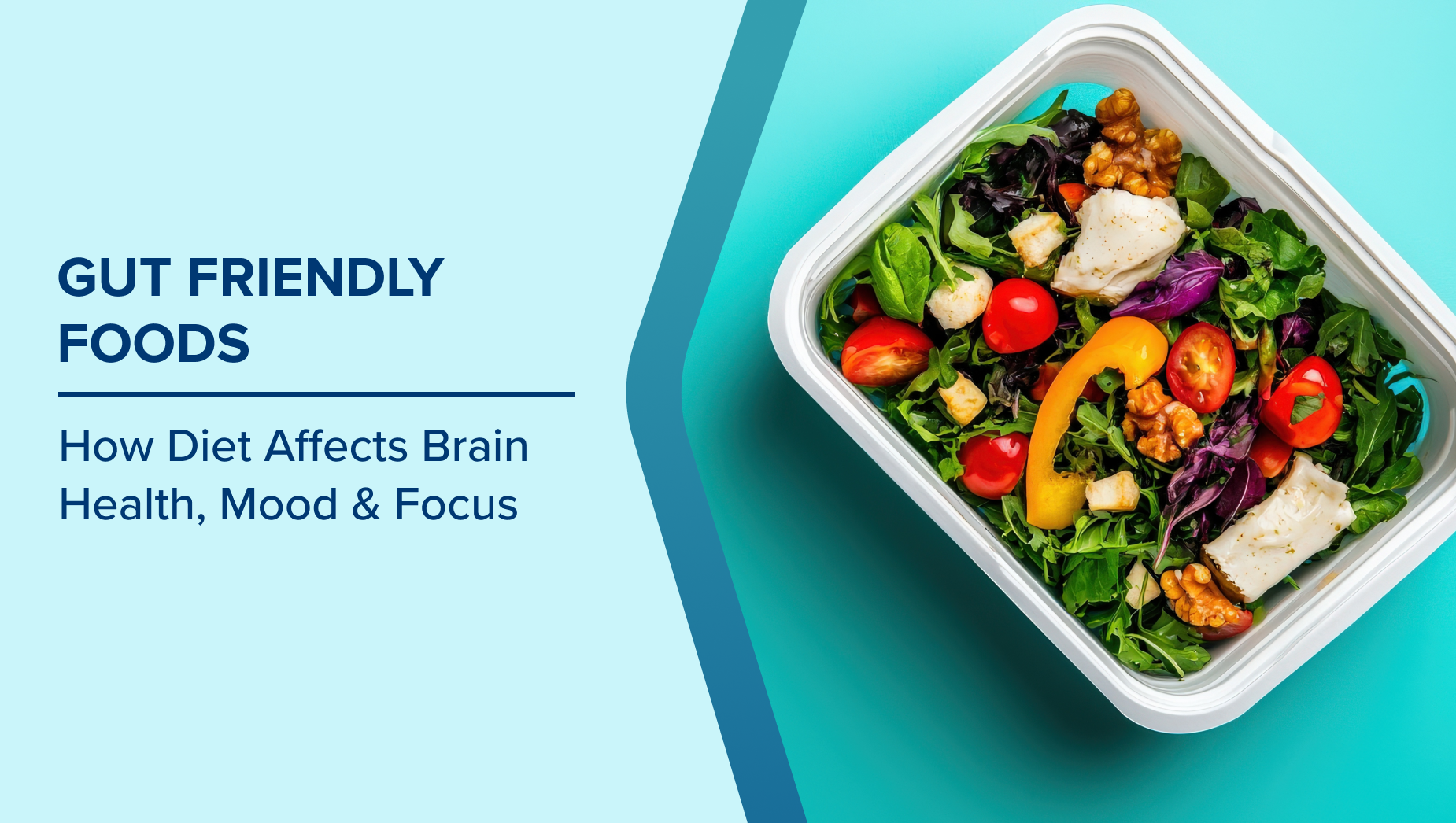
Including gut-friendly foods in your diet doesn't have to be complicated. Here are some everyday options to support both gut health and brain function:
- Fermented foods (like yoghurt, pickles): Packed with natural probiotics that help grow good gut bacteria.
- High-fiber foods (like bananas, oats, and leafy greens): These support digestion and feed healthy microbes in the gut.
- Healthy fats (like nuts, seeds, and avocado): Help protect brain cells and support mental clarity.
- Colourful vegetables: Rich in antioxidants that reduce stress on the body and mind.
- Whole grains: Provide steady energy to the brain and keep the gut moving.
It's About Balance, Not Perfection
No one eats perfectly all the time, and that's okay. What matters is the bigger picture. A diet that regularly includes real, whole foods can help support both your digestive system and your mental well-being.
Think of it as feeding two parts of yourself at once—your gut and your brain. When you nourish one, you strengthen the other.
Frequently Asked Questions
1. Can improving gut health help reduce mood swings?
Yes, a healthy gut helps regulate hormones and chemicals that influence mood, leading to better emotional stability.
2. How long does it take to feel mental benefits from a better diet?
After changing your eating habits, you might start noticing changes in mood and focus within a few days to a couple of weeks.
3. Are cravings connected to my gut health?
Yes, an imbalance in gut bacteria can increase cravings for sugar and processed foods, which may affect mood and energy.
4. Is drinking enough water important for mental clarity?
Yes, staying hydrated helps your body absorb nutrients better and supports mental alertness throughout the day.
5. Do I need supplements for gut-brain health?
Not always. A balanced diet rich in fibre, fermented foods, and healthy fats can naturally support your gut and brain.
Related Blogs

Dr. Nivedita Pandey In Gastroenterology, Hepatology & Endoscopy , Liver Transplant and Biliary Sciences
Nov 07 , 2020 | 2 min read

Dr. Nivedita Pandey In Gastroenterology, Hepatology & Endoscopy , Liver Transplant and Biliary Sciences
Nov 07 , 2020 | 2 min read
Most read Blogs


Related Blogs
Dr. Nivedita Pandey In Gastroenterology, Hepatology & Endoscopy , Liver Transplant and Biliary Sciences
Nov 07 , 2020 | 2 min read
Dr. Nivedita Pandey In Gastroenterology, Hepatology & Endoscopy , Liver Transplant and Biliary Sciences
Nov 07 , 2020 | 2 min read
Most read Blogs