 WhatsApp Us (24/7)
 +91 926 888 0303 (24/7)


To Book an Appointment
Call Us+91 926 888 0303GI Bleeding: Symptoms, Types, Causes, and When to Seek Help
By Dr Pankaj Kumar in Gastroenterology, Hepatology & Endoscopy
Sep 24 , 2025 | 5 min read
1

Have you ever noticed blood in your stool or vomit and wondered, “Should I be worried?” This is one of the most common and frightening questions patients ask when they visit a gastroenterologist. The sight of blood, whether it is bright red, dark, or mixed with stools, often leads to anxiety.
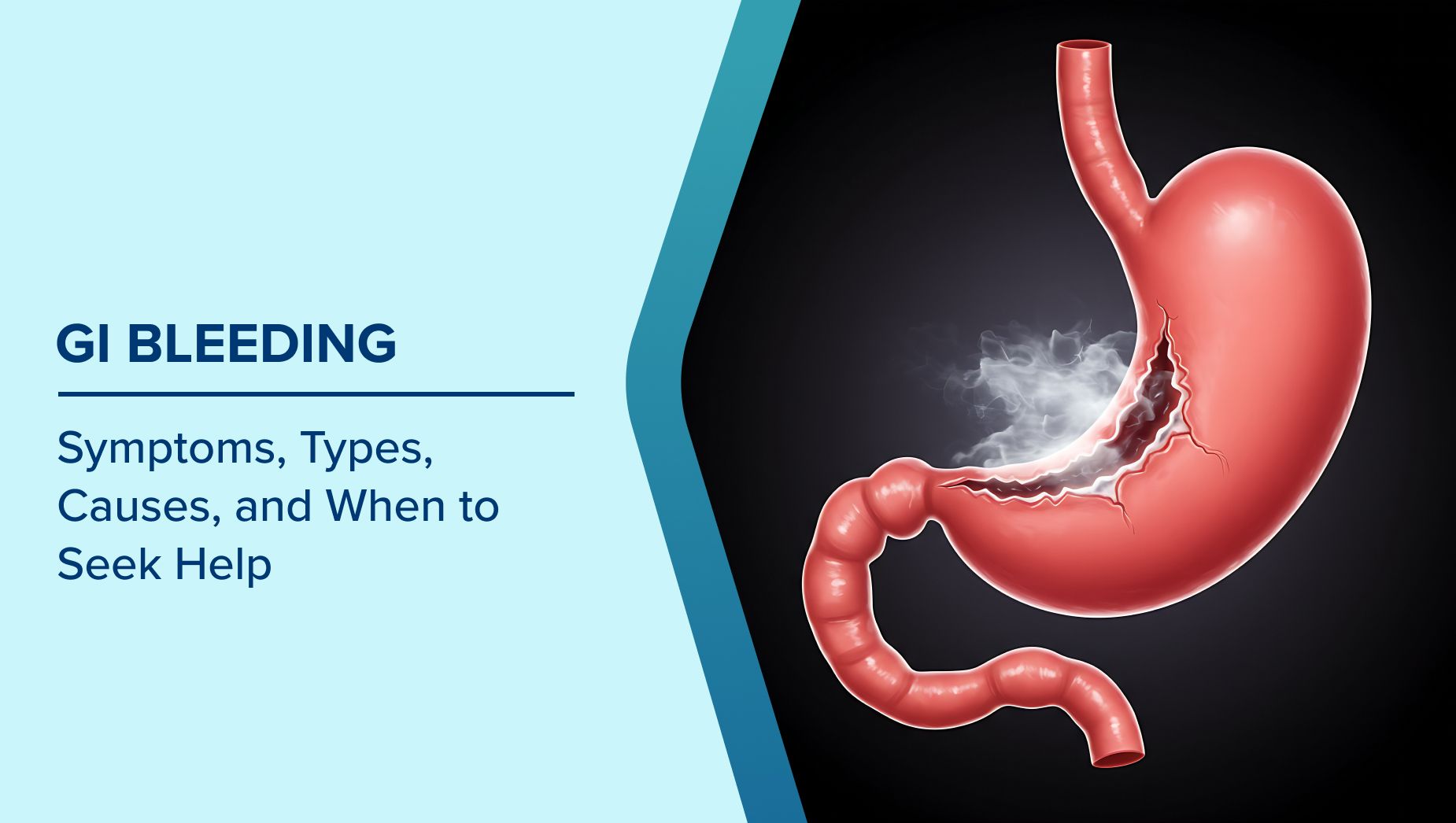
The truth is, gastrointestinal (GI) bleeding is not a disease itself but a symptom of another condition. Sometimes the cause is minor, like haemorrhoids, but it can also be linked to serious conditions such as ulcers, inflammatory bowel disease, or even cancer.
Because of the wide range of possible causes, understanding GI bleeding is essential for early detection, timely treatment, and peace of mind.
What Is GI Bleeding?
GI bleeding refers to any form of bleeding that happens within the digestive tract. This tract includes the oesophagus (food pipe), stomach, small intestine, large intestine (colon), rectum, and anus.
The bleeding can range from mild to life-threatening. Some people may notice only a small streak of blood on toilet paper, while others may experience sudden and heavy bleeding.
There are two major types of GI bleeding:
- Overt bleeding (visible): Seen as vomiting blood, passing black tarry stools, or bright red blood in stool.
- Occult bleeding (hidden): Not visible to the naked eye but detected through stool tests or blood tests.
Symptoms of GI Bleeding
The signs of GI bleeding vary depending on the source and severity. Here are the symptoms patients commonly report:
- Vomiting blood: It may appear bright red or like coffee grounds.
- Black or tarry stools (melena): Usually linked to bleeding in the stomach or upper small intestine.
- Bright red blood in stool (hematochezia): Often comes from bleeding in the colon or rectum.
- Blood streaks on toilet paper: Can be due to haemorrhoids or anal fissures.
- Abdominal pain or cramping: Sometimes linked to ulcers or inflammation.
- Weakness and fatigue: Due to slow, chronic blood loss leading to anaemia.
- Dizziness or fainting: A sign of significant blood loss.
- Shortness of breath: When anaemia or sudden blood loss reduces oxygen supply.
Types of GI Bleeding
Doctors classify bleeding based on where it starts:
Upper GI Bleeding
Bleeding that occurs in the oesophagus, stomach, or the first part of the small intestine (duodenum).
Common causes include:
- Peptic ulcers (often due to H. pylori infection or painkillers)
- Gastritis (inflammation of the stomach lining)
- Oesophageal varices (swollen veins due to liver disease)
- Mallory-Weiss tear (tear in the oesophagus caused by forceful vomiting)
Lower GI Bleeding
Bleeding that starts in the small intestine, colon, rectum, or anus.
Common causes include:
- Haemorrhoids (swollen veins in the anus)
- Anal fissures (small tears in the anal lining)
- Diverticulosis (pouches in the colon wall that can bleed)
- Colon polyps or colon cancer
- Inflammatory bowel disease (ulcerative colitis, Crohn’s disease)
Causes of GI Bleeding
Patients often ask, “What causes blood in vomit or stool?”
The answer depends on the underlying condition. Here are the most common causes:
- Peptic ulcers: Caused by H. pylori infection or prolonged NSAID use.
- Gastroesophageal reflux disease (GERD): Chronic acid reflux can irritate and cause bleeding.
- Liver cirrhosis: Leads to enlarged veins (varices) in the oesophagus and stomach.
- Diverticulosis and diverticulitis: Weak spots in the colon wall that may bleed.
- Haemorrhoids and anal fissures: Common, especially in people with constipation.
- Colon cancer and polyps: Cancerous or precancerous growths in the colon.
- Inflammatory bowel disease (IBD): Crohn’s disease or ulcerative colitis.
- Infections: Bacterial, viral, or parasitic infections in the digestive tract.
- Trauma: Injury to the digestive tract.
When to Seek Medical Help
One of the biggest concerns patients have is knowing when to go to the hospital for GI bleeding.
Seek urgent care if you experience:
- Large amounts of blood in vomit or stool
- Dizziness, fainting, or a rapid heartbeat
- Black, tarry stools or coffee-ground vomit
- Severe abdominal pain
- Bleeding that doesn’t stop
- Unexplained weight loss along with bleeding
How Doctors Diagnose GI Bleeding
Doctors use advanced tools to find the source of bleeding. The most common diagnostic methods include:
- Endoscopy: A thin camera tube inserted through the mouth to check the oesophagus, stomach, and duodenum.
- Colonoscopy: To examine the colon and rectum.
- Capsule endoscopy: A swallowable capsule with a camera to capture images of the small intestine.
- Angiography and CT scans: Imaging to detect active bleeding.
- Blood tests: To check for anaemia, clotting problems, and infections.
- Stool tests: To detect hidden (occult) blood.
Treatment Options for GI Bleeding
Treatment depends on what caused the bleeding, how severe it is, and where it occurs.
Common approaches include:
- Endoscopic treatment: Doctors can clip bleeding vessels, apply heat (cauterisation), or inject medicines to stop bleeding.
- Medications:
- Proton pump inhibitors (reduce stomach acid)
- Antibiotics for H. pylori infection
- Anti-inflammatory drugs for IBD
- Blood transfusions: For severe blood loss.
- Surgery: Required in rare cases where bleeding cannot be controlled endoscopically.
- Lifestyle management: Avoiding NSAIDs, limiting alcohol, quitting smoking, and eating a fibre-rich diet.
Can GI Bleeding Be Prevented?
While not all causes are preventable, you can reduce your risk by:
- Avoiding unnecessary NSAIDs and painkillers.
- Treating stomach infections like H. pylori promptly.
- Managing acid reflux and liver problems early.
- Eating a diet rich in fibre can help prevent constipation.
- Limiting alcohol and quitting smoking.
- Going for routine colon cancer screenings after 45 years of age (or earlier if you have a family history).
Why Early Diagnosis Matters
A common issue is that people ignore small amounts of blood in stool, assuming it’s due to piles. But early care is essential because:
- Colon cancer, ulcers, and liver disease often start with minor bleeding.
- Delayed diagnosis can lead to severe anaemia, repeated hospitalisations, or even life-threatening emergencies.
- Early treatment not only controls bleeding but also prevents future complications.
Conclusion
GI bleeding is a symptom that should never be ignored. While it may be caused by something as simple as haemorrhoids, it can also point to serious conditions such as ulcers, inflammatory bowel disease, or cancer.
Early diagnosis and treatment make a huge difference in recovery and long-term health. If you notice blood in stool, black tarry stools, or vomit with blood, consult a gastroenterologist without delay.
Frequently Asked Questions
Can stress cause GI bleeding?
Stress doesn’t directly cause bleeding, but it can worsen ulcers or gastritis, which may bleed.
Is GI bleeding painful?
Not always. Some patients notice blood without any pain, while others may have abdominal cramps or burning sensations.
Can haemorrhoids cause a lot of bleeding?
Haemorrhoids can cause bright red bleeding, especially during bowel movements, but usually not life-threatening amounts.
How can I tell if the blood in my stool is serious?
If bleeding is heavy, frequent, black, or associated with dizziness, you should see a doctor immediately.
What foods should I avoid if I have GI bleeding?
Spicy foods, alcohol, caffeine, and NSAIDs should be avoided until the cause is treated. A bland, high-fibre diet is often recommended.
When should I worry about blood in stool?
If you see repeated blood in stool, large amounts of blood, or feel weak and dizzy, you should seek medical attention immediately.
Is blood in stool always cancer?
No, most cases are not cancer. Haemorrhoids and fissures are common causes. However, persistent or unexplained bleeding should always be investigated to rule out cancer or other serious conditions.
How do doctors check where GI bleeding is coming from?
They use endoscopy or colonoscopy as the first choice. If bleeding is hidden, capsule endoscopy or CT scans may be used.
Can GI bleeding stop on its own?
Sometimes, minor bleeding from haemorrhoids or small ulcers may stop on its own. But you should never ignore it, because it can come back or indicate a serious condition.
Written and Verified by:

Related Blogs

Dr. Nivedita Pandey In Gastroenterology, Hepatology & Endoscopy , Liver Transplant and Biliary Sciences
Nov 07 , 2020 | 2 min read
Dr. Nivedita Pandey In Gastroenterology, Hepatology & Endoscopy , Liver Transplant and Biliary Sciences
Nov 07 , 2020 | 2 min read
Blogs by Doctor

Most read Blogs


Related Blogs
Dr. Nivedita Pandey In Gastroenterology, Hepatology & Endoscopy , Liver Transplant and Biliary Sciences
Nov 07 , 2020 | 2 min read
Dr. Nivedita Pandey In Gastroenterology, Hepatology & Endoscopy , Liver Transplant and Biliary Sciences
Nov 07 , 2020 | 2 min read
Blogs by Doctor
Most read Blogs