 WhatsApp Us (24/7)
 +91 926 888 0303 (24/7)


To Book an Appointment
Call Us+91 926 888 03034 Week of Pregnancy: From Early Symptoms to Embryo Development
By Dr. Arpana Haritwal in Obstetrics And Gynaecology
Jul 09 , 2025 | 9 min read
1

The fourth week of pregnancy marks a crucial phase in the early stages of fetal development. Though physical changes may not yet be visible, significant progress occurs within the body as the embryo begins to form essential structures. This week sets the foundation for a healthy pregnancy journey, with early symptoms signaling the start of many bodily adjustments. To help expecting women understand all this better, this blog will explore what to expect during week 4, and simple ways to support a healthy pregnancy. Let us start with the early signs that may appear at this stage.
What are the Common Pregnancy Symptoms in Week 4?
At week 4, many women are only just beginning to suspect they might be pregnant. This is the stage when the fertilised egg has implanted in the uterus, and the body starts producing more of the hormone hCG (human chorionic gonadotropin), along with rising levels of progesterone and oestrogen. These hormones are responsible for many of the early symptoms, although not everyone experiences them the same way.
Some of the most common signs that may appear around this time include:
- Mild cramping or a tugging feeling in the lower abdomen: These are often similar to period pains and are caused by the uterus starting to adapt to support the pregnancy.
- Breast tenderness, fullness or tingling: Hormonal changes can make the breasts feel more sensitive, swollen or sore to touch. The area around the nipples may also darken slightly.
- Fatigue: A sudden drop in energy is one of the earliest signs. The body is using extra energy to support the developing embryo, and rising progesterone levels can add to this feeling of tiredness.
- Light spotting: Known as implantation bleeding, this is usually light pink or brown and lasts a short time. It occurs as the embryo settles into the uterine lining. Not everyone experiences this, and it’s often mistaken for the start of a period.
- Mood swings: Emotional ups and downs may happen as hormone levels rise. Some may feel unusually teary, irritable, or more emotional than usual.
- Increased need to urinate: Hormonal changes can cause more frequent trips to the toilet, even though the uterus is still quite small at this stage.
- Bloating and digestive changes: Slower digestion caused by progesterone can lead to a bloated feeling or mild constipation.
It’s important to remember that early pregnancy symptoms can vary widely. Some women may feel several of these signs, others only one or two, and some may feel nothing at all in week 4. Not having symptoms at this stage is also completely normal. The absence of signs does not reflect the health of the pregnancy.
Check Pregnancy: Pregnancy Due Date Calculator
How is the Embryo Developing at Week 4?
By week 4, the fertilised egg has attached itself to the lining of the uterus. This is called implantation and is an important early step in pregnancy. Once this happens, the body starts to support the tiny new life growing inside. The embryo at this stage is very small, about the size of a poppy seed, and the basic body systems of the baby are already beginning to form.
Cells inside the embryo are starting to organise into different parts that will later become the brain, heart, and other body systems. The area around the embryo is also starting to form into what will become the placenta, which helps provide oxygen and nutrients as the baby grows.
Although it is still too early to see anything clearly on an ultrasound, a lot is happening behind the scenes. These early developments are laying the foundation for the baby’s growth in the weeks ahead.
Will a Pregnancy Test Show Positive at Week 4?
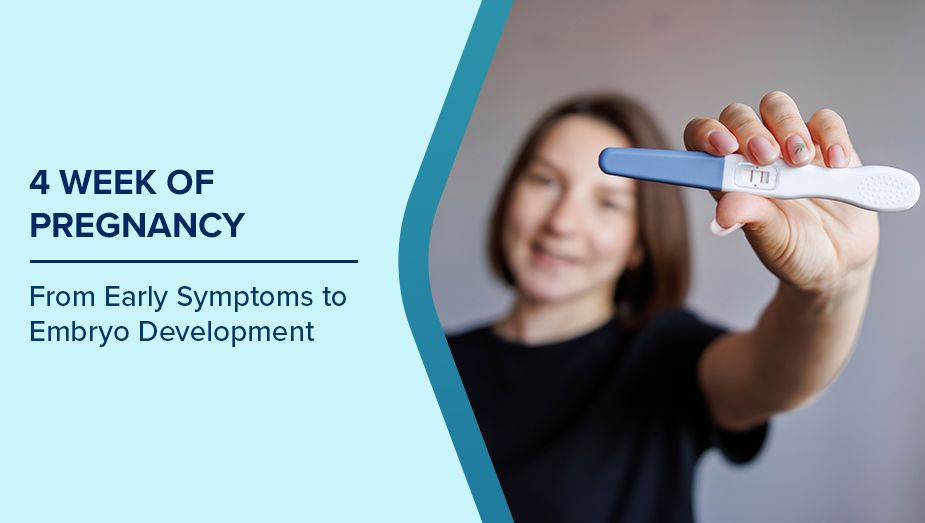
By week 4, many home pregnancy tests can start to show a positive result. This is usually the time when the body has produced enough hCG (human chorionic gonadotropin), the hormone that confirms pregnancy. After the fertilised egg implants in the uterus, hCG levels begin to rise quickly, and most tests are designed to detect this hormone in urine.
Some early-result tests may show a faint line before the missed period, but for a clearer result, testing after the first missed period is usually more accurate. The best time to take the test is in the morning, when the urine is more concentrated. If the test is negative but there are signs of pregnancy, it may help to wait a couple of days and try again, as hCG levels rise with each passing day.
It’s also possible to confirm pregnancy through a blood test, which can detect lower levels of hCG earlier than a urine test. However, for many, a home test at this stage gives the first sign that pregnancy has begun.
What Are Some Tips for a Healthy Pregnancy?
The first few weeks of pregnancy are a time of rapid change inside the body. Making healthy choices early on can help support both the baby’s development and the mother’s well-being. Below are some tips for a healthy pregnancy:
Begin with Folic Acid and Supplements
Folic acid plays an important role in early pregnancy, especially in supporting the development of the baby’s brain and spine. A daily supplement of 400 micrograms is usually recommended at this stage. Depending on diet and health status, the doctor may also advise adding iron, calcium, or vitamin D to support energy levels, bone development, and overall growth.
Focus on Simple, Nutritious Food
A balanced diet helps the body cope with early changes and supports the baby’s development. Home-cooked meals with fresh ingredients are often the safest and most nourishing option. Meals should include:
- Whole grains like wheat, rice, and oats
- Cooked vegetables and fruits
- Protein sources such as lentils, beans, paneer, or well-cooked meat
- Dairy products like milk, curd, or buttermilk for calcium
It may help to eat smaller portions more frequently to reduce nausea or bloating, which are common in the first few weeks.
Stay Hydrated Throughout the Day
Drinking enough fluids supports digestion and helps reduce tiredness and headaches. Water is the best option, but coconut water, lemon water, milk, and light soups can also help. Avoid sugary drinks and limit tea or coffee to one or two cups a day, as too much caffeine may not be suitable in pregnancy.
Get Enough Rest and Gentle Movement
Feeling more tired than usual is common in early pregnancy. Hormonal changes slow things down in the body, and extra rest helps manage this. Going to bed early, taking short naps during the day, and reducing screen time before sleep can improve rest. Light walking, stretching, or breathing exercises may help improve energy and mood, especially if done regularly.
Avoid Harmful Substances and Risky Foods
Early pregnancy is a sensitive time. Certain substances and foods should be avoided, such as:
- Alcohol, smoking, and second-hand smoke
- Raw or undercooked meat and seafood
- Soft cheeses made from unpasteurised milk
- Leftover or street food that may carry bacteria
- Herbal remedies or over-the-counter medicines not approved by a doctor
Always check with a doctor before continuing any regular medication.
Look After Emotional Well-being
Mood swings and worry can be common in the early weeks. Gentle daily routines, relaxing music, quiet reading, or talking to a loved one can help ease emotional ups and downs. Creating a calm environment and taking short breaks throughout the day also support mental balance.
Plan an Early Pregnancy Check-up
Booking a doctor’s appointment during week 4 or soon after helps confirm the pregnancy and check for any health concerns. The doctor may recommend early blood tests or a scan, review the diet, and give advice on what to expect in the coming weeks. It’s also a good time to ask questions and build confidence for the journey ahead.
What Can You Expect in the Coming Weeks?
In the weeks following week 4, many changes begin to take shape, both in the body and in the pregnancy itself.
Pregnancy Symptoms May Increase
After week 4, hormone levels continue to rise. This can cause more noticeable symptoms such as nausea, vomiting, tiredness, breast changes, mood swings, or food aversions. These changes differ from person to person—some may have stronger signs, while others may feel relatively normal.
Embryo Begins Forming Organs and Structures
From week 5 onwards, the embryo starts to develop essential body systems. The brain, spinal cord, and heart begin to form. Around week 6, an ultrasound may detect a heartbeat. The placenta also starts taking shape and will gradually begin supporting the pregnancy more fully.
First Doctor’s Visit May Be Advised
Many doctors suggest the first antenatal appointment around week 6 or 7. This may include blood and urine tests, general health checks, and an early ultrasound to confirm the pregnancy. It helps ensure everything is progressing normally and gives a chance to ask questions early on.
Emotional Changes May Start to Show
The hormonal shifts of early pregnancy may bring mood changes, anxiety, or tiredness. These feelings are common and often come and go. Keeping a calm routine, getting enough rest, and speaking to someone trustworthy can help make these early weeks feel more manageable.
Consult Today
Week 4 is when many people first find out they’re pregnant. It’s an early stage, and it's normal to have questions or feel unsure about what to do next. Speaking to a doctor now can help clear up any doubts and make sure everything is on track. Obstetricians at Max Hospital can confirm the pregnancy, explain what to expect in the coming weeks, and guide you through the early steps. If the test is positive, this is a good time to book your first check-up at Max Hospital.
Frequently Asked Questions
Is light cramping or spotting normal in week 4?
Mild cramping or light spotting can happen around this time, usually due to implantation, when the fertilised egg attaches to the uterine lining. This is often harmless and short-lived. However, if the pain becomes sharp, lasts long, or if bleeding is heavy like a period, it’s important to get medical advice, as these could be signs of something more serious.
Should any supplements be started at this stage?
Folic acid is usually recommended from the time pregnancy is planned or suspected, and it's especially important now to help support early neural development. Some doctors may also suggest iron, vitamin D, or calcium based on individual needs. It’s best to avoid starting new supplements without checking with a doctor.
Is it okay to continue daily workouts or exercise?
Light to moderate activity like walking or basic stretching is generally safe for most people during early pregnancy. However, high-impact exercises or routines that involve heavy lifting or a risk of falling should be avoided. Those who already follow an exercise routine should speak to their doctor to know what’s safe to continue.
Are food cravings or changes in taste common at week 4?
Some people begin to notice heightened smell sensitivity or dislike certain foods around this time. Cravings may also develop, but they tend to become more noticeable in the coming weeks. These changes are linked to rising hormone levels and are usually harmless unless they involve non-food items (a condition called pica), in which case medical advice is needed.
Can stress affect early pregnancy?
Short-term stress is common and usually not harmful, but ongoing high stress levels may affect sleep, appetite, and energy. It's helpful to rest when needed, maintain a light routine, and speak to someone, whether a family member or a doctor, if stress starts to interfere with daily life.
What if there are no symptoms yet?
Yes, it’s possible to have little or no symptoms at week 4. Some people only notice signs later, around weeks 5 to 6. A lack of symptoms at this stage doesn’t mean anything is wrong. If there’s a positive pregnancy test, it’s still best to book a consultation and begin early check-ups.
What should be avoided during this time?
Avoid alcohol, smoking, and any recreational drugs. Limit caffeine to safe levels (usually one small cup a day) and steer clear of undercooked meat, raw eggs, unpasteurised dairy, and certain seafood. Also, avoid taking any over-the-counter or herbal medicine without a doctor’s advice, as some may not be safe in early pregnancy.
Written and Verified by:

Related Blogs

Dr. Manju Khemani In Obstetrics And Gynaecology
Oct 27 , 2020 | 3 min read

Dr. Neera Aggarwal In Obstetrics And Gynaecology , Nutrition And Dietetics
Nov 07 , 2020 | 7 min read
Blogs by Doctor

Miscarriage: Types, Symptoms, and When to Seek Help
Dr. Arpana Haritwal In Obstetrics And Gynaecology
Oct 03 , 2024 | 10 min read
Preterm Birth: What Happens When You Go into Labour Too Soon
Dr. Arpana Haritwal In Obstetrics And Gynaecology
Aug 28 , 2025 | 13 min read
Most read Blogs

Related Blogs
Dr. Manju Khemani In Obstetrics And Gynaecology
Oct 27 , 2020 | 3 min read
Dr. Neera Aggarwal In Obstetrics And Gynaecology , Nutrition And Dietetics
Nov 07 , 2020 | 7 min read
Blogs by Doctor
Miscarriage: Types, Symptoms, and When to Seek Help
Dr. Arpana Haritwal In Obstetrics And Gynaecology
Oct 03 , 2024 | 10 min read
Preterm Birth: What Happens When You Go into Labour Too Soon
Dr. Arpana Haritwal In Obstetrics And Gynaecology
Aug 28 , 2025 | 13 min read
Most read Blogs