 WhatsApp Us (24/7)
 +91 926 888 0303 (24/7)


To Book an Appointment
Call Us+91 926 888 0303First Aid for Emergencies: Bleeding, Burns, Choking & More
By Dr. Mukesh Mehra in Internal Medicine
Sep 16 , 2025 | 4 min read

Emergencies rarely come with a warning. A sudden accident, a collapse at home, or an unexpected health crisis can leave anyone feeling helpless. Yet, knowing what to do in those first critical minutes can make the difference between life and death.
First aid is not about replacing professional medical care, but about stabilising a person until trained help arrives. By learning simple, effective steps, you can act confidently when it matters most.
Why First Aid Knowledge Matters
When emergencies strike, every second counts. Medical professionals may take time to arrive, and immediate action can prevent conditions from worsening. First aid helps in three vital ways:
- Preserving life: Actions such as CPR can keep someone alive until paramedics take over.
- Preventing complications: Correct wound care reduces the risk of severe bleeding or infection.
- Promoting recovery: Quick intervention often leads to faster, smoother healing.
First aid knowledge empowers individuals, families, and communities to act swiftly instead of standing by in fear.
First Aid for Bleeding and Wounds
Injuries with bleeding are among the most common emergencies. Acting promptly can control blood loss and reduce the risk of infection.
- Apply firm pressure to the wound using a clean cloth or sterile bandage.
- Keep the injured area elevated above heart level, if possible.
- Do not attempt to remove deeply embedded objects. Instead, apply pressure around them.
- Once bleeding slows, secure the dressing but avoid tying it too tightly.
Do not: wash a severe wound with water immediately, as this can worsen bleeding. Instead, wait until medical professionals advise or provide treatment.
First Aid for Choking
Choking can be life-threatening within minutes. Recognising the signs early is crucial.
- For adults and children over one year:
- Encourage coughing if the person can still breathe or speak.
- If the airway is blocked, perform abdominal thrusts (Heimlich manoeuvre) until the obstruction clears.
- For infants under one year:
- Lay the baby face down along your forearm.
- Deliver gentle but firm back blows between the shoulder blades.
Always seek urgent medical attention if the person does not recover quickly.
First Aid for Heart Attacks
A heart attack is a medical emergency that needs immediate attention. Key signs include chest pain, sweating, nausea, or discomfort spreading to the arm, jaw, or back.
Steps to take:
- Call emergency services right away.
- Keep the person calm and seated.
- Loosen tight clothing and ensure fresh air.
- If unresponsive and not breathing, begin CPR immediately. Push hard and quickly in the centre of the chest until trained help arrives.
First Aid for Stroke
A stroke occurs when blood flow to the brain is interrupted. The FAST method helps identify symptoms quickly:
- F – Face: Drooping on one side.
- A – Arms: Inability to raise both arms.
- S – Speech: Slurred or strange speech.
- T – Time: Act fast and call emergency services.
Do not give food, drink, or medication. Keep the person comfortable and note the time symptoms began, as this information helps doctors decide treatment.
First Aid for Burns
Burns vary in severity, but a quick response can limit damage.
- Immediately cool the burn under cool running water for at least 20 minutes.
- Remove tight clothing or jewellery near the burn, but do not attempt to peel off stuck fabric.
- Cover with a clean, non-fluffy dressing or cling film.
- Seek emergency care for deep, large, or facial burns.
Avoid using butter, toothpaste, or oils, as these worsen injury.
First Aid for Seizures
Seizures can be distressing to witness, but most last only a few minutes.
- Move dangerous objects away to prevent injury.
- Place something soft under the person’s head.
- Loosen clothing around the neck.
- Do not restrain movements or place anything in the mouth.
- After the seizure ends, roll the person onto their side and stay with them until they recover.
Call emergency services if the seizure lasts longer than five minutes or repeats without recovery.
Other Common Situations
- Drowning: If you are a confident swimmer, remove the person from the water safely. If not, call for help and use a rope, stick, or float to reach them. Once out, check breathing and begin CPR if needed.
- Fainting: Lay the person flat, raise their legs slightly, and loosen tight clothing. Do not offer food or drink until they are fully awake and alert. Seek help if they do not recover quickly.
- Fractures: Keep the injured area still and support it with a splint or sling. Apply a covered ice pack to ease swelling. Avoid moving or straightening the bone and call for medical help.
When to Call Emergency Services
First aid stabilises, but professional help is often essential. Call immediately if:
- Breathing or circulation is compromised.
- Bleeding cannot be controlled.
- Burns are extensive or involve the face, hands, or genitals.
- Seizures are prolonged or repeated.
- Chest pain or stroke symptoms are present.
Building Confidence in First Aid
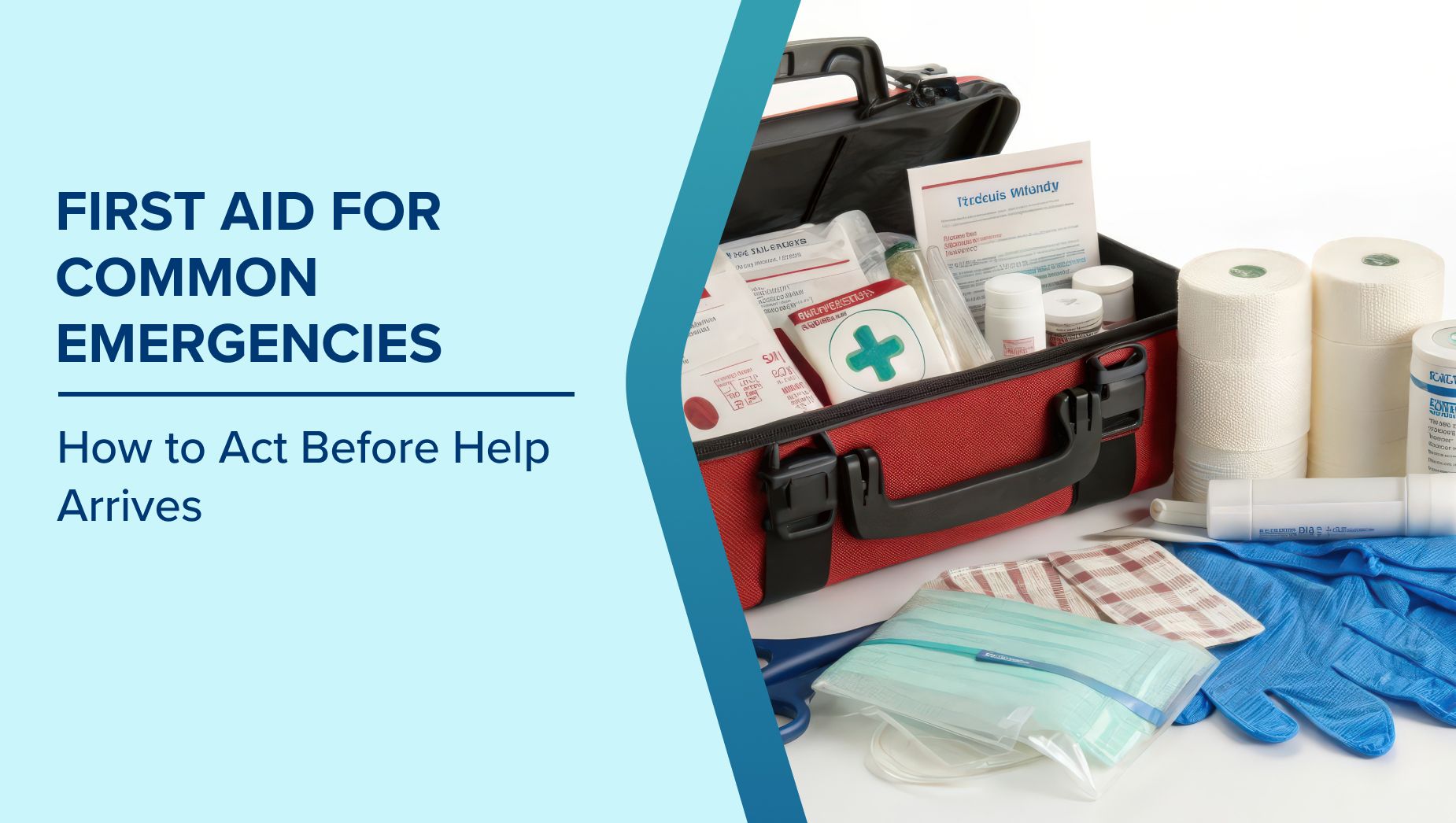
Confidence comes with preparation. Consider enrolling in certified first aid and CPR training courses. Keep a well-stocked first aid kit at home, in your car, and at work. Community awareness programmes also help normalise quick, effective responses during crises.
Conclusion
First aid is about stepping up when it matters most. You do not need to be a medical professional to save a life. Simple skills, calm actions, and the right knowledge can bridge the critical gap before professional help arrives. Equip yourself, stay prepared, and encourage others to do the same.
FAQs
Can children learn basic first aid?
Yes, even primary school-aged children can be taught simple steps such as calling emergency services, placing someone in the recovery position, or helping with minor cuts under supervision.
How often should you refresh your first aid training?
It is recommended to refresh training every two to three years. Updated guidelines and techniques are regularly introduced, so staying current ensures you act effectively in emergencies.
How can you stay calm while giving first aid in an emergency?
Take a deep breath and focus on one step at a time. Staying calm helps you act quickly and effectively until help arrives.
What items should always be kept in a home first aid kit?
A well-prepared kit should include sterile dressings, adhesive plasters, antiseptic wipes, scissors, tweezers, a digital thermometer, disposable gloves, and an emergency contact list.
Can mobile apps help guide first aid in real emergencies?
Yes, several trusted organisations offer apps with step-by-step first aid instructions, videos, and emergency contact features. They provide real-time support when every second counts.
Written and Verified by:

Related Blogs


Dr. Vandana Boobna In Internal Medicine
Nov 08 , 2020 | 2 min read
Blogs by Doctor

Are you Ensuring a Good Health for Elderly People?
Dr. Mukesh Mehra In Internal Medicine
Jun 23 , 2016 | 2 min read

Unexplained Weight Loss: Should You See a Doctor?
Dr. Mukesh Mehra In Internal Medicine
May 12 , 2017 | 3 min read
Most read Blogs


Related Blogs
Dr. Vandana Boobna In Internal Medicine
Nov 08 , 2020 | 2 min read
Blogs by Doctor
Are you Ensuring a Good Health for Elderly People?
Dr. Mukesh Mehra In Internal Medicine
Jun 23 , 2016 | 2 min read
Unexplained Weight Loss: Should You See a Doctor?
Dr. Mukesh Mehra In Internal Medicine
May 12 , 2017 | 3 min read
Most read Blogs