 WhatsApp Us (24/7)
 +91 926 888 0303 (24/7)


To Book an Appointment
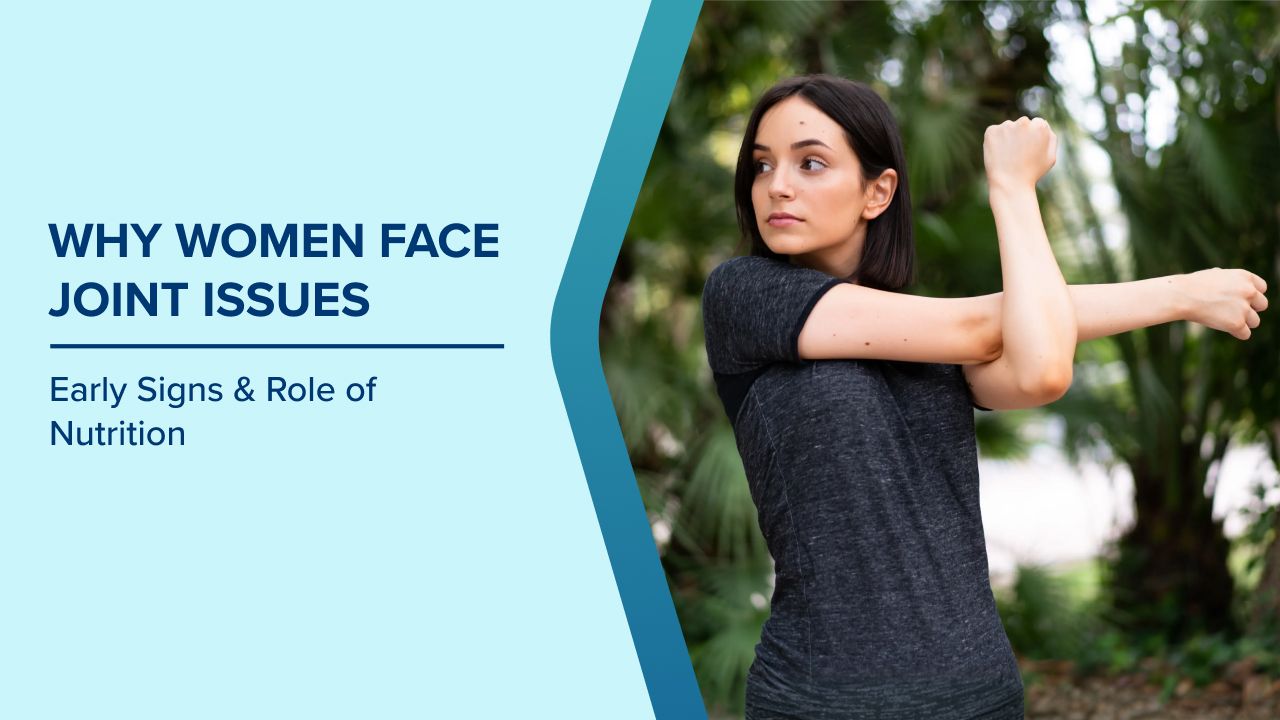
Call Us+91 926 888 0303Why Women Face Joint Issues: Early Signs & Role of Nutrition
By Dr. Simon Thomas in Orthopaedics & Joint Replacement
Apr 30 , 2026

Joint pain is often dismissed as “part of ageing,” especially in women. But the truth is, women experience joint problems more frequently, earlier, and often more severely than men. Understanding why this happens and what can be done about it is the first step toward healthier, pain-free living.
After age 45, women constitute a significant proportion of patients seeking treatment for knee arthritis. Thus, early awareness and lifestyle changes can delay or prevent the need for joint surgery.
Why Are Women More Prone to Joint Issues?
A woman’s body goes through multiple hormonal changes during puberty, pregnancy, and menopause. Estrogen, a key hormone, plays an important role in maintaining bone density and joint health. After menopause, the drop in estrogen levels accelerates bone loss and increases the risk of osteoarthritis and osteoporosis.
Additionally, women generally have a wider pelvis and different limb alignment compared to men. This natural anatomy increases stress on the knees, which partly explains why knee osteoarthritis is more common among women.
Autoimmune conditions like rheumatoid arthritis are also more frequently seen in women. Lifestyle factors such as vitamin D deficiency, calcium deficiency, sedentary routines, and weight gain further worsen joint health.
Early Signs You Should Not Ignore
Joint problems rarely start suddenly. They give warning signs:
Persistent knee pain while climbing stairs
Morning stiffness lasting more than 20–30 minutes
Swelling around joints
Frequent back or hip discomfort
A feeling of weakness or instability
Ignoring these early symptoms often leads to advanced damage, where treatment becomes more complex.
The Role of Nutrition
Nutrition plays a vital role in joint health. Women should ensure adequate intake of:
Calcium (milk, curd, paneer, leafy greens)
Vitamin D (sunlight exposure, supplements if required)
Protein (dal, legumes, eggs, tofu, lean meats)
Vitamin D deficiency is extremely common in women who spend most of their time indoors. Regular screening and supplementation under medical guidance can make a significant difference.
Regular Exercise
Movement is essential, as avoiding activity due to pain often worsens the condition.
Low-impact exercises like walking, cycling, swimming, and yoga help maintain joint mobility and strengthen surrounding muscles.
Strength training, especially for the quadriceps and hip muscles, is particularly beneficial for knee health.
For postmenopausal women, weight-bearing exercises help maintain bone density and reduce the risk of osteoporosis.
Management of Weight
Even 5–7 kg of excess weight can significantly increase stress on knee joints. Every additional kilogram of body weight adds nearly three to four times that load on the knees while walking. Maintaining a healthy weight is one of the simplest and most effective ways to prevent joint degeneration.
When to Seek Medical Advice
If pain persists for more than a few weeks, affects daily activities, or is associated with swelling and deformity, a specialist consultation is advisable. Early intervention, whether through physiotherapy, medications, lifestyle changes, or minimally invasive procedures, can prevent the need for major surgery later.
Modern advancements like joint preservation procedures and robotic-assisted joint replacement have made treatment outcomes more predictable and recovery smoother. However, prevention and timely action remain the most powerful tools.
Conclusion
Joint health is not a luxury; it is essential for independence and quality of life. Women often prioritise family over themselves, ignoring their own health concerns. But strong joints mean the ability to walk, work, care, and live an active life.
Taking small, consistent steps, maintaining balanced nutrition, engaging in regular exercise, managing weight, and seeking timely medical advice can help ensure that women remain strong at every stage of life.
Because when women stay strong, families stay strong too.
Written and Verified by:

Related Blogs


Dr. Ashish Jain In Orthopaedics & Joint Replacement
Nov 07 , 2020 | 1 min read
Blogs by Doctor

Technology Advancement in Robotic Knee Replacement: Procedure & Benefits
Dr. Simon Thomas In Orthopaedics & Joint Replacement , Robotic Surgery
Sep 16 , 2024 | 4 min read

Benefits of Revision Hip Replacement
Dr. Simon Thomas In Orthopaedics & Joint Replacement , Robotic Surgery
Oct 09 , 2024 | 3 min read
Most read Blogs


Related Blogs
Dr. Ashish Jain In Orthopaedics & Joint Replacement
Nov 07 , 2020 | 1 min read
Blogs by Doctor
Technology Advancement in Robotic Knee Replacement: Procedure & Benefits
Dr. Simon Thomas In Orthopaedics & Joint Replacement , Robotic Surgery
Sep 16 , 2024 | 4 min read
Benefits of Revision Hip Replacement
Dr. Simon Thomas In Orthopaedics & Joint Replacement , Robotic Surgery
Oct 09 , 2024 | 3 min read
Most read Blogs