 WhatsApp Us (24/7)
 +91 926 888 0303 (24/7)


To Book an Appointment
Call Us+91 926 888 0303Cholesterol Myths vs Facts: What People Still Get Wrong About Heart Health
By Dr. Sehba Asim Nehal in Internal Medicine
Dec 10 , 2025 | 5 min read

Cholesterol has been at the centre of health conversations for decades. Yet even today, with all the information available, many people still feel confused about what cholesterol actually does, how it affects the heart, and what truly matters when it comes to managing it. Some believe that all cholesterol is harmful. Others assume only older adults need to be concerned. Many think diet alone controls cholesterol levels, while some completely underestimate the role of genetics.
This mix of misunderstandings leads to unnecessary fear for some and dangerous complacency for others. The truth is that cholesterol is more complex than a simple “good vs bad” narrative, and knowing these nuances can help you take informed steps toward better heart health.
What Is Cholesterol and Why Does Your Body Need It?
Cholesterol is a waxy compound found in every cell of your body. Contrary to popular belief, it’s not inherently harmful. In fact, your body requires cholesterol for essential functions such as:
- Producing hormones
- Building cell membranes
- Supporting vitamin D synthesis
- Helping with digestion through bile acid production
Your liver produces most of the cholesterol you need. The rest comes from the foods you eat.
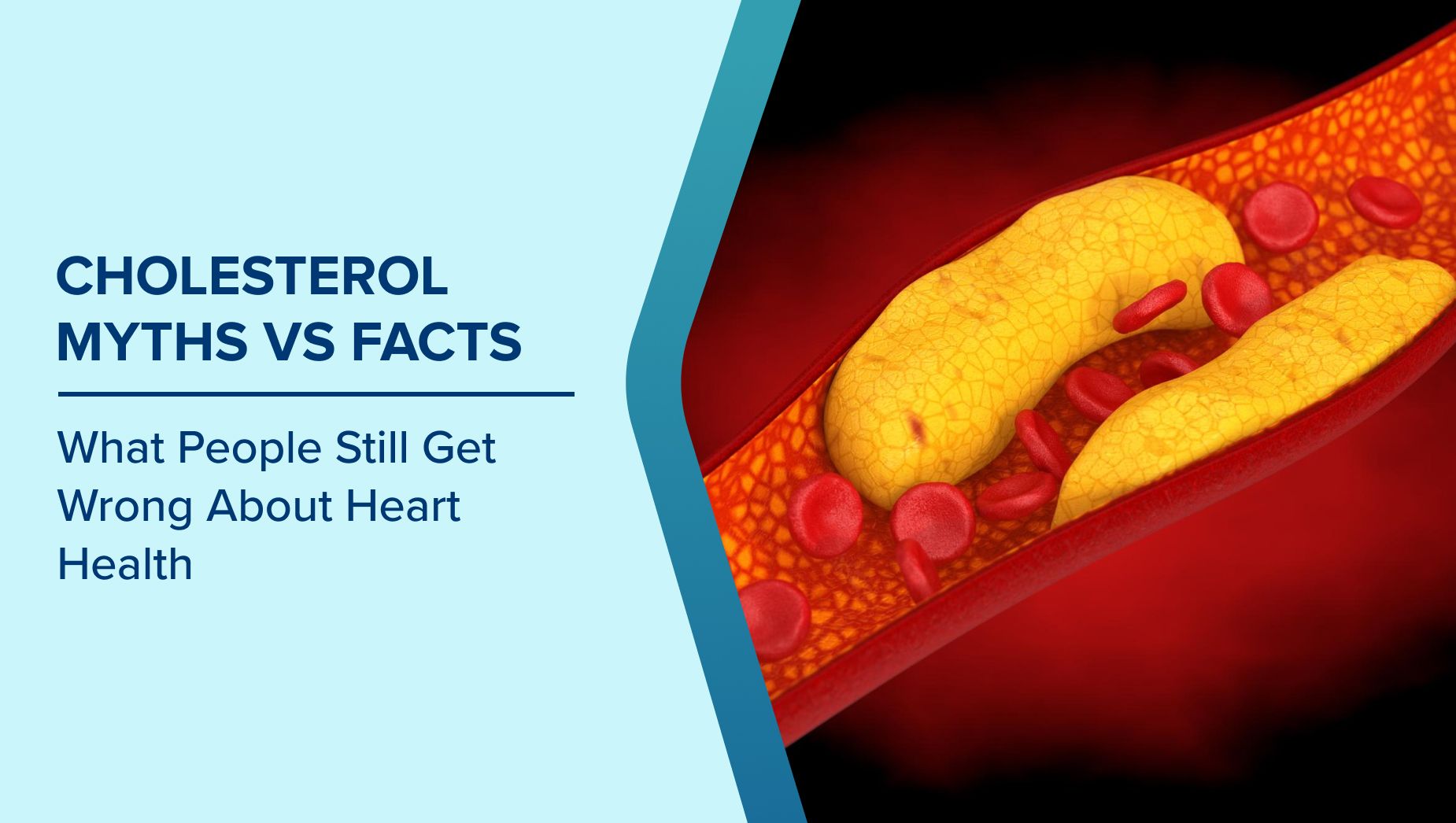
Problems arise only when cholesterol levels become imbalanced, increasing the risk of plaque build-up inside the arteries, which may eventually lead to heart attacks or strokes.
Cholesterol Myths vs Facts
Myth 1: “All Cholesterol Is Bad”
Fact:
Cholesterol is essential for survival. It becomes a concern only when harmful levels start to build up.
There are different types of cholesterol:
- LDL (Low-Density Lipoprotein): Often called “bad cholesterol,” high levels can contribute to plaque in arteries.
- HDL (High-Density Lipoprotein): Referred to as “good cholesterol,” it helps transport excess cholesterol away from blood vessels for disposal.
- Triglycerides: A type of fat in the blood; elevated levels increase cardiovascular risk.
A healthy balance among these three markers, not avoiding cholesterol entirely, is what matters.
Myth 2: “Cholesterol Problems Happen Only Later in Life”
Fact:
High cholesterol can start developing silently in the teenage years or early adulthood.
Atherosclerosis (plaque formation) progresses gradually over many years. Poor diet, sedentary lifestyle, smoking, and family history can accelerate this process much earlier than most people realise. Screening is important even for younger individuals, particularly those with risk factors.
Myth 3: “You’ll Know If You Have High Cholesterol”
Fact:
High cholesterol usually has no symptoms.
Most people discover elevated cholesterol levels only during routine blood tests. Relying on physical signs or waiting for symptoms can be dangerous, as complications such as a heart attack may be the first indicator.
Myth 4: “Thin People Don’t Get High Cholesterol”
Fact:
High cholesterol affects people of all body types.
Obesity is a known risk factor, but slim individuals can also have high LDL or triglyceride levels due to factors such as:
- Genetics
- Poor dietary habits
- Smoking
- Stress
- Hormonal changes
A healthy weight does not automatically guarantee healthy cholesterol.
Myth 5: “Cholesterol Comes Only From Fatty Foods”
Fact:
Your liver naturally produces cholesterol. Food contributes only part of it.
Diet affects cholesterol levels, but it’s not the sole factor. Even individuals who eat very little fat may have high cholesterol because of genetics, smoking, hormonal imbalances, or metabolic disorders. Conversely, not all fats raise cholesterol; healthy fats (like omega-3s) are beneficial.
Myth 6: “If My LDL Is High but I Feel Fine, I Don’t Need Treatment”
Fact:
Untreated high cholesterol silently damages arteries over time.
Even without symptoms, raised LDL levels steadily increase the risk of cardiovascular disease. Early treatment, whether through lifestyle changes or prescribed medication, prevents long-term complications.
Myth 7: “Cholesterol-Lowering Medicines Are Dangerous”
Fact:
Statins and other lipid-lowering drugs are among the safest and most widely used medications worldwide.
They effectively reduce LDL and significantly lower the risk of heart attack and stroke. Mild side effects like muscle aches may occur in some people, but serious side effects are rare. Doctors carefully assess risks versus benefits before prescribing them.
Myth 8: “Only Diet Can Fix High Cholesterol”
Fact:
Diet is important, but not always enough.
For many people, especially those with genetic conditions like familial hypercholesterolaemia, dietary changes alone cannot reduce cholesterol to safe levels. These individuals often require medical treatment along with lifestyle adjustments.
Myth 9: “Once My Cholesterol Improves, I Can Stop Being Careful”
Fact:
Cholesterol management is lifelong.
Stopping medication or slipping back into unhealthy habits can cause levels to rise again. Heart health requires consistent monitoring and long-term lifestyle commitment.
What Really Affects Cholesterol Levels?
Understanding the actual factors influencing cholesterol can help you take better control of your cardiovascular health.
Genetics
Inherited conditions can cause extremely high LDL levels, regardless of diet or lifestyle.
Diet Choices
Foods rich in trans fats, saturated fats, and refined sugars increase unhealthy cholesterol levels.
Physical Activity
Regular exercise raises HDL and reduces LDL and triglycerides.
Smoking
Tobacco lowers HDL and damages blood vessels, speeding up plaque formation.
Stress
Chronic stress may contribute to hormonal shifts and unhealthy eating habits that raise cholesterol.
Medical Conditions
Diabetes, thyroid disorders, kidney disease, and liver disease can all influence cholesterol levels.
How to Maintain Healthy Cholesterol Levels
Eat Heart-Healthy Foods
Include fruits, vegetables, legumes, nuts, seeds, whole grains, fish, and healthy oils (olive oil, flaxseed oil).
Reduce Saturated and Trans Fats
Limit processed meats, packaged snacks, deep-fried foods, and high-fat dairy.
Increase Soluble Fibre
Oats, lentils, beans, flaxseeds, and apples help reduce LDL naturally.
Stay Active
Aim for at least 150 minutes of moderate exercise each week.
Quit Smoking
Stopping tobacco use improves HDL rapidly.
Maintain a Healthy Weight
Even small reductions in weight can significantly improve cholesterol levels.
Limit Alcohol
Heavy drinking increases triglycerides and can harm the liver.
When Should You Get Your Cholesterol Checked?
It is generally recommended:
- Every 5 years for adults aged 20–45
- Every 1–2 years for adults over 45
- More frequently, if you have a chronic illness, obesity, a family history of heart disease, or are on cholesterol medication
A lipid profile test measures LDL, HDL, total cholesterol, and triglycerides, together giving a clear picture of heart health.
Conclusion
Cholesterol is often misunderstood, but knowing the truth behind the myths can make a remarkable difference in how you protect your heart. Instead of fearing cholesterol or assuming it affects only certain people, it’s far more empowering to understand how your body uses cholesterol, what pushes it out of balance, and how lifestyle and medical care can help maintain healthy levels.
With the right knowledge, consistent habits, and timely medical check-ups, cholesterol becomes something you can effectively manage, not something to fear.
FAQs
Can herbal supplements cure high cholesterol?
Herbal supplements like garlic or green tea may offer mild benefits, but they cannot cure high cholesterol. They should not replace prescribed medication.
Is fasting necessary before a cholesterol test?
Some doctors ask for a fasting sample, especially when measuring triglycerides. Others may allow a non-fasting test depending on your health status.
Can menopause affect cholesterol levels?
Yes, hormonal changes during menopause may increase LDL and triglycerides, which is why regular monitoring becomes even more important.
Does drinking coffee raise cholesterol?
Filtered coffee has minimal impact, but unfiltered coffee (such as French press or Turkish coffee) can slightly increase cholesterol due to natural oils called diterpenes.
Can dehydration affect cholesterol readings?
Severe dehydration may make blood thicker and temporarily alter readings. It’s best to drink water normally before testing unless instructed otherwise.
Written and Verified by:

Related Blogs


Dr. Vandana Boobna In Internal Medicine
Nov 08 , 2020 | 2 min read
Blogs by Doctor

Interpreting CBC Test Results: What Your Blood Tells You about Your Health
Dr. Sehba Asim Nehal In Internal Medicine
Jul 22 , 2024 | 6 min read

Radioallergosorbent Test (RAST): Purpose, Risk & Results Interpretation
Dr. Sehba Asim Nehal In Internal Medicine
Apr 28 , 2025 | 3 min read
Most read Blogs


Related Blogs
Dr. Vandana Boobna In Internal Medicine
Nov 08 , 2020 | 2 min read
Blogs by Doctor
Interpreting CBC Test Results: What Your Blood Tells You about Your Health
Dr. Sehba Asim Nehal In Internal Medicine
Jul 22 , 2024 | 6 min read
Radioallergosorbent Test (RAST): Purpose, Risk & Results Interpretation
Dr. Sehba Asim Nehal In Internal Medicine
Apr 28 , 2025 | 3 min read
Most read Blogs