 WhatsApp Us (24/7)
 +91 926 888 0303 (24/7)


To Book an Appointment
Call Us+91 926 888 0303Who Eligible for Minimally Invasive Heart Surgery: Type & Key Factors
By Dr. Vaibhav Mishra in Cardiac Sciences
Feb 06 , 2026
8

Minimally invasive heart surgery has changed how many cardiac conditions are treated today. Smaller incisions, reduced physical trauma, and quicker recovery have made it an attractive option for patients and clinicians alike. However, despite its growing popularity, this approach is not suitable for everyone.
Being a suitable candidate for minimally invasive heart surgery depends on a combination of medical, anatomical, functional, and procedural factors. Knowing these considerations helps patients make informed decisions and sets realistic expectations before surgery.
Understanding Minimally Invasive Heart Surgery
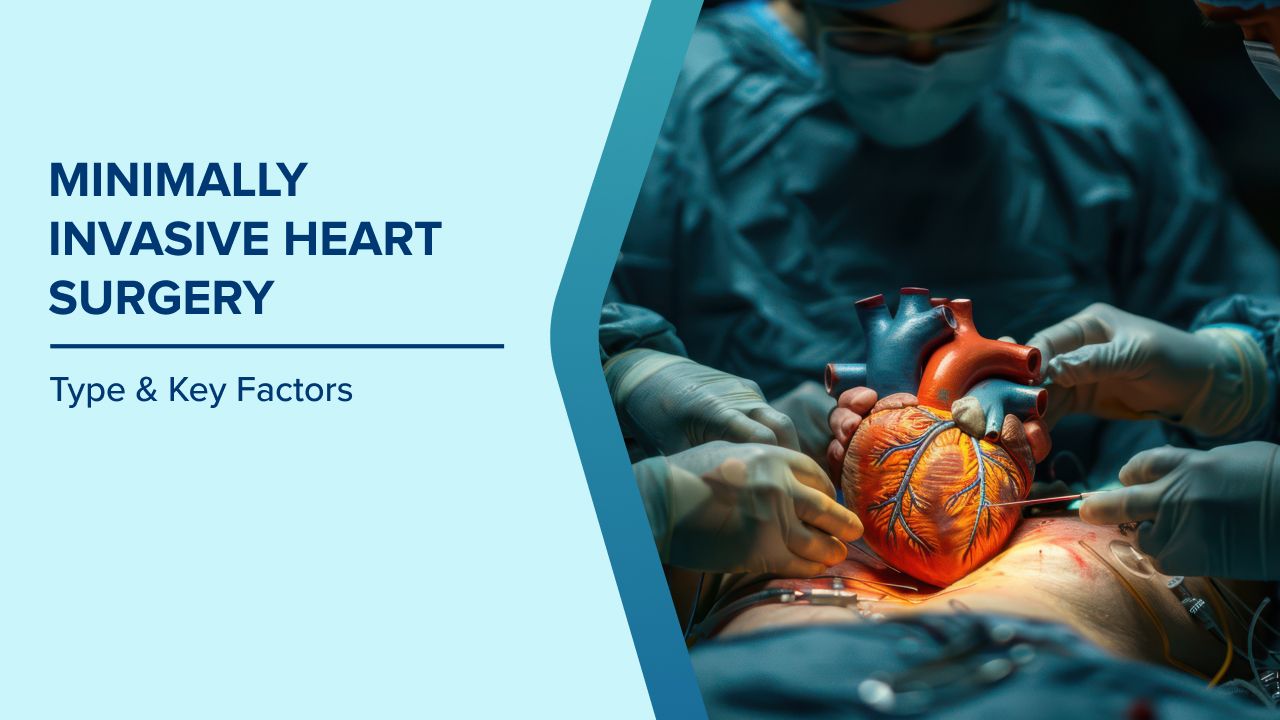
Minimally invasive heart surgery refers to cardiac procedures performed through small incisions between the ribs or limited chest openings, avoiding full sternotomy in selected cases. While the surgical goal remains the same as conventional open-heart surgery, the access route and recovery experience differ.
Importantly, suitability for this approach is not based on preference alone. It depends on whether the technique can achieve the same safety and effectiveness as traditional surgery for a specific patient.
Why Patient Selection Is Crucial
Unlike standard surgical approaches that can accommodate a wide range of anatomical variations, minimally invasive techniques require precision, visibility, and controlled access. Attempting this approach with an unsuitable candidate may increase procedural complexity or compromise outcomes.
Therefore, cardiologists and cardiac surgeons prioritise clinical appropriateness over cosmetic or recovery advantages when recommending minimally invasive surgery.
Key Factors That Determine Candidacy for Minimally Invasive Heart Surgery
Type and Severity of the Heart Condition
The underlying cardiac problem plays the most decisive role.
Minimally invasive heart surgery is commonly considered for:
- Isolated valve disease (mitral, aortic, tricuspid)
- Selected congenital heart defects
- Certain rhythm disorders requiring surgical correction
- Specific coronary artery disease patterns
However, patients with multiple valve involvement, extensive coronary disease, or advanced heart failure may require broader surgical access.
Severity also matters. Advanced structural damage, severe calcification, or unstable heart function may limit the feasibility of minimally invasive techniques.
Location and Accessibility of the Affected Area
Not all parts of the heart are equally accessible through small incisions.
Surgeons assess:
- Whether the diseased valve or structure can be reached safely
- If instruments can be positioned with adequate control
- Whether repair or replacement can be performed without compromising accuracy
For example, mitral valve procedures are often well suited to minimally invasive approaches, whereas certain complex aortic conditions may not be.
Overall Heart Function
Cardiac performance influences both surgical safety and recovery.
Factors assessed include:
- Left ventricular function
- Presence of cardiomyopathy
- Existing rhythm abnormalities
- Pulmonary artery pressures
Patients with preserved or moderately reduced heart function generally tolerate minimally invasive procedures better than those with severely weakened cardiac output.
Patient’s Age and Physiological Reserve
Age alone does not determine eligibility, but biological fitness matters more than chronological age.
Younger and middle-aged patients often benefit from:
- Faster functional recovery
- Earlier return to work
- Reduced musculoskeletal impact
Older adults may still be suitable candidates if they:
- Have stable organ function
- Are free from major frailty
- Can tolerate single-lung ventilation when required
In many cases, minimally invasive surgery may actually reduce surgical stress in older individuals when carefully selected.
Lung Health and Breathing Capacity
Many minimally invasive heart procedures require temporary lung deflation on one side to improve surgical access.
This makes lung function an important consideration. Surgeons evaluate:
- History of chronic lung disease
- Smoking-related damage
- Pulmonary function test results
Patients with severe respiratory compromise may face a higher risk during minimally invasive approaches.
Previous Heart or Chest Surgeries
Prior surgeries can alter internal anatomy.
Scar tissue from earlier procedures may:
- Limit safe access routes
- Increase the risk of bleeding
- Reduce visibility
That said, previous surgery does not automatically rule out minimally invasive heart surgery. In selected cases, it may still be feasible with advanced imaging and surgical planning.
Body Structure and Chest Anatomy
Anatomical variations affect surgical access.
Surgeons consider:
- Chest wall shape
- Rib spacing
- Heart position within the chest
- Body mass index
Extreme obesity or unusual chest anatomy may make instrument navigation challenging, though many patients with higher BMI can still undergo minimally invasive procedures safely.
Vascular Health
Minimally invasive surgery often relies on peripheral blood vessel access for heart-lung machine support.
Before surgery, doctors assess:
- Femoral and iliac artery health
- Presence of vascular disease
- Risk of vessel injury or embolism
Healthy blood vessels improve procedural safety and reduce complications related to circulation management.
Diagnostic Tests That Help Determine Suitability
To decide candidacy, doctors rely on a combination of advanced investigations, including:
- Echocardiography for structural assessment
- CT scans to evaluate chest and vascular anatomy
- Coronary angiography, when required
- Pulmonary function tests
- Blood tests to assess overall health
These investigations allow for individualised surgical planning.
Situations Where Minimally Invasive Surgery May Not Be Ideal
Minimally invasive heart surgery may not be advised when:
- Multiple complex procedures are required simultaneously
- Severe calcification limits safe repair
- Emergency surgery is needed
- Infection affects the heart structures extensively
- Anatomical access is unsafe
In such cases, conventional open-heart surgery may offer better exposure and control.
The Importance of Surgical Expertise and Centre Experience
Even when a patient appears suitable, the experience of the surgical team matters.
Minimally invasive heart surgery requires:
- Advanced training
- Specialised equipment
- A coordinated cardiac care team
Outcomes are consistently better when procedures are performed in centres with established minimally invasive cardiac programmes.
Shared Decision-Making: A Critical Step
Choosing minimally invasive heart surgery is not purely a technical decision. It involves:
- Understanding risks and benefits
- Considering recovery goals
- Aligning expectations with medical reality
A thorough discussion between patient, cardiologist, and surgeon ensures that the chosen approach supports long-term heart health.
Conclusion
Minimally invasive heart surgery offers meaningful advantages for the right patient, but it is not universally suitable.
When these goals align with minimally invasive techniques, patients are well positioned to benefit from this advanced surgical approach.
Frequently Asked Questions
Can I request minimally invasive heart surgery if I meet some criteria?
You can discuss it with your doctor, but the final decision depends on medical safety and appropriateness.
Does being fit automatically make me a good candidate?
General fitness helps recovery but does not replace anatomical and procedural considerations.
Are minimally invasive procedures always safer?
They may reduce certain risks but are not always safer in complex disease.
Will test results alone decide my eligibility?
Tests guide decisions, but clinical judgement and surgical expertise are equally important.
Can candidacy change over time?
Yes, disease progression or improvement in overall health may influence surgical options.
Written and Verified by:

Related Blogs

Dr. Ritwick Raj Bhuyan In Cardiac Sciences , Cardiac Surgery (CTVS)
Nov 08 , 2020 | 2 min read

Dr. Gaurav Minocha In Cardiac Sciences
Nov 08 , 2020 | 4 min read
Blogs by Doctor

Tachycardia: Causes, Symptoms and Treatment
Dr. Vaibhav Mishra In Cardiac Surgery (CTVS)
May 16 , 2024 | 11 min read

Stress and Hypertension: How Stress Leads to High Blood Pressure
Dr. Vaibhav Mishra In Cardiac Sciences , Cardiac Surgery (CTVS)
Jun 17 , 2024 | 2 min read
Most read Blogs


Related Blogs
Dr. Ritwick Raj Bhuyan In Cardiac Sciences , Cardiac Surgery (CTVS)
Nov 08 , 2020 | 2 min read
Dr. Gaurav Minocha In Cardiac Sciences
Nov 08 , 2020 | 4 min read
Blogs by Doctor
Tachycardia: Causes, Symptoms and Treatment
Dr. Vaibhav Mishra In Cardiac Surgery (CTVS)
May 16 , 2024 | 11 min read
Stress and Hypertension: How Stress Leads to High Blood Pressure
Dr. Vaibhav Mishra In Cardiac Sciences , Cardiac Surgery (CTVS)
Jun 17 , 2024 | 2 min read
Most read Blogs