 WhatsApp Us (24/7)
 +91 926 888 0303 (24/7)


To Book an Appointment
Call Us+91 926 888 0303Cancer Treatment Side Effects: Causes, Management & Care
By Dr. Satyaranjan Das in Cancer Care / Oncology , Bone Marrow Transplant , Haematology , Musculoskeletal Oncology
Feb 23 , 2026

Cancer treatment is not just about removing or controlling the disease. It is also about supporting the person going through it. Chemotherapy, radiation therapy, targeted therapy and immunotherapy have helped millions of patients live longer and better lives. At the same time, these treatments can bring physical and emotional changes that are often unexpected and difficult to talk about.
Why Cancer Treatment Causes Side Effects
Cancer treatments are designed to target fast-growing cancer cells. The challenge is that some healthy cells also grow and divide quickly. These include cells in the skin, hair, digestive system, blood and immune system. When treatment affects these healthy cells, side effects appear.
Not everyone experiences side effects in the same way. The type of treatment, the dose, the duration and a person’s overall health all play a role. Some side effects are temporary, while others may last longer or appear after treatment ends.
Understanding that side effects are a sign of treatment working can sometimes make them easier to accept. At the same time, no one should feel they have to suffer in silence. Most side effects can be reduced when addressed early.
Fatigue That Feels Different From Normal Tiredness
Cancer-related fatigue is one of the most common and misunderstood side effects. It is not the kind of tiredness that improves with sleep. Patients often describe it as a heavy, drained feeling that affects both the body and mind.
Why It Happens
Fatigue can result from the treatment itself, anaemia, changes in metabolism, pain, emotional stress or disturbed sleep. Even simple tasks may feel exhausting.
What Helps
- Short rest breaks instead of long naps
- Light physical activity, like slow walking, when possible
- Eating small, frequent meals to maintain energy
- Accepting help with daily tasks without guilt
- Talking to the care team if fatigue is severe or worsening
Fatigue often improves gradually after treatment ends, but it can take time. Patience and self-compassion are essential.
Nausea, Appetite Changes and Digestive Discomfort
Many patients worry about nausea even before treatment begins. While modern medicines have significantly reduced severe vomiting, digestive changes are still common.
Common Digestive Side Effects
- Nausea or vomiting
- Loss of appetite
- Changes in taste or smell
- Constipation or loose stools
- Bloating or stomach discomfort
Practical Coping Tips
- Eat bland foods during difficult days
- Avoid strong smells when appetite is low
- Sip fluids slowly throughout the day
- Try room temperature foods, which may feel easier to tolerate
- Speak up early so medicines can be adjusted
Taste changes can be frustrating. Some people find that plastic cutlery reduces metallic taste, while others prefer sour or tangy flavours. These changes usually improve after treatment.
Hair Loss, Skin Changes, and Body Image Concerns
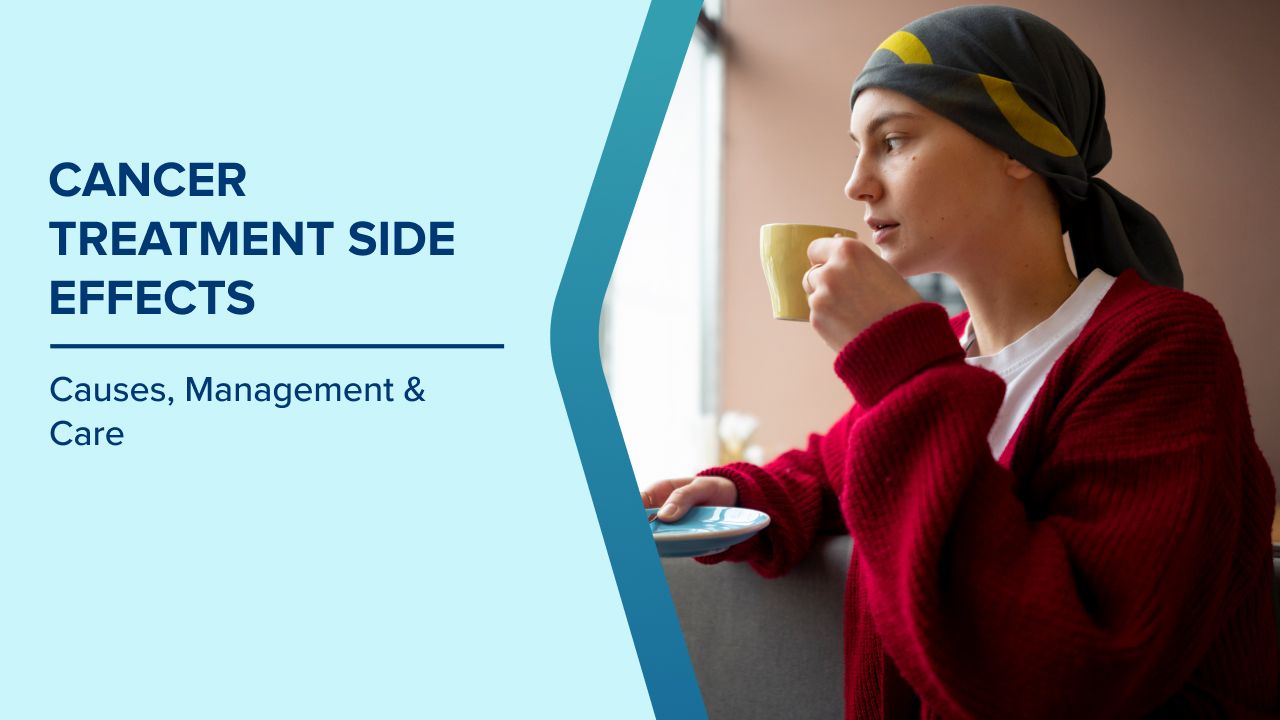
Hair loss is one of the most visible side effects and often the most emotionally challenging. Skin and nail changes can also occur depending on the treatment.
Hair Related Changes
- Hair thinning or complete hair loss
- Changes in hair texture when it grows back
- Loss of eyebrows or eyelashes in some cases
Skin-Related Changes
- Dryness or itching
- Darkening or sensitivity
- Rashes or peeling in treated areas
Coping With Appearance Changes
- Preparing emotionally before hair loss begins
- Choosing scarves, wigs, or hats that feel comfortable
- Using gentle fragrance-free skin products
- Protecting skin from sun exposure
- Remembering that these changes do not define identity or strength
Support groups and counselling can help patients process changes in appearance and self-image.
Pain, Discomfort, and Sensory Changes
Pain during cancer treatment may come from the disease itself, procedures, nerve irritation or inflammation. Sensory changes, such as tingling, numbness, or burning sensations, may also occur.
Common Pain-Related Experiences
- Joint or muscle aches
- Headaches
- Mouth sores
- Neuropathy in hands and feet
Managing Pain Safely
- Reporting pain early instead of waiting
- Using prescribed medicines as directed
- Trying gentle stretching or relaxation techniques
- Protecting numb areas from injury
- Asking about dose adjustments if pain interferes with daily life
Pain management is a key part of cancer care, and relief is possible in most cases.
Changes in Blood Counts and Infection Risk
Many cancer treatments affect the bone marrow where blood cells are made. This can lead to low white blood cell, red blood cell, or platelet counts.
What Patients May Notice
- Increased infections
- Shortness of breath
- Easy bruising or bleeding
Daily Precautions
- Washing hands frequently
- Avoiding crowded places during low-immunity periods
- Eating well-cooked foods
- Monitoring temperature regularly
- Seeking medical advice promptly for a fever
These changes are closely monitored through blood tests and often improve with time or supportive treatment.
Conclusion
Cancer treatment is a complex journey filled with challenges and moments of resilience. Understanding side effects and knowing how to manage them empowers patients and caregivers to face treatment with confidence and clarity.
Written and Verified by:

Related Blogs

Dr. Kanika Batra Modi In Cancer Care / Oncology
Nov 07 , 2020 | 3 min read

Dr. R.Ranga Rao In Medical Oncology , Cancer Care / Oncology , Thoracic Oncology
Nov 07 , 2020 | 2 min read
Blogs by Doctor

Why Thalassaemia Screening Should Be a Priority Before Marriage and Pregnancy
Dr. Satyaranjan Das In Hematology Oncology
May 19 , 2025 | 5 min read
Most read Blogs


Related Blogs
Dr. Kanika Batra Modi In Cancer Care / Oncology
Nov 07 , 2020 | 3 min read
Dr. R.Ranga Rao In Medical Oncology , Cancer Care / Oncology , Thoracic Oncology
Nov 07 , 2020 | 2 min read
Blogs by Doctor
Why Thalassaemia Screening Should Be a Priority Before Marriage and Pregnancy
Dr. Satyaranjan Das In Hematology Oncology
May 19 , 2025 | 5 min read
Most read Blogs