 WhatsApp Us (24/7)
 +91 926 888 0303 (24/7)


To Book an Appointment
Call Us+91 926 888 0303Radiation Therapy for Cancer: Pain, Side Effects & Recovery
By Dr. Abhishek Gulia in Radiation Oncology , Cancer Care / Oncology , Neuro Oncology , Gastrointestinal & Hepatobiliary Oncology
Jan 16 , 2026

Radiation therapy is one of the most time-tested and effective treatments for cancer, yet many patients approach it with fear and uncertainty. Since time immemorial, mankind has utilised radiation to cure cancers and save innumerable human lives. The type of radiation used in the treatment of cancer is the same as that used in a diagnostic chest X-ray. Just as most people who have undergone a chest X-ray know that it is painless, similarly, radiation therapy for cancer treatment is also completely pain-free. Patients don’t feel any kind of pain, warmth, cold or any other sensation while receiving radiation therapy.
What Is Radiation Therapy and Why Is It Used?
Radiation therapy is a medical treatment that uses high-energy X-rays to destroy tumour cells. Most cancers like nasopharynx cancer, base of tongue cancer, larynx or throat cancer, lung cancer, cervix cancer, anal cancer and prostate cancer are curable with radiation therapy. Chemotherapy is often used along with radiation to slightly enhance the potency of radiation and thereby increase the chance of a complete cure of cancer.
Radiation does not act by producing heat or burning the tumour cells; it damages the DNA of cancer cells, which ultimately kills them. Healthy cells recover quickly, but cancer cells cannot. Most cancer patients receive radiation therapy because it can:
- Cure cancers like cervix cancer, anal canal cancer, throat cancer, lung cancer, prostate cancer, plasmacytoma, early-stage lymphomas and nasopharyngeal & base of tongue cancers
- Kill remaining cancer cells after surgery
- Shrink tumours before surgery
- Relieve symptoms such as pain or pressure
Is Radiation Therapy Painful During Treatment?
What Most Patients Feel During a Session
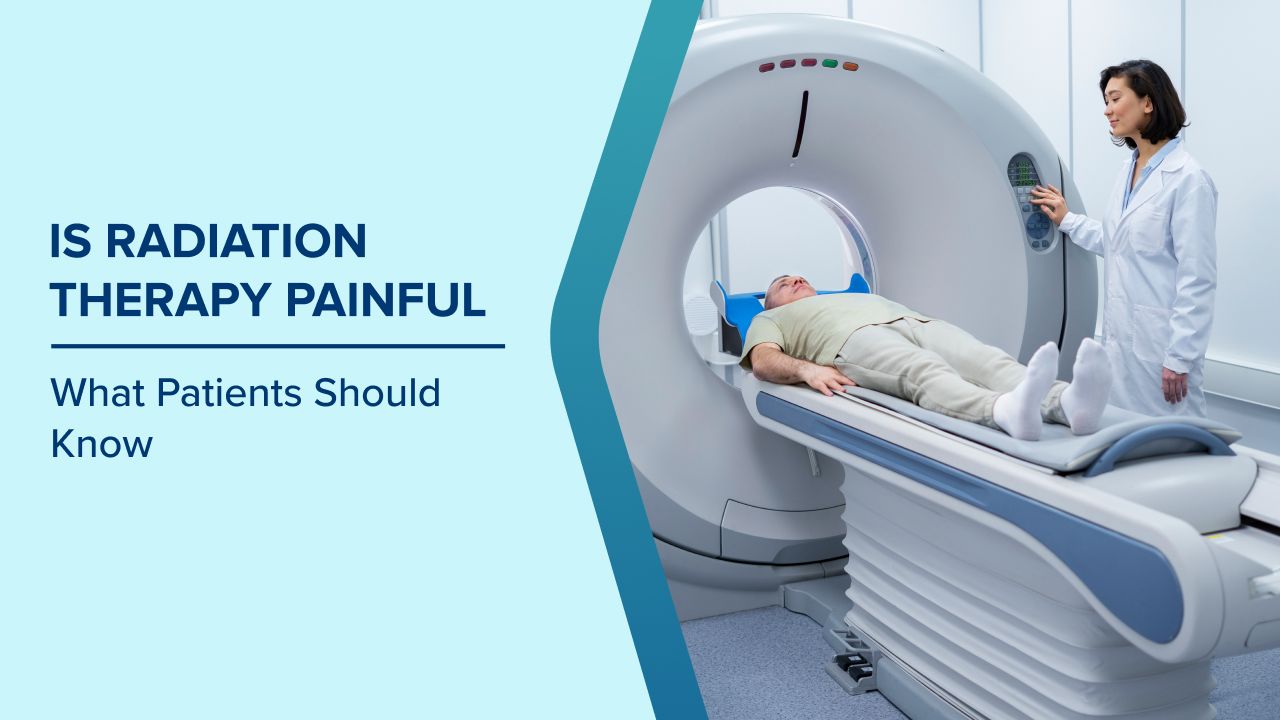
Radiation therapy is not painful during delivery. Radiation cannot be seen, felt, or smelled. Patients lie comfortably while a machine directs radiation to the targeted area, similar to an X-ray but longer. Most patients experience:
- No pain during radiation delivery
- No burning or electric sensation
- No immediate discomfort from the machine
Each session lasts 10–15 minutes, with 15–30 sessions planned by the radiation oncologist.
Why the Fear of Pain Exists
The fear often arises from incorrect local terminology such as “sikayi” or “bijli,” which falsely imply burning or electric shock.
The correct Hindi term for radiation therapy is “vikiran chikitsa.” Radiation involves no cuts, needles, or physical pain.
When Can Radiation Therapy Cause Discomfort?
Although sessions are painless, some patients experience discomfort weeks into treatment due to inflammation, which usually begins after 10–15 sessions and resolves within 2–4 weeks after completion.
- Area being treated (more pronounced in oral cancers)
- Total dose and number of sessions
- Individual sensitivity
- Overall health and nutrition
- Pre-existing medical conditions
Common Radiation Therapy Side Effects That May Cause Discomfort
Skin Changes and Sensitivity
High-dose radiation may affect skin, especially in head and neck cancer treatment:
- Redness or darkening
- Tenderness or soreness
- Mild burning sensation
These effects usually improve within 2–4 weeks.
Inflammation in Abdominal Organs
- Radiation to the abdomen may cause temporary inflammation leading to diarrhea, loss of appetite, or urinary irritation during prostate or bladder cancer treatment.
These symptoms usually resolve within 2–4 weeks after therapy.
Does Radiation Therapy Side Effects Continue After Treatment?
Most side effects peak near the end of treatment and gradually improve. Long-term discomfort is rare and managed carefully by radiation oncologists.
How Doctors Prevent and Manage Side Effects
Precision Treatment Planning
- Accurate tumour targeting
- Minimal exposure to healthy tissue
- Skin-sparing advanced techniques
Supportive Medications
- Anti-inflammatory medicines
- Mouth rinses for throat discomfort
- Skin creams (rarely needed now)
Regular Monitoring
Patients are reviewed weekly to manage side effects early.
Radiation Therapy Compared to Other Cancer Treatments
Radiation Therapy vs Chemotherapy
Chemotherapy causes systemic effects like nausea and hair loss, while radiation effects are localised.
Radiation Therapy vs Surgery
Surgery involves postoperative pain, while radiation allows most patients to continue daily activities.
What Patients Can Do to Reduce Discomfort
- Follow skin-care instructions
- Stay hydrated
- Eat balanced meals
- Get adequate rest
- Report symptoms early
Conclusion
Radiation therapy is painless and well tolerated. Temporary discomfort may occur, but modern techniques like IGRT, VMAT, and Stereotactic Radiosurgery ensure safer and more comfortable treatment.
Frequently Asked Questions
Is radiation therapy painful?
No, radiation delivery itself is painless.
How long does discomfort last?
Usually 2–4 weeks after treatment ends.
Is modern radiation therapy safe?
Yes, it is more precise and safer than ever before.
Written and Verified by:

Related Blogs


Dr. Charu Garg In Radiation Oncology , Cancer Care / Oncology , Breast Cancer
Sep 20 , 2017 | 3 min read
Blogs by Doctor

Mucormycosis in cancer patients - an emerging threat
Dr. Abhishek Gulia In Radiation Oncology
Jun 02 , 2021 | 2 min read

Most read Blogs


Related Blogs
Dr. Charu Garg In Radiation Oncology , Cancer Care / Oncology , Breast Cancer
Sep 20 , 2017 | 3 min read
Blogs by Doctor
Mucormycosis in cancer patients - an emerging threat
Dr. Abhishek Gulia In Radiation Oncology
Jun 02 , 2021 | 2 min read
Most read Blogs