 WhatsApp Us (24/7)
 +91 926 888 0303 (24/7)


To Book an Appointment
Call Us+91 926 888 0303Bursitis: Symptoms, Diagnosis, Treatment, and Prevention
By Dr. Ramneek Mahajan in Orthopaedics & Joint Replacement
Apr 08 , 2024 | 10 min read
3

Bursitis is a condition that causes joint pain when the small fluid filled sacs called bursae become inflamed. These sacs cushion the space between bones, muscles and tendons, so when they swell, joint movement can become painful and stiff. As the pain can feel similar to a simple muscle strain, it is often ignored in the early stages. Over time, this inflammation can begin to interfere with daily tasks and limit movement. A clear explanation of bursitis and its warning signs can help in recognising the problem early. This blog looks at the different types of bursitis, its causes, common symptoms and the treatment options that can help manage it effectively.
What is Bursitis?
Bursitis is a condition in which a small fluid filled sac called a bursa becomes inflamed. Bursae are present around many joints in the body. Their role is to reduce friction between bones, muscles and tendons during movement. When a bursa becomes irritated or swollen, it can cause pain, tenderness and difficulty in moving the affected joint.
This inflammation most commonly affects the shoulder, elbow, hip and knee. The pain may begin suddenly after an injury, or it may develop gradually due to repeated strain or prolonged pressure on a joint. In some cases, infection can also lead to bursitis.
Depending on how long the inflammation lasts, bursitis can be acute, which means it develops quickly and causes sharp pain, or chronic, where the discomfort persists for weeks or keeps returning
What are the Different Types of Bursitis?
Bursitis is usually classified based on the joint that is affected. Since bursae are present in many parts of the body, inflammation can occur in different areas. The most common bursitis types include the following:
Shoulder bursitis
This type often involves the bursa located between the top of the upper arm bone and the shoulder blade. It is commonly linked to repeated overhead movements such as lifting, throwing or painting. Pain is usually felt on the outer side of the shoulder and may worsen when raising the arm or lying on the affected side. In some cases, stiffness and reduced range of motion can also occur.
Elbow bursitis
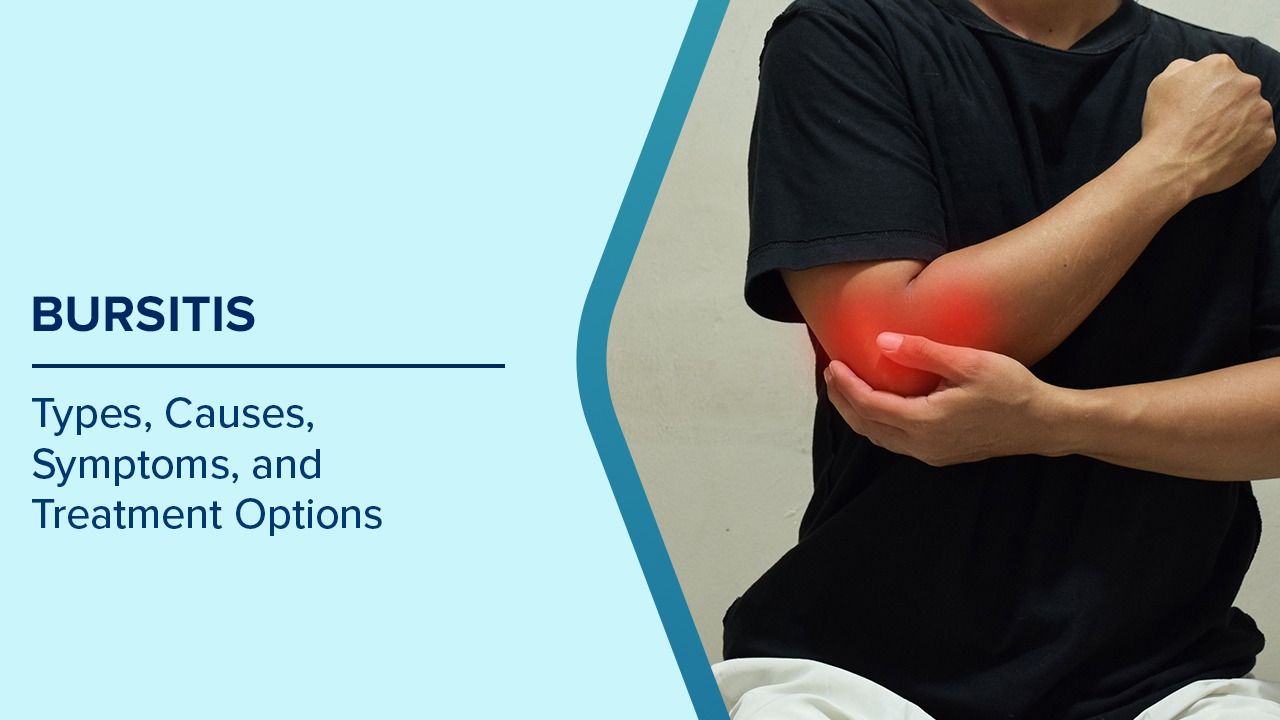
Elbow bursitis affects the bursa at the back of the elbow. It may lead to visible swelling that feels soft to touch. The condition can develop after prolonged pressure, such as resting the elbow on a hard surface for long periods, or after a direct blow to the area. If infection is present, redness, warmth and fever may also appear.
Hip bursitis
Hip bursitis most often involves the bursa on the outer side of the hip. Pain is typically felt along the outer thigh and may spread downwards. It can become more noticeable during walking, climbing stairs or standing for long periods. Repetitive stress, leg length differences or underlying joint problems may increase the risk.
Knee bursitis
Knee bursitis usually affects the bursa in front of the kneecap. It is common in people who kneel frequently for work or daily activities. Swelling at the front of the knee is a common sign, and bending the knee may cause discomfort. In some cases, infection can lead to warmth and redness in the area.
Heel bursitis
Heel bursitis involves the bursa at the back of the heel, close to the Achilles tendon. It may cause pain while walking or wearing tight shoes. Athletes and individuals who engage in repeated running or jumping are more likely to develop this type. Swelling and tenderness at the back of the heel are common features.
Although the location differs, the underlying issue in all these types is inflammation of a bursa.
What Causes Bursitis?
Bursitis develops when a bursa becomes irritated and inflamed. This irritation may build up slowly due to repeated strain on a joint, or it can occur suddenly after an injury. Several factors can increase the risk:
- Repetitive movements: Repeated use of the same joint is one of the most common causes of bursitis. Activities that involve frequent lifting, reaching overhead, throwing, kneeling or bending can create constant friction between tissues. Over time, this repeated stress can irritate the bursa and lead to swelling and pain.
- Prolonged pressure on a joint: Continuous pressure on a specific area can inflame the underlying bursa. For example, kneeling for long hours can affect the knee, and resting the elbows on hard surfaces for extended periods can irritate the elbow bursa. Occupations and daily habits often play a role in this type of strain.
- Direct injury or trauma: A fall, sudden impact or direct blow to a joint can trigger immediate inflammation. In such cases, swelling may appear quickly and the area can feel tender or warm to touch.
- Infection: Bacteria can enter a bursa through a nearby cut, scrape or skin infection. This leads to septic bursitis, which is usually associated with redness, warmth, increased pain and sometimes fever. This type requires prompt medical attention to prevent complications.
- Underlying medical conditions: Certain health conditions that affect the joints can make bursae more prone to inflammation. Rheumatoid arthritis, gout and other inflammatory disorders may increase the likelihood of recurrent bursitis.
Often, bursitis does not have a single clear cause. Instead, it develops due to a combination of strain, pressure and existing joint problems.
What are the Symptoms of Bursitis?
Bursitis symptoms usually develop in the joint where the bursa is inflamed. The intensity of symptoms can vary depending on the cause and whether the condition is acute or long standing. Common signs include:
- Pain around the affected joint: Pain is the most noticeable symptom. It may feel dull and aching or sharp during movement. The discomfort often increases when the joint is pressed, moved or used repeatedly.
- Swelling: The area over the joint may appear swollen. In some cases, the swelling is clearly visible, especially in elbow or knee bursitis.
- Tenderness: The joint may feel sore when touched. Even light pressure can cause discomfort.
- Warmth and redness: The skin over the affected area may feel warm. Redness is more common in cases linked to infection.
- Restricted movement: Stiffness can develop due to pain and inflammation. This may make it difficult to lift the arm, bend the knee or walk comfortably, depending on the joint involved.
- Fever in case of infection: When bursitis is caused by infection, fever and a general feeling of illness may occur. This requires immediate medical evaluation.
Symptoms may begin suddenly after an injury or develop gradually with repeated strain. Persistent joint pain or swelling should not be ignored, especially if daily activities become difficult.
How is Bursitis Diagnosed?
Bursitis is diagnosed through a careful clinical assessment and, if required, supportive tests to confirm the cause and rule out other joint problems:
Medical History
The diagnostic process begins with a detailed discussion about symptoms. Information about when the pain started, how it has progressed and which movements make it worse helps narrow down the cause. Questions about recent injuries, repetitive activities at work or sports participation are also relevant. A history of conditions such as rheumatoid arthritis, gout or diabetes may provide further clues, especially in cases of recurrent or infected bursitis.
Physical Examination
A careful examination of the affected joint follows. The doctor checks for visible swelling, redness and warmth over the area. Gentle pressure is applied to identify tenderness and pinpoint the exact site of inflammation. Range of motion is also assessed to see how pain affects joint movement. In some types, such as elbow or knee bursitis, swelling may be clearly noticeable.
Imaging Tests
Imaging studies may be advised if the diagnosis is uncertain or if symptoms are severe. An X-ray does not show the bursa itself but helps rule out fractures, bone spurs or arthritis. Ultrasound can detect fluid collection and confirm inflammation of the bursa. MRI provides a more detailed view of soft tissues and may be useful in complex or long standing cases.
Fluid Aspiration and Laboratory Tests
If infection is suspected, fluid may be drawn from the swollen bursa using a sterile needle. This procedure, known as aspiration, helps identify bacteria or crystals related to gout. Laboratory testing of the fluid guides further treatment, particularly if antibiotics are required.
What are the Treatment Options for Bursitis?
Bursitis treatment aims to reduce inflammation, ease pain and restore smooth joint movement. The plan depends on the severity of symptoms, the affected joint and the underlying cause. In most cases, non surgical measures provide significant relief.
Non Surgical Treatment
- Rest and activity modification: Limiting movements that strain the affected joint allows the inflamed bursa to recover. Short term rest is helpful, but complete immobilisation is usually avoided. Adjusting daily habits, correcting posture or modifying work techniques can prevent repeated irritation.
- Cold application: Ice packs applied for 15 to 20 minutes at a time can reduce swelling and pain, especially during the early phase. Regular application over the first few days often helps control inflammation.
- Pain relieving and anti-inflammatory medicines: These medicines reduce discomfort and improve joint mobility. They are commonly used for short term symptom control. If bursitis is caused by infection, appropriate antibiotics are prescribed to treat the bacterial source.
- Supportive devices: Elbow pads, knee pads or cushioned supports may reduce pressure on the joint and protect the area during healing.
- Physiotherapy: Structured exercises help restore range of motion and strengthen the muscles around the joint. Stronger muscles provide better support and reduce strain on the bursa. Stretching exercises also improve flexibility and lower the risk of recurrence.
Minimally Invasive Procedures
- Corticosteroid injections: When pain does not improve with initial treatment, a corticosteroid injection may be given into or around the inflamed bursa. This helps reduce inflammation more rapidly and can provide lasting relief in many cases.
- Fluid aspiration: If swelling is significant, especially in elbow or knee bursitis, excess fluid may be removed using a sterile needle. This can reduce pressure and discomfort. The fluid may also be sent for laboratory testing if infection or gout is suspected.
Surgical Treatment
- Bursectomy: Surgery is rarely required and is considered only when symptoms are persistent, severe or repeatedly returning despite adequate treatment. The procedure involves removal of the inflamed bursa. Recovery usually includes a short period of rest followed by guided rehabilitation to restore movement and strength.
Consult Today
Joint pain has a way of slowly becoming part of everyday life, and it is easy to keep adjusting around it instead of addressing it. If discomfort, swelling or stiffness has been staying longer than expected, it deserves proper attention. If bursitis is suspected, speak directly with an orthopaedic specialist at Max Hospital. A clear evaluation and the right guidance can help you move freely again and get back to your routine with confidence.
Frequently Asked Questions
Can bursitis go away on its own?
Mild bursitis can settle with rest and simple care, especially if the strain on the joint is reduced early. However, pain that continues for more than a few weeks should be assessed to prevent long term discomfort.
How long does it take to recover from bursitis?
Recovery time depends on the severity and cause. Some people improve within a few weeks, whereas others may need longer, particularly if the joint continues to be strained or if infection is involved.
Is bursitis more common in certain age groups?
Bursitis can occur at any age, but it is more frequently seen in adults who perform repetitive physical tasks or have underlying joint conditions. Age related wear and tear may also increase the risk.
Can exercise make bursitis worse?
High impact or repetitive activities can aggravate symptoms. However, guided exercises that focus on stretching and strengthening are often helpful during recovery. The type and timing of exercise matter.
Does bursitis increase the risk of permanent joint damage?
Bursitis itself does not usually cause permanent joint damage. Persistent inflammation or untreated infection, however, can lead to complications, which is why timely evaluation is important.
Can bursitis return after treatment?
Yes, recurrence is possible if the original cause, such as repeated strain or prolonged pressure, is not addressed. Making changes to daily habits and joint protection can reduce this risk.
Written and Verified by:

Related Blogs


Dr. Ashish Jain In Orthopaedics & Joint Replacement
Nov 07 , 2020 | 1 min read
Blogs by Doctor

ANTERIOR CRUCIATE LIGAMENT TEAR
Dr. Ramneek Mahajan In Arthroscopic Surgery , Orthopaedics & Joint Replacement , Arthroscopy & Sports Injury
Nov 28 , 2020 | 3 min read
Most read Blogs


Related Blogs
Dr. Ashish Jain In Orthopaedics & Joint Replacement
Nov 07 , 2020 | 1 min read
Blogs by Doctor
ANTERIOR CRUCIATE LIGAMENT TEAR
Dr. Ramneek Mahajan In Arthroscopic Surgery , Orthopaedics & Joint Replacement , Arthroscopy & Sports Injury
Nov 28 , 2020 | 3 min read
Most read Blogs