 WhatsApp Us (24/7)
 +91 926 888 0303 (24/7)


To Book an Appointment
Call Us+91 926 888 0303Brain-Eating Amoeba: How it Spreads, Warning Signs, and Treatment Options
By Dr. Amit Batra in Neurosciences
Sep 22 , 2025 | 7 min read
4

In recent weeks, several cases of brain-eating amoeba (Naegleria fowleri) have been reported in Kerala, drawing national attention to this rare yet deadly infection. Health authorities have confirmed a few infections linked to exposure to warm, untreated freshwater sources, with most patients having a history of swimming or diving in such environments. Although these infections are extremely rare, their severity has prompted public health advisories and awareness drives across the state. Authorities are urging people to recognise early brain-eating amoeba symptoms, follow safe water practices, and seek immediate medical care if illness develops after freshwater exposure. To help increase awareness, reduce the risk and protect public health, in this article, we will discuss this amoeba infection in detail, covering its sources, early symptoms, and treatment options.
What is Naegleria fowleri (Brain-Eating Amoeba)?
Naegleria fowleri, commonly known as the brain-eating amoeba, is a rare single-celled amoeba that naturally lives in warm freshwater environments such as lakes, ponds, rivers, and hot springs. It is a free-living microorganism, not a virus, bacteria, or fungus, although it is often mistakenly thought to be one.
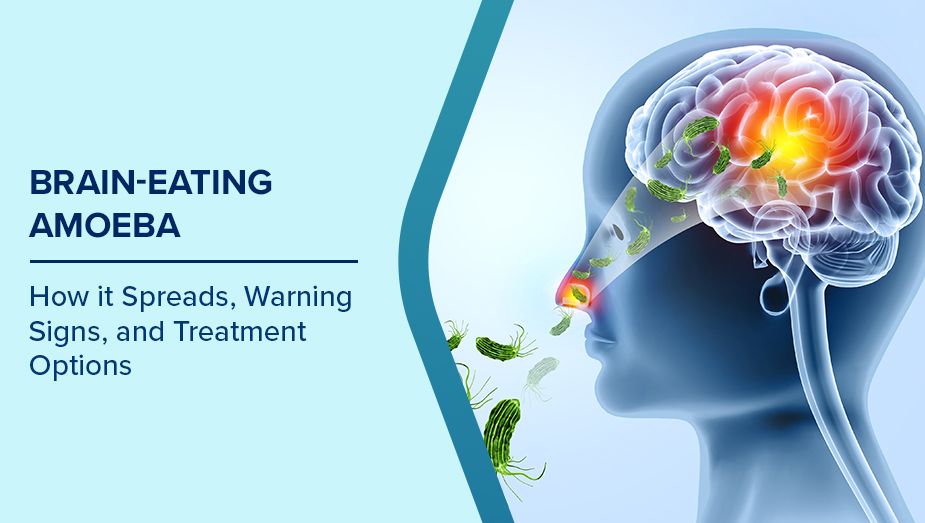
This microscopic organism becomes dangerous only when it enters the human body through the nose. From there, it can travel along the olfactory nerve to the brain and cause a severe and rapidly progressing infection called Primary Amebic Meningoencephalitis (PAM). This infection destroys brain tissue, leading to swelling, inflammation, and often death if not treated urgently. While extremely rare, even a single case requires immediate medical attention due to its high fatality rate.
Where Is Naegleria fowleri Found?
Naegleria fowleri, or the brain-eating amoeba, thrives in warm and untreated freshwater environments. It is more common during hot weather, especially in stagnant or slow-moving water where temperatures are high. Most brain-eating amoeba cases have been linked to water-related activities where water enters the nose. Common places where this amoeba can be found include:
- Warm lakes, ponds, and rock pits
- Mud puddles and shallow water bodies
- Warm, slow-flowing rivers with low water levels
- Untreated swimming pools and spas
- Untreated well water or poorly maintained municipal water
- Hot springs and other geothermal water sources
- Thermally polluted water, such as runoff from power plants
- Aquariums and artificial water tanks
- Soil and even indoor dust
- Splash pads and water parks used by children
Risk Factors for Brain-Eating Amoeba Infection
Although Naegleria fowleri infection is rare, certain situations can increase the risk of exposure to this brain-eating amoeba. Being aware of these risk factors can help in taking extra precautions, especially during the summer months.
Key risk factors include:
- Swimming or diving in untreated warm freshwater, such as lakes, ponds, and rivers
- Stirring up sediment at the bottom of shallow warm water bodies, where the amoeba often lives
- Children and teenagers who spend more time in water parks, splash pads, or swimming pools
- Hot climates and summer seasons, when water temperatures rise and water levels drop
- Poorly maintained swimming pools or tanks with inadequate chlorination
- Weakened immune systems, which may reduce the body’s ability to fight infections
It is important to note that:
- The infection cannot spread from person to person
- It does not occur from drinking water, even if it contains the amoeba
- Most infections are linked to nasal exposure during water activities in untreated or poorly maintained water sources
Warning Signs and Symptoms of Infection
Symptoms of brain-eating amoeba infection usually appear within 1 to 12 days after exposure and progress rapidly. Because the early signs resemble other common illnesses, it can be difficult to recognise the infection at first. However, the condition worsens quickly and can become life-threatening without prompt treatment. Common brain-eating amoeba symptoms include:
- Sudden high fever
- Very painful or severe headache (often described as unbearable)
- Nausea and vomiting
- Trembling or loss of balance
- Stiff neck and sensitivity to light, similar to meningitis
- Mental confusion, irritability, or unusual behaviour
- Seizures
- Coma in advanced stages
Treatment Options for Naegleria fowleri Infection
Treating brain-eating amoeba infection is challenging because it is extremely rare and often diagnosed late, after symptoms have rapidly progressed. However, prompt and aggressive medical care can improve the chances of survival.
Treatment usually involves:
- Antimicrobial and antifungal medicines such as amphotericin B, miltefosine, rifampicin, and azithromycin to kill the amoeba
- Supportive care in an intensive care unit (ICU) to control brain swelling, seizures, and other complications
- Lowering body temperature (therapeutic hypothermia) in some cases to reduce brain inflammation
- Experimental treatment combinations under close medical supervision
While the survival rate remains low, early diagnosis and immediate treatment in specialised hospitals can offer the best possible outcome.
How to Prevent This Infection
Although Naegleria fowleri infection is rare, it can be deadly, making prevention the most effective way to stay safe. Since the brain-eating amoeba spreads through the nose during water activities, simple precautions can significantly reduce the risk.
Helpful safety measures include:
- Avoid swimming or diving in warm, stagnant freshwater during hot weather
- Use nose clips or keep the head above water when in lakes, ponds, or untreated pools
- Do not stir up sediment in shallow warm waters, as the amoeba lives in soil and mud at the bottom
- Ensure swimming pools, spas, and water tanks are properly cleaned and chlorinated
- Use boiled, filtered, or distilled water for nasal rinsing or religious ablutions
- Educate children about safe swimming habits in splash pads and water parks
These precautions are especially important during the summer months and in areas where brain-eating amoeba cases have been reported.
When to See a Doctor
Because Naegleria fowleri infection progresses rapidly, early medical attention can be life-saving. Anyone who develops sudden high fever, severe headache, stiff neck, confusion, or vomiting within a few days of swimming or diving in warm freshwater should seek immediate medical care.
Consulting a neurologist or an internal medicine doctor without delay is crucial, as early diagnosis and treatment offer the best chance of recovery. It’s always better to get evaluated promptly rather than wait for symptoms to worsen.
Conclusion
The recent brain-eating amoeba (Naegleria fowleri) cases reported in Kerala have highlighted the need for greater public awareness about this rare but deadly infection. Knowing how this amoeba infection spreads, recognising its early symptoms, and acting quickly can make the difference between life and death. If you or your loved one experiences sudden neurological symptoms after freshwater exposure, do not delay medical care. At Max Healthcare, our experienced neurologists and internal medicine doctors are equipped with advanced diagnostic tools and critical care facilities to provide timely and expert treatment. To book an appointment, call +91 92688 80303 today!
Frequently Asked Questions (FAQs)
Q: Is amoeba harmful to humans?
Most amoeba species are harmless, but Naegleria fowleri, also called the brain-eating amoeba, can cause a rare and deadly brain infection known as Primary Amebic Meningoencephalitis (PAM).
Q: What are the first signs of brain-eating amoeba infection?
Early brain-eating amoeba symptoms include high fever, severe headache, nausea, vomiting, and neck stiffness, which may appear within 1–12 days after exposure to warm freshwater.
Q: Is the brain-eating amoeba a virus, bacteria, or fungi?
It is neither a virus, bacteria, nor fungi. Naegleria fowleri is a free-living single-celled amoeba that thrives in warm freshwater environments.
Q: How does Naegleria fowleri infection spread in Kerala?
Recent brain-eating amoeba cases in Kerala have been linked to swimming or diving in untreated warm freshwater, where the amoeba enters the body through the nose and travels to the brain.
Q: Which water sources in Kerala are linked to brain-eating amoeba infections?
The amoeba has been detected in warm lakes, ponds, untreated pools, splash pads, and poorly maintained water tanks, especially during summer months when water levels are low and temperatures are high.
Q: Can brain-eating amoeba infection be cured?
Although survival rates are low, early diagnosis and aggressive treatment with medicines such as amphotericin B and miltefosine can improve recovery chances in brain-eating amoeba infection cases.
Q: Are children more vulnerable to brain-eating amoeba infections?
Children are often more exposed to warm freshwater while swimming or playing, which may increase their risk of Naegleria fowleri infection, though it can affect people of any age.
Q: Can drinking water cause brain-eating amoeba infection?
No, Naegleria fowleri does not spread through drinking water. Infection only occurs if contaminated water enters the nose during water activities.
Q: When should I see a doctor if I suspect a brain-eating amoeba infection?
Seek urgent medical care from a neurologist or internal medicine doctor if you develop sudden fever, headache, neck stiffness, or confusion after swimming in warm freshwater.
Q: What precautions should tourists take to avoid brain-eating amoeba in Kerala?
Tourists should avoid swimming in untreated warm freshwater, wear nose clips, choose properly chlorinated pools, and use boiled or filtered water for nasal rinsing to prevent amoeba infection.
Q: Where can I find treatment for a brain-eating amoeba infection near me?
If you or someone you know shows sudden neurological symptoms after freshwater exposure, seek immediate medical care. Visit a neurologist or internal medicine doctor near you at a well-equipped hospital such as Max Healthcare, where timely diagnosis and advanced treatment can improve survival chances.
Written and Verified by:

Related Blogs

Dr. Chandril Chugh In Neurosciences , Interventional Neurology
Nov 08 , 2020 | 1 min read

Dr. Chandril Chugh In Neurosciences , Interventional Neurology
Nov 08 , 2020 | 2 min read
Blogs by Doctor

Empower Your Wellness: Practical Tips for Physical and Mental Well-Being
Apr 17 , 2024 | 3 min read

Most read Blogs


Related Blogs
Dr. Chandril Chugh In Neurosciences , Interventional Neurology
Nov 08 , 2020 | 1 min read
Dr. Chandril Chugh In Neurosciences , Interventional Neurology
Nov 08 , 2020 | 2 min read
Blogs by Doctor
Empower Your Wellness: Practical Tips for Physical and Mental Well-Being
Apr 17 , 2024 | 3 min read
Most read Blogs