 WhatsApp Us (24/7)
 +91 926 888 0303 (24/7)


To Book an Appointment
Call Us+91 926 888 0303Cochlear Implant: Restoring Hearing, Transforming Lives
By Dr. Iram Khan in ENT
Jun 29 , 2025 | 3 min read

Hearing is one of the most vital senses that connects us to people, conversations, and the world around us. For those living with severe to profound hearing loss, especially when hearing aids no longer help, a cochlear implant can be a life-changing solution. It offers the chance to restore hearing and regain the ability to understand speech, music, and everyday sounds.
Cochlear implant surgery is now more accessible than ever due to advancements in technology, skilled ENT specialists, and growing awareness. Whether for children born with hearing loss or adults who have lost hearing over time, this implant offers renewed hope and a better quality of life.
How Cochlear Implants Work
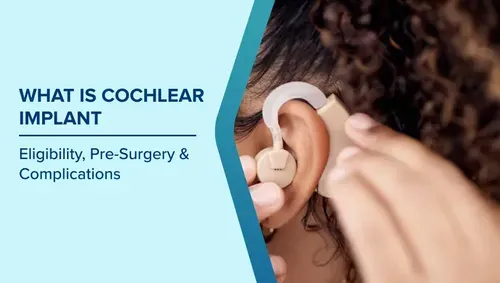
A cochlear implant is a small electronic medical device that bypasses damaged parts of the inner ear and directly stimulates the hearing nerve. It is different from a hearing aid, which only amplifies sound. Instead, it converts sound into electrical signals and sends them to the brain.
Components of a Cochlear Implant
- External processor: Worn behind the ear, it captures sound and processes it.
- Internal implant: Surgically placed under the skin, it receives signals and sends them to the cochlea.
- Electrode array: Inserted into the cochlea, it stimulates the auditory nerve.
The entire system works together to help the user hear and understand sounds more clearly.
Who Can Benefit from a Cochlear Implant?
Not everyone with hearing loss needs a cochlear implant. However, certain individuals may benefit more than others.
Ideal candidates include:
- People with severe to profound sensorineural hearing loss.
- Children born with deafness or significant hearing loss.
- Adults who lost hearing due to illness, age, or injury.
- Individuals who do not benefit from hearing aids.
- Patients with stable inner ear anatomy as confirmed by ENT specialists.
Pediatric cochlear implants have shown especially positive results when done early. Studies suggest that children who receive implants before the age of 2 develop better speech and language skills.
The Cochlear Implant Procedure and Recovery
- Evaluation: Audiological tests, MRI or CT scans, and counseling.
- Surgery: Usually a 1-2 hour procedure done under general anesthesia.
- Healing period: The external device is not activated immediately. A 2-4 week healing period is required.
- Activation: After recovery, the external processor is fitted and activated.
- Rehabilitation: Speech and auditory therapy begins soon after.
Recovery
Most patients are discharged within a day. Mild discomfort or dizziness may occur initially, but recovery is generally smooth. Full adjustment to the implant takes a few months of practice and therapy.
Benefits of Cochlear Implants
Cochlear implants do not "cure" deafness, but they provide significant functional hearing.
Key benefits include:
- Improved ability to understand speech, even without lip reading.
- Better communication at work, school, and in social settings.
- Enhanced sound awareness: environmental sounds, alarms, music.
- Greater independence and confidence.
- Improved learning in children, especially when implanted early.
While results vary, many patients show dramatic improvement in their quality of life.
Risks and Considerations
As with any surgery, there are some risks and challenges involved:
- Infection at the surgical site.
- Device malfunction or failure.
- Temporary dizziness or balance issues.
- Need for future upgrades or replacements.
- Limited benefits if the auditory nerve is damaged.
It is crucial to have realistic expectations and proper counseling. A cochlear implant requires commitment to rehabilitation and follow-up sessions with ENT specialists and audiologists.
Life After a Cochlear Implant
Success with a cochlear implant depends greatly on post-surgery therapy. This includes:
- Speech therapy after cochlear implant: Essential for both children and adults.
- Auditory training: Helps the brain adapt to new sound signals.
- Regular follow-ups: Device adjustments and progress monitoring.
Children may require more intensive support. Families should be involved in therapy to ensure better outcomes.
For adults, hearing improvement is often seen within weeks, although full adaptation may take several months.
Conclusion
Hearing loss can affect every part of life— from personal relationships to education and employment. Fortunately, with a cochlear implant, many individuals regain the ability to hear and connect with the world again.
If you or a loved one is struggling with hearing, it is important to consult an ENT specialist for cochlear implant evaluation. Early diagnosis and timely intervention make all the difference.
With access to the best cochlear implant hospitals in India, advanced technology, and experienced professionals, restoring hearing and transforming lives is now within reach.
Frequently Asked Questions
What is the latest technology in cochlear implants?
Modern cochlear implants come with features like Bluetooth connectivity, noise reduction, smartphone compatibility, and water-resistant processors. Some even allow remote adjustments via apps, improving user experience and convenience.
Can children as young as 1 year get a cochlear implant?
Yes, pediatric cochlear implant surgery can be safely done in children as young as 9 to 12 months, depending on medical evaluation. Early implantation leads to better speech, language, and social development outcomes.
What are the long-term outcomes of cochlear implants?
Long-term results are generally positive, especially with consistent therapy and follow-up care. Most users experience stable hearing improvements for many years. Device upgrades may be needed every 5 to 10 years, depending on usage and technological advancements.
Written and Verified by:

Related Blogs

Feb 19 , 2024 | 2 min read

Feb 20 , 2024 | 1 min read
Blogs by Doctor

Most read Blogs


Related Blogs
Feb 19 , 2024 | 2 min read
Feb 20 , 2024 | 1 min read
Blogs by Doctor
Most read Blogs