 WhatsApp Us (24/7)
 +91 926 888 0303 (24/7)


To Book an Appointment
Call Us+91 926 888 0303Anti-Obesity Drugs: Benefits, Role, and Safety Concerns in MASLD Management
By Dr. Pallavi Garg in Gastroenterology, Hepatology & Endoscopy
Jan 06 , 2026 | 1 min read

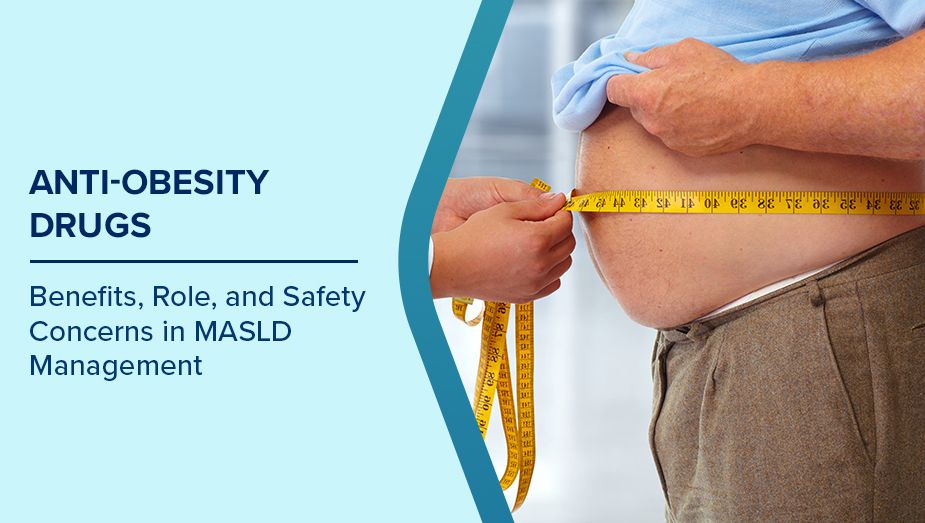
Metabolic dysfunction-associated steatotic liver disease (MASLD), which was formerly called non-alcoholic fatty liver disease (NAFLD), is now a rising health concern closely related to type 2 diabetes, insulin resistance, and obesity. Global obesity rates are rising, and this increase is driving more cases of MASLD. Therefore, people must manage their weight with care.
Emergence of Anti-Obesity Medications
Recent advancements in anti-obesity medications offer new hope. Drugs like semaglutide and tirzepatide, originally developed for diabetes, are showing powerful weight-loss effects. These drugs mimic gut hormones like GLP-1 (glucagon-like peptide-1), which regulate appetite, glucose metabolism, and satiety. Tirzepatide, in particular, also targets GIP (glucose-dependent insulinotropic polypeptide), offering dual hormonal action for enhanced results.
Clinical Benefits in Weight and Liver Health
Clinical trials have demonstrated that with these medications patients are able to lose up to 15–20% of their body weight. Greatly reducing this weight improves insulin sensitivity and also reduces liver fat, key drivers of MASLD progression. Early data suggests that GLP-1 receptor agonists reduce hepatic steatosis and may improve liver inflammation and fibrosis, hallmarks of more severe MASLD.
The Role of Lifestyle and Need for Medication
Diet and exercise remain foundational. Pharmacologic support offers a workable solution for people struggling to achieve meaningful weight loss through lifestyle changes alone. Unfortunately, these drugs are easily available and are often used for cosmetic purposes without regard to medical limitations.
Limitations and Safety Concerns
To name a few limitations: cost, long-term safety, and access remain barriers. GI disturbances like bloating, fullness, diarrhoea, gallstones, and even pancreatitis have been reported. Long-term safety is still under research. Rebound weight gain after discontinuing these drugs is a well-documented concern. Additionally, they are currently approved for obesity and type 2 diabetes, not specifically for MASLD, though trials are showing promising results.
Conclusion
New anti-obesity drugs may be helpful in the fight against MASLD. As evidence grows, they may become part of a multidisciplinary approach that combines lifestyle, pharmacotherapy, and metabolic monitoring for comprehensive care. To date, lifestyle modification including dietary changes and regular exercise remains the cornerstone of MASLD management.
Written and Verified by:

Related Blogs

Dr. Nivedita Pandey In Gastroenterology, Hepatology & Endoscopy , Liver Transplant and Biliary Sciences
Nov 07 , 2020 | 2 min read
Dr. Nivedita Pandey In Gastroenterology, Hepatology & Endoscopy , Liver Transplant and Biliary Sciences
Nov 07 , 2020 | 2 min read
Blogs by Doctor

Protecting Your Liver: Understanding the Importance of World Liver Day
Dr. Pallavi Garg In Gastroenterology, Hepatology & Endoscopy
Apr 19 , 2023 | 2 min read

An introduction to fatty liver disease
Dr. Pallavi Garg In Gastroenterology, Hepatology & Endoscopy
Jun 13 , 2023 | 2 min read
Most read Blogs


Related Blogs
Dr. Nivedita Pandey In Gastroenterology, Hepatology & Endoscopy , Liver Transplant and Biliary Sciences
Nov 07 , 2020 | 2 min read
Dr. Nivedita Pandey In Gastroenterology, Hepatology & Endoscopy , Liver Transplant and Biliary Sciences
Nov 07 , 2020 | 2 min read
Blogs by Doctor
Protecting Your Liver: Understanding the Importance of World Liver Day
Dr. Pallavi Garg In Gastroenterology, Hepatology & Endoscopy
Apr 19 , 2023 | 2 min read
An introduction to fatty liver disease
Dr. Pallavi Garg In Gastroenterology, Hepatology & Endoscopy
Jun 13 , 2023 | 2 min read
Most read Blogs