 WhatsApp Us (24/7)
 +91 926 888 0303 (24/7)


To Book an Appointment
Call Us+91 926 888 0303Alcoholic vs Non-Alcoholic Liver Cirrhosis: Causes & Symptoms
By Dr. Karamjot Singh Bedi in Liver Transplant and Biliary Sciences , Gastrointestinal & Hepatobiliary Oncology , Gastrointestinal Surgery , Institute of Laparoscopic, Endoscopic & Bariatric Surgery , Gastro Intestinal & Hepatopancreatobiliary Surgical Oncology
Feb 12 , 2026

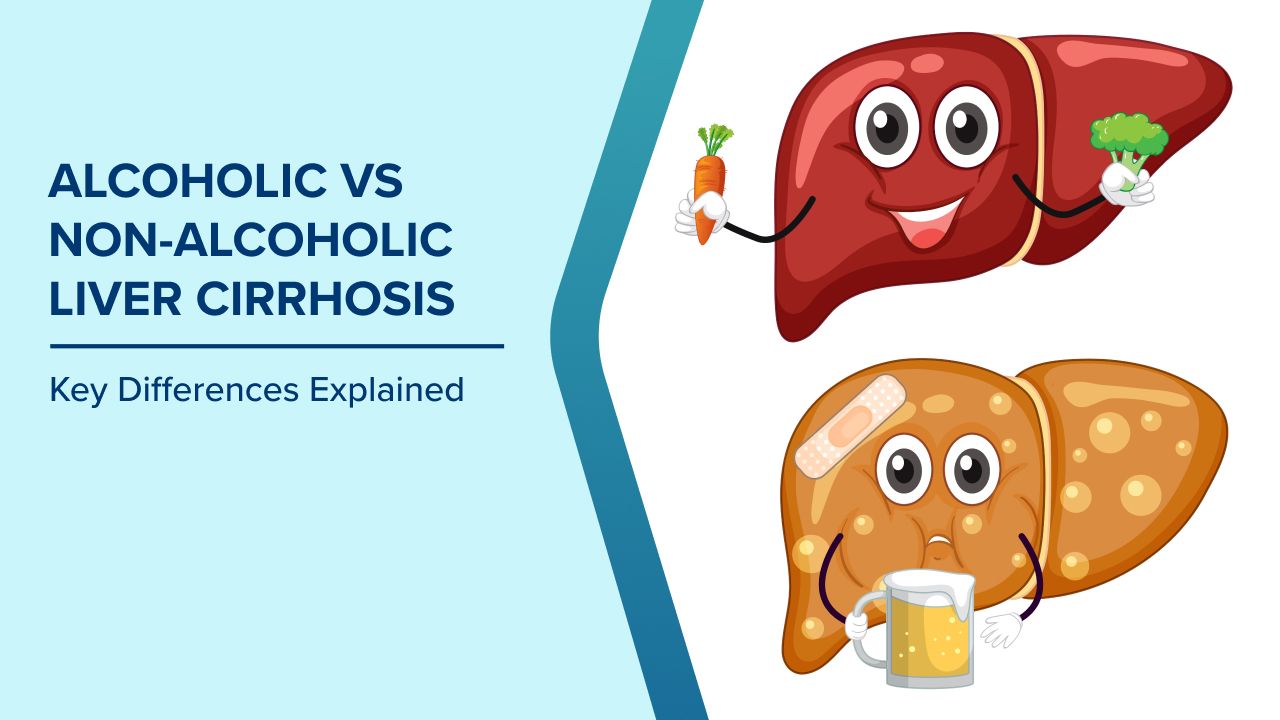
Liver cirrhosis is often misunderstood as a condition caused only by heavy alcohol use. In reality, cirrhosis can develop for several reasons, many of which have nothing to do with alcohol. Understanding the difference between alcoholic and non alcoholic liver cirrhosis is important, as the causes, progression, and management strategies can vary significantly.
What Is Liver Cirrhosis?
Liver cirrhosis is a long-term condition in which healthy liver tissue is gradually replaced by scar tissue. This scarring disrupts blood flow through the liver and reduces its ability to perform vital functions such as detoxification, digestion support, and protein production.
Cirrhosis develops slowly over years. In its early stages, symptoms may be mild or absent. As damage progresses, complications become more apparent and potentially life-threatening.
Understanding Alcoholic Liver Cirrhosis
Alcoholic liver cirrhosis occurs when long-term alcohol consumption causes repeated injury to liver cells. Over time, the liver’s ability to repair itself becomes overwhelmed, leading to permanent scarring.
Alcohol does not damage the liver overnight. The process usually begins with fatty liver changes, followed by inflammation, and eventually cirrhosis if alcohol intake continues.
Factors that influence how quickly alcoholic cirrhosis develops include:
- Duration and quantity of alcohol intake
- Gender, as women may develop damage at lower levels
- Nutritional status
- Coexisting liver conditions
Importantly, not everyone who drinks heavily develops cirrhosis, but continued alcohol exposure significantly raises the risk.
Understanding Non Alcoholic Liver Cirrhosis
Non alcoholic liver cirrhosis develops without alcohol being the primary cause. It is often linked to metabolic and autoimmune conditions that quietly damage the liver over time.
One of the most common pathways is non alcoholic fatty liver disease, where fat accumulates in the liver due to insulin resistance, obesity, or metabolic imbalance. Over the years, this can progress to inflammation, fibrosis, and cirrhosis.
Other causes include:
- Chronic viral hepatitis
- Autoimmune liver diseases
- Genetic metabolic disorders
- Long-standing bile duct problems
Non alcoholic cirrhosis is increasingly common and often diagnosed later because symptoms may be subtle until significant damage has occurred.
How the Causes Shape Disease Progression
The underlying cause of cirrhosis strongly influences how the condition behaves over time.
- Alcoholic cirrhosis often progresses in episodes, with flare-ups linked to continued drinking. Periods of abstinence may slow damage, while relapse accelerates it.
- Non alcoholic cirrhosis tends to progress silently. Many patients feel well for years while scarring continues in the background, especially when driven by metabolic conditions that may already be affecting other organs.
This difference often affects when patients seek care and how advanced the disease is at diagnosis.
Differences in Symptom Patterns
Both types of cirrhosis share many symptoms, but their timing and triggers can differ.
Alcoholic cirrhosis may present earlier with symptoms linked to inflammation and nutritional deficiencies, such as weakness or muscle wasting.
Non alcoholic cirrhosis may remain unnoticed until complications develop, such as fluid buildup or bleeding issues.
Common symptoms seen in both include:
- Persistent fatigue
- Swelling of the abdomen or legs
- Digestive discomfort
- Skin changes like itching or yellowing
The key difference is often the gradual onset of these symptoms and how patients interpret them.
Impact on Other Organs and Overall Health
Alcoholic cirrhosis frequently affects multiple systems due to alcohol’s toxic effects. This can include damage to the pancreas, heart, and nervous system.
Non alcoholic cirrhosis is often part of a broader metabolic picture. Patients may also have diabetes, high blood pressure, or heart disease, which complicates management.
Diagnostic Approach and Monitoring
The diagnostic process for both types of cirrhosis involves similar tools, but interpretation differs based on cause.
Doctors assess:
- Medical history and lifestyle factors
- Blood tests evaluating liver function
- Imaging to assess liver structure
- Sometimes liver biopsy for clarity
In alcoholic cirrhosis, confirming abstinence is crucial for management planning. In non alcoholic cirrhosis, identifying and controlling underlying metabolic drivers becomes the priority.
Treatment Focus and Long-Term Management
There is no single cure for cirrhosis, but treatment aims to slow progression, prevent complications, and maintain quality of life.
- Alcoholic cirrhosis management centres on complete alcohol avoidance. Even small amounts can worsen damage once cirrhosis is established.
- Non alcoholic cirrhosis management focuses on addressing root causes such as blood sugar control, weight management, and treating associated conditions.
In both cases, ongoing monitoring is essential to detect complications early.
When Liver Transplant Becomes a Consideration
For advanced cirrhosis, a liver transplant may be the only definitive option.
Eligibility depends on several factors, including:
- Severity of liver failure
- Overall health status
- Ability to follow post-transplant care
In alcoholic cirrhosis, sustained abstinence is typically required before transplant listing. In non alcoholic cirrhosis, controlling metabolic conditions plays a key role in eligibility and outcomes.
Why Early Recognition Matters
Early identification of cirrhosis allows interventions that can significantly slow progression. Many patients live stable lives for years with proper management when diagnosed before severe complications develop.
Recognising risk factors and taking early symptoms seriously can make a meaningful difference in outcomes.
Conclusion
Alcoholic and non alcoholic liver cirrhosis differ in how they begin, progress, and are managed, but both represent serious, long-term conditions that require careful medical attention. Understanding these differences helps patients make informed decisions and engage more confidently in their care journey.
Early evaluation, consistent monitoring, and tailored management remain the foundation of better outcomes for all forms of liver cirrhosis.
Frequently Asked Questions
Can alcoholic and non alcoholic cirrhosis look the same on scans?
Yes, imaging often shows similar scarring patterns. The distinction usually comes from medical history, blood markers, and underlying risk factors rather than scans alone.
Is non alcoholic cirrhosis reversible?
While scarring itself cannot be reversed, disease progression can often be slowed or stabilised by addressing the underlying cause early.
Does stopping alcohol always improve alcoholic cirrhosis?
Stopping alcohol does not remove existing scars, but it significantly reduces further damage and lowers the risk of complications.
Can someone have both alcoholic and non alcoholic causes?
Yes, some patients have combined risk factors, such as alcohol use along with metabolic disease, which can accelerate liver damage.
How does cirrhosis affect medication safety?
Many medications are processed by the liver. In cirrhosis, drug doses often need adjustment to avoid toxicity, regardless of the cause.
Written and Verified by:

Related Blogs

Prof (Dr.) Subhash Gupta In Liver Transplant and Biliary Sciences
Nov 07 , 2020 | 2 min read

Dr. Nivedita Pandey In Gastroenterology, Hepatology & Endoscopy , Liver Transplant and Biliary Sciences
Nov 07 , 2020 | 2 min read
Most read Blogs


Related Blogs
Prof (Dr.) Subhash Gupta In Liver Transplant and Biliary Sciences
Nov 07 , 2020 | 2 min read
Dr. Nivedita Pandey In Gastroenterology, Hepatology & Endoscopy , Liver Transplant and Biliary Sciences
Nov 07 , 2020 | 2 min read
Most read Blogs