 WhatsApp Us (24/7)
 +91 926 888 0303 (24/7)


To Book an Appointment
Call Us+91 926 888 0303Role Of Surgery In Modern Cancer Care: What Patients Should Know
By Dr Prateek Varshney in Surgical Oncology , Cancer Care / Oncology , Breast Cancer , Thoracic Oncology , Gynecologic Oncology , Gastro Intestinal & Hepatopancreatobiliary Surgical Oncology , Robotic Surgery
Nov 02 , 2025 | 4 min read

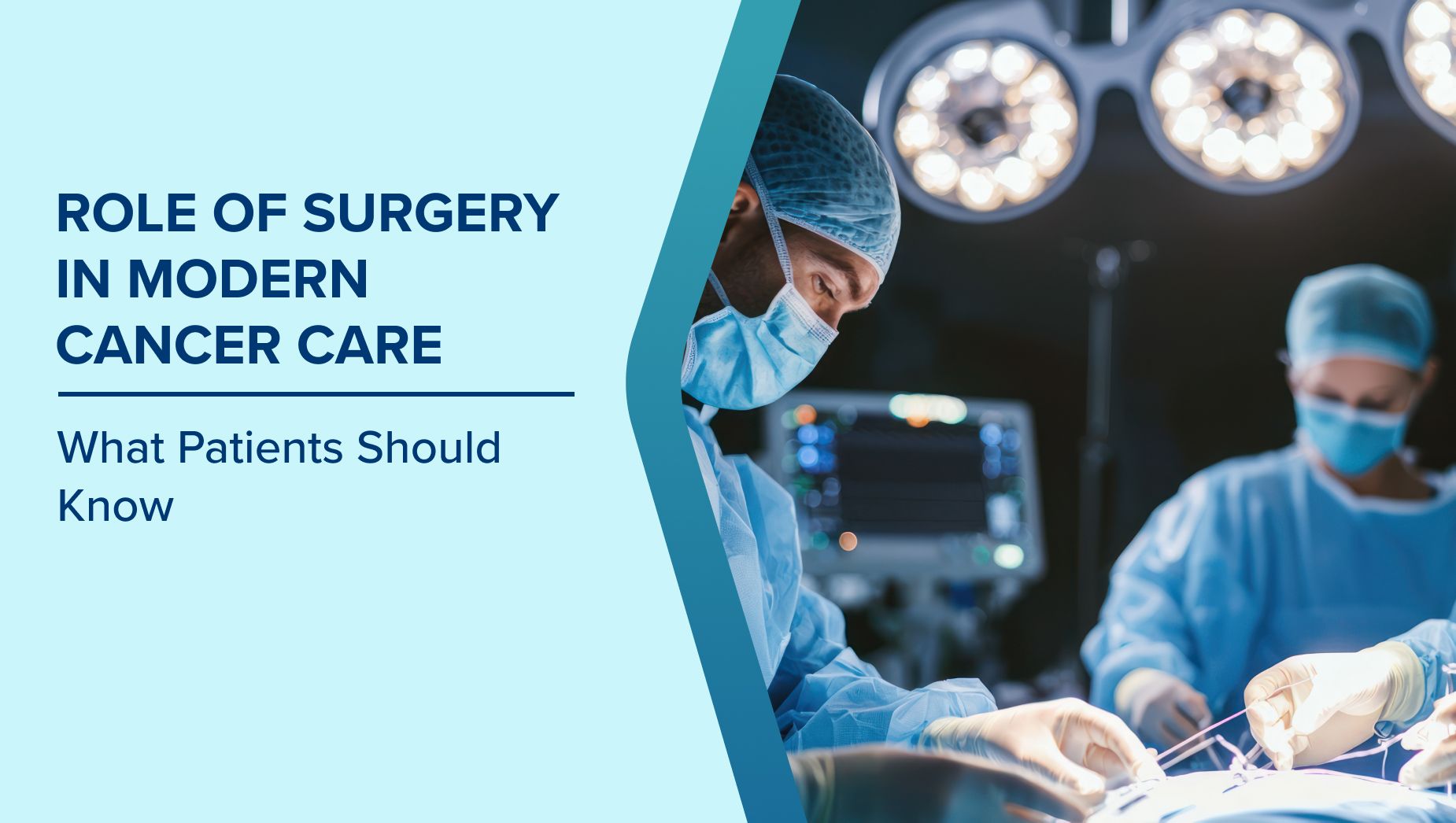
Cancer treatment has evolved tremendously over the past decades, offering patients more options and improved outcomes. Among all treatments, surgery remains a cornerstone of cancer care, playing a crucial role in removing tumours, preventing disease progression, and improving survival.
With advancements in technology and surgical techniques, modern cancer surgery focuses not only on curing the disease but also on preserving organ function and enhancing quality of life.
How Surgery Fits into Modern Cancer Treatment
Surgery is often one of the first-line treatments for many solid tumours. While chemotherapy, radiation, and targeted therapies have become powerful tools, surgery provides a direct way to remove cancerous tissue from the body. It can be used alone or in combination with other treatments to:
- Eliminate tumours before they spread
- Reduce tumour size to make other therapies more effective
- Allow for accurate staging and diagnosis
- Improve long-term survival and reduce recurrence
The timing and type of surgery depend on the cancer type, stage, location, and the patient’s overall health.
Types of Surgical Interventions for Cancer
Modern surgical oncology offers a range of procedures, tailored to both disease control and quality of life.
Curative Surgery
This involves the complete removal of the tumour and surrounding tissue with the aim of eradicating cancer. It is most effective when the disease is detected early.
Debulking Surgery
For advanced cancers, debulking removes as much tumour as possible, reducing tumour burden and allowing chemotherapy or radiation to work more effectively.
Palliative Surgery
When cancer cannot be fully removed, palliative surgery helps relieve symptoms, such as pain or obstruction, improving comfort and daily functioning.
Organ-Sparing Surgery
Modern techniques aim to preserve organs and maintain function whenever possible, such as lumpectomy for breast cancer or partial nephrectomy for kidney tumours.
Reconstructive Surgery
In certain cases, reconstructive surgery restores appearance and function after tumour removal, which is crucial for emotional well-being and confidence.
Minimally Invasive vs Traditional Surgery
Minimally invasive techniques have revolutionised cancer surgery. Laparoscopic and robotic-assisted procedures allow surgeons to remove tumours through small incisions, offering:
- Less pain and scarring
- Shorter hospital stays
- Faster recovery and return to daily life
- Lower risk of infection
While traditional open surgery is still necessary for complex cases, these advanced approaches are increasingly preferred for suitable patients.
Pre-Operative Preparation and Considerations
Successful surgical outcomes begin well before the operation. Patients may undergo:
- Comprehensive medical evaluation to assess fitness for surgery
- Imaging and laboratory tests to map the tumour and surrounding structures
- Discussion of surgical options and potential outcomes with the oncology team
- Lifestyle optimisation, including nutrition, exercise, and cessation of smoking or alcohol
Proper preparation reduces complications, shortens recovery time, and improves overall treatment effectiveness.
Post-Operative Care and Recovery
Recovery after cancer surgery is critical for long-term health. Key aspects include:
- Pain management and wound care to prevent infection
- Physical rehabilitation to restore strength, mobility, and function
- Nutritional support to aid healing and energy levels
- Follow-up imaging and tests to monitor for recurrence
Patients are encouraged to stay engaged in their recovery, adhering to medical guidance and attending regular check-ups.
How Surgery Affects Survival and Quality of Life
Surgery not only removes cancer but also directly influences prognosis. Early, well-planned surgical interventions can:
- Increase the chances of complete tumour removal
- Minimise the need for more aggressive treatments later
- Reduce recurrence risk
- Preserve organ function, improving daily living
With modern techniques, patients often experience faster recovery, less pain, and better long-term outcomes, balancing survival with quality of life.
Role of Multidisciplinary Teams in Surgical Oncology
Surgical cancer care is rarely a solo effort. A multidisciplinary team ensures the best outcomes:
- Oncologists guide overall treatment planning
- Surgeons perform precise tumour removal
- Radiologists provide imaging support for tumour mapping
- Pathologists confirm tumour type and margins
- Nurses and rehabilitation specialists assist in recovery
Collaboration ensures that every patient receives tailored care for optimal results.
Advances in Surgical Techniques and Technology
Modern cancer surgery is rapidly evolving with cutting-edge technology:
- Robotic-assisted surgery improves precision and reduces trauma
- Intraoperative imaging helps surgeons remove tumours while sparing healthy tissue
- 3D surgical planning allows for accurate mapping of complex tumours
- Enhanced recovery protocols shorten hospital stays and accelerate healing
These innovations ensure that surgery is not only effective but also less invasive and patient-friendly.
Patient Empowerment and Decision-Making
Patients today play an active role in their cancer care. Understanding the surgical options, risks, and expected outcomes allows for informed decisions. Open communication with the surgical and oncology team helps patients:
- Choose the most appropriate surgery for their condition
- Prepare mentally and physically for the procedure
- Engage in post-operative rehabilitation and lifestyle adjustments
Empowered patients often experience better satisfaction and improved recovery.
Conclusion
Surgery remains an essential pillar of cancer treatment, offering curative potential, symptom relief, and quality-of-life benefits. Advances in technology, minimally invasive techniques, and organ preservation approaches have transformed patient experiences, ensuring faster recovery and improved outcomes. By working closely with a multidisciplinary team and staying informed about surgical options, patients can make empowered decisions to fight cancer effectively while maintaining their well-being.
Frequently Asked Questions
Can surgery be performed for advanced cancers?
Yes, surgery can remove part of the tumour to relieve symptoms or reduce tumour burden, often in combination with other treatments.
How long does recovery take after cancer surgery?
Recovery varies depending on the type of surgery, age, and overall health, but minimally invasive procedures generally allow for faster healing.
Is robotic surgery suitable for all cancer types?
Robotic surgery is ideal for many tumours, but not all. The suitability depends on tumour location, size, and patient health.
Will surgery affect fertility or organ function?
Some procedures may impact organ function, but organ-sparing techniques are increasingly used to maintain function whenever possible.
How do I choose the right surgical option for my cancer?
A multidisciplinary team will consider your cancer type, stage, overall health, and personal goals to recommend the best surgical approach.
Written and Verified by:

Related Blogs

Dr. S. VEDA PADMA PRIYA In Surgical Oncology , Cancer Care / Oncology
May 16 , 2016 | 2 min read

Dr. Kanika Batra Modi In Surgical Oncology , Cancer Care / Oncology
May 26 , 2016 | 4 min read
Blogs by Doctor

Breast Cancer in Young Women: Why Age Doesn’t Mean Immunity
Dr Prateek Varshney In Surgical Oncology , Cancer Care / Oncology , Breast Cancer
Oct 23 , 2025 | 6 min read
Most read Blogs


Related Blogs
Dr. S. VEDA PADMA PRIYA In Surgical Oncology , Cancer Care / Oncology
May 16 , 2016 | 2 min read
Dr. Kanika Batra Modi In Surgical Oncology , Cancer Care / Oncology
May 26 , 2016 | 4 min read
Blogs by Doctor
Breast Cancer in Young Women: Why Age Doesn’t Mean Immunity
Dr Prateek Varshney In Surgical Oncology , Cancer Care / Oncology , Breast Cancer
Oct 23 , 2025 | 6 min read
Most read Blogs